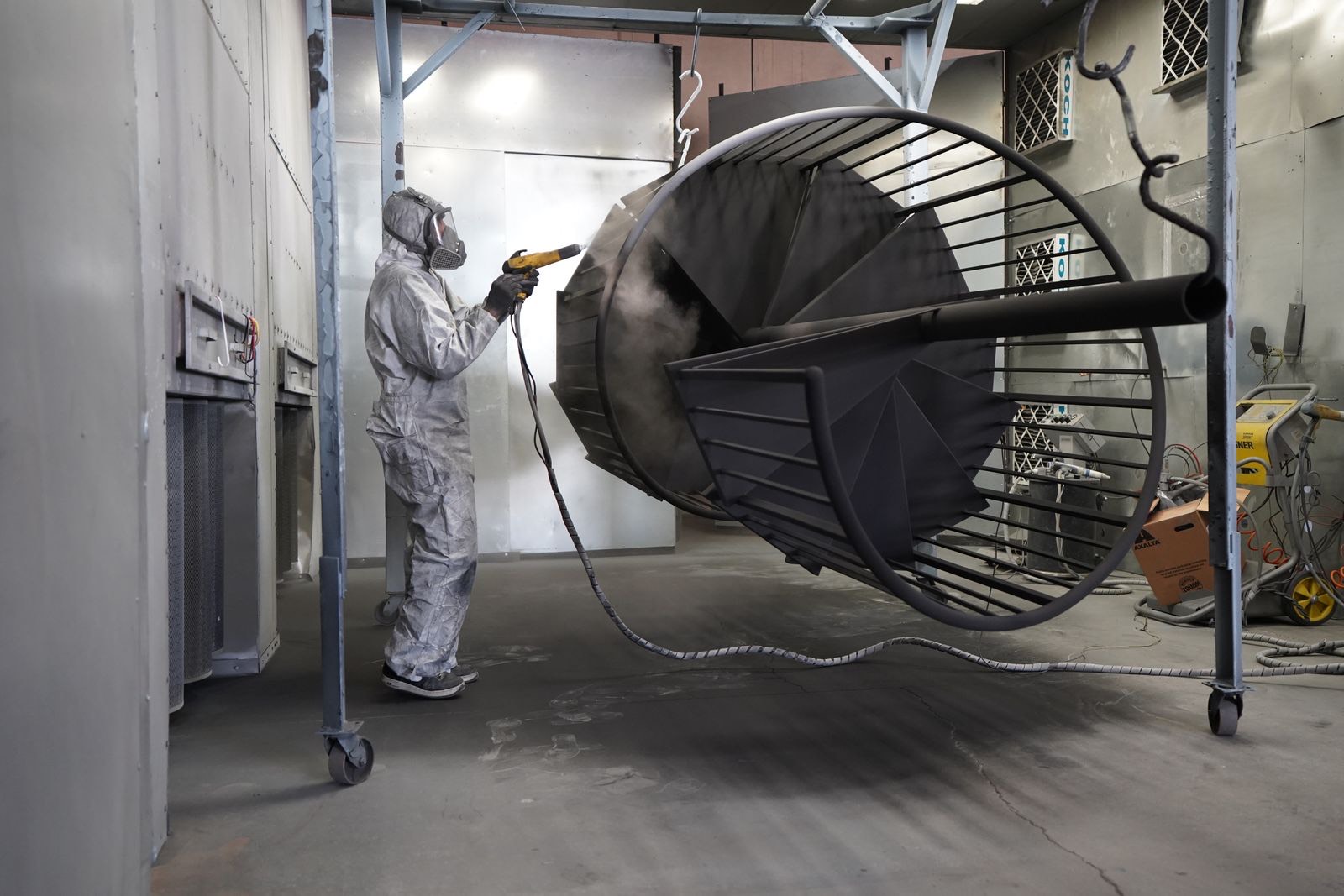
A focused additives line for coatings and ink formulators
P.A.T. Products distributes three specialist additive lines for the paint, ink, and coated-substrate industries: Deuteron surface additives and matting agents, Tramaco Trapylen adhesion promoters, and ROWA Lack lacquer resin systems. All three are made in Germany, and we carry them for formulators and converters across North America.
Each line solves a specific formulation problem: how to take gloss down and add slip without fluorochemistry, how to make a coating or ink stick to a plastic that resists bonding, and how to put a durable finished topcoat on a coated technical textile.
Tell us the system you are formulating and the substrate it has to perform on, and our technical team will narrow it to a grade and send a sample.
PFAS-free slip and matting additives (PTFE replacement)
Regulators in the United States and Europe are tightening rules on PFAS, and PTFE micronized waxes sit inside that scope.
Deuteron makes the replacement from organic polymethylurea (PMU) chemistry. PMU surface additives deliver low coefficient of friction, mar and scratch resistance, and a soft, matte tactile feel, the same properties a coating gets from a PTFE wax, with no fluorine in the additive. Cross-references against common PTFE micronized-wax additives are available on request.
Read more in PFAS-free PTFE-replacement slip additives for coatings and inks, or on the dedicated PFAS-free slip and matting additives page.
Matting agents and micronized waxes
Deuteron's core franchise is organic matting agents built on micronized polymethylurea. PMU matting agents take gloss down through particle structure rather than through silica. They give low gloss together with good transparency, abrasion resistance, and a soft surface feel, and they work in waterborne, solventborne, and solvent-free systems, air-drying or stoving. Common homes are wood and furniture coatings, coil and can coatings, printing inks, overprint varnishes, and UV-curable systems. The grade ladder, the silica comparison and the qualification method are on the matting agents page; the cost-per-gloss-unit argument is in PMU vs silica matting agents.
The line also includes micronized wax powders and water-based wax dispersions in polyethylene, polypropylene, polyamide, and oxidized-polyethylene chemistries. Waxes add surface slip, rub and abrasion resistance, and mar protection to coatings and inks. In printing inks they are a standard tool for rub resistance on the finished print. For stearate flatting and anti-settling, we also stock low-ash calcium stearate and other metal stearates.
Two more functional families round out the range: anti-static and conductivity additives for coatings, polyurethane and PVC that need to dissipate charge, and biopolymer rheology modifiers for sag control in waterborne systems.
Chlorinated polyolefin (CPO) adhesion promoters
Polyolefins such as polypropylene, polyethylene, and TPO have low surface energy. Paints, inks, and adhesives do not bond to them without help, which is why these substrates usually need flame or corona pre-treatment before they can be coated or printed.
Tramaco Trapylen adhesion promoters solve that chemically. The workhorse grades are maleic-anhydride-grafted chlorinated polypropylene. The polyolefin backbone anchors into the untreated plastic surface, and the polar grafted groups give the topcoat, ink, or adhesive something to bond to. The result is a chemical tie-coat between a hard-to-bond plastic and whatever goes on top of it.
Trapylen is available in solid resin, solvent-borne solution, waterborne dispersion, and UV-curable forms, so the carrier can match the coating or ink system it goes into. See the chlorinated polyolefin (CPO) adhesion promoters page for forms and applications, or chlorine free adhesion promoters if the specification excludes chlorine.
For substrates outside the polyolefin lane, Tramaco's TRAPUR polyurethane primers cover PVC, PES, PS, ABS, rubber and TPO film, and TRAZIDIN VN is the polyfunctional aziridine crosslinker for carboxyl-bearing acrylic emulsions and polyurethane dispersions.
Coated-textile lacquer resin systems
ROWA Lack makes finished topcoat lacquer systems for coated technical textiles and plastic films. These are formulated, substrate-validated lacquer systems supplied in working lot sizes to coaters and converters.
The line covers three topcoat chemistries. Acrylic lacquers (ROWAKRYL) are the volume topcoat for truck tarpaulins, awnings, boat covers, banners, and flexible advertising media, and they form the base of two-component anti-graffiti and easy-clean topcoats. Polyurethane lacquers (ROWATHAL) finish PVC and PU synthetic leather for automotive interiors, furniture, footwear, and apparel, with matte, soft-touch, and mar-resistant finishes in waterborne and solvent forms. PVDF fluoropolymer lacquers (ROWAFLON) put a weatherable, anti-soiling topcoat on PVC architectural membranes used in tents, halls, and tensile structures.
These are made-to-order systems, not shelf stock. Tell us the substrate, the finish you need, and the performance target, and we will work the right system with ROWA Lack's technical team. We can also coat a piece of your own fabric or film with the candidate grade and send it back, so the finish is judged on your material.
Each family has its own page carrying the grades ROWA publishes and the processing window from ROWA's own data sheets: ROWAKRYL acrylic, ROWATHAL polyurethane, ROWAFLON PVDF, ROWANYL transfer coating and ROWASET crosslinkers. The selection view across all five, including the waterborne grades, the UV protection primers for architectural membrane, and the weldability and plasticizer-barrier requirements, is on the coated textile lacquers page. For the selection logic, choosing a topcoat lacquer for PVC-coated fabric compares the three chemistries by end use and covers solids, 1K versus 2K, and waterborne conversion.
Products in this line
Every Deuteron grade PAT supplies, grouped by what it does in a film. Each one has its own page carrying the typical properties from Deuteron's own technical data sheet, the dosage range, and the handling notes.
Matting agents
| Grade | Chemistry | Particle size | Where it fits |
|---|
| Deuteron MK-F6 | Micronized PMU | 3.5 micron dv50 | The finest of the three MK grades, for thin films |
| Deuteron MK-F | Micronized PMU | 4.6 micron dv50 | The middle MK grade |
| Deuteron MK | Micronized PMU | 6.3 micron dv50 | The coarsest MK grade, the general purpose matting powder |
| Deuteron PMH C | Micronized PMU | Powder | Built for low viscosity impact, less matting efficiency than the MK family |
| Deuteron MM 100 | PMU dispersion in DPGDA | 0.6 micron dv50 | Thin layer UV curable coatings and inks, 17 percent active, no wetting agent |
| Deuteron MM 110 | PMU dispersion in DPGDA | 0.6 micron dv50 | The 25 percent active version with a wetting agent included |
| Deuteron MM 823 | PMU compounded with PTFE | Powder | Matting that also carries slip, for abrasion resistant low gloss |
Micronized waxes
| Grade | Chemistry | Form | Where it fits |
|---|
| Deuteron Wax A | Micronized amide wax | Powder | Velvet surface feel, sanding properties, wood grain enhancement |
| Deuteron Wax PE | Micronized polyethylene wax | Powder | Abrasion and scratch resistance, rub resistance in inks |
| Deuteron Wax PP/2 | Micronized polypropylene wax | Powder | Matting with a smooth feel and polishing resistance, 138 degrees C melting point |
| Deuteron Wax TF | PTFE-modified polyethylene wax | Powder | Surface protection and friction reduction where a fluoropolymer is acceptable |
| Deuteron WD PE | Polyethylene wax in water | Dispersion, 50 percent | Pre-dispersed, made without dispersing additives or emulsifiers |
| Deuteron WD OPE | Oxidized polyethylene wax in water | Dispersion, 46 percent | High hardness, 128 degrees C melting point, made without additives |
PFAS-free slip and surface additives
| Grade | Chemistry | Particle size | Where it fits |
|---|
| Deuteron SF 707 | Micronized PMU, halogen free | 4.0 micron dv50 | The finer of the two, for thinner films |
| Deuteron SF 505 | Micronized PMU, halogen free | 7.0 micron dv50 | PTFE-like surface properties without a fluoropolymer |
Thickeners and rheology
| Grade | Chemistry | Form | Where it fits |
|---|
| Deuteron XG | Xanthan gum | Powder | The straightforward thickener for waterborne coatings, inks and pigment concentrates |
| Deuteron VT 920 | Xanthan gum, granulated | Granulate | Dust free, for the same systems as XG |
| Deuteron VT 930 | Xanthan gum, granulated | Granulate | Dust free and transparent, dissolves without lumps |
| Deuteron VT 819 | Xanthan gum, glyoxal modified | Powder | Delayed hydration, added under gentle stirring at pH 5 to 7 |
Antistatic and UV
| Grade | Chemistry | Form | Where it fits |
|---|
| Deuteron LE 100 LV | Quaternary ammonium antistatic | Liquid, carrier free | Coatings, PU and PVC, 100 percent active |
| Deuteron LE 50 | Quaternary ammonium antistatic | Liquid, 50 percent in butanol | Electrostatic spray paints, primers and top coats |
| Deuteron LE 15P | Quaternary ammonium on silica | Powder | Powder coatings, plastics and extrusion |
| Deuteron UV 1240 | Iodonium salt photoinitiator | Liquid, 50 percent | Cationic UV cure of epoxy and vinyl ether resins |
Tramaco primers and crosslinker
| Line | Chemistry | Form | Where it fits |
|---|
| TRAPUR primers | Polyurethane, chlorine free | Solvent solutions and a waterborne dispersion | Primers for PVC, PES, PS, ABS, rubber and TPO film, one or two component |
| TRAZIDIN VN | Polyfunctional aziridine | Liquid, 97 percent solids | Crosslinks carboxyl-bearing acrylic emulsions and PUDs in adhesives, coatings and inks |
Browse the full Deuteron catalog, or tell us the binder system and the property you are targeting and we will confirm the grade.
Narrowing down a grade?
Tell us the binder system, the film thickness and the property you need to hit. We will name the grade, send the data sheet, and ship a sample from North American stock.
Request a Sample
Applications
PFAS-free PTFE-replacement slip
Organic PMU surface additives that give low friction, scratch resistance, and soft-touch feel as a fluorine-free replacement for PTFE micronized waxes.
PFAS-free slip additives →
CPO adhesion promoters for polyolefins
Chlorinated-polyolefin tie-coats that bond paints, inks, and adhesives to polypropylene, polyethylene, and TPO without flame or corona pre-treatment.
CPO adhesion promoters →
Chlorine free grades →
Matting agents for coatings and inks
Organic polymethylurea matting agents that reduce gloss through particle structure, with abrasion resistance and soft feel, in waterborne, solventborne, and UV systems.
Micronized waxes for slip and rub resistance
PE, PP, polyamide, and oxidized-PE wax powders and dispersions for surface slip, mar protection, and rub resistance in coatings and printing inks.
Anti-static and conductivity additives
Additives that let coatings dissipate static charge, for electrostatic-sensitive and ESD coating applications.
Coated-textile topcoat lacquers
Acrylic, polyurethane, and PVDF lacquer systems for tarpaulins, synthetic leather, automotive interior foils, and architectural membranes.
PVDF anti-soiling membrane topcoats
Weatherable fluoropolymer lacquers that resist soiling and UV on PVC architectural membranes for tents, halls, and tensile structures.
Rheology modifiers for waterborne systems
Biopolymer thickeners for sag control and anti-settling in waterborne coatings.
Documentation
Technical Data Sheets and Safety Data Sheets are available for the grades in all three lines. For the PFAS-free Deuteron additives, we can provide the documentation a PFAS-conscious formulation needs, and SVHC and REACH statements are available on request. Tell us what your qualification process requires and we will pull the documents.
North American supply
P.A.T. Products supplies all three lines across the United States, Canada, and Mexico, with technical support and direct access to each manufacturer's application engineers when a project calls for it. We hold inventory for domestic delivery and quote lead time and minimum quantity on the specialty and tailored systems. Cross-references to commonly specified additives are available on request.
PFAS-free slip
Matting agents
Micronized waxes
CPO adhesion promoters
Lacquer systems
Frequently asked questions
What additive lines does P.A.T. Products carry for coatings and inks?
Three German specialty lines: Deuteron surface additives, matting agents, and micronized waxes; Tramaco Trapylen chlorinated-polyolefin adhesion promoters; and ROWA Lack topcoat lacquer systems for coated technical textiles. We supply all three across the United States, Canada, and Mexico.
Do you have a PFAS-free replacement for PTFE additives?
Yes. Deuteron's organic polymethylurea surface additives give coatings and inks the low friction, scratch resistance, and soft-touch feel that formulators use PTFE micronized waxes for, with no fluorine in the additive. Cross-references against common PTFE additives are available on request.
How do chlorinated polyolefin adhesion promoters work?
They bond paints, inks, and adhesives to low-surface-energy plastics like polypropylene, polyethylene, and TPO. The chlorinated-polyolefin backbone anchors into the untreated plastic and the polar grafted groups give the topcoat or ink something to bond to, which often reduces or removes the need for flame or corona pre-treatment.
What are the ROWA Lack lacquers used for?
They are finished topcoat systems for coated technical textiles and films: acrylic lacquers for tarpaulins, awnings, and banners; polyurethane lacquers for PVC and PU synthetic leather; and PVDF fluoropolymer lacquers for weatherable, anti-soiling finishes on architectural membranes. We stock the grades our customers run, and we coat trial panels on customer substrate.
Are the matting agents in this line silica-based?
No. The Deuteron matting agents are organic polymethylurea. They reduce gloss through particle structure and add abrasion resistance and a soft feel, and they work in waterborne, solventborne, and UV systems. Grade selection by film thickness is on the matting agents page.
Can I get samples and documentation?
Yes. Technical Data Sheets and Safety Data Sheets are available across the three lines, with PFAS documentation on the Deuteron surface additives and SVHC and REACH statements on request. Tell us your application and what your qualification process needs, and we will send a sample and pull the documents.