
Italy · Thermoplastic Copolyester Elastomer (TPC-ET)
Sipol S.p.A.
We handle Sipol's Sipolprene line, a family of thermoplastic copolyester elastomers (TPC-ET) spanning Shore D 28 to 72 and service temperatures from −60°C to +185°C.
Italy · Thermoplastic Copolyester Elastomer (TPC-ET)
We handle Sipol's Sipolprene line, a family of thermoplastic copolyester elastomers (TPC-ET) spanning Shore D 28 to 72 and service temperatures from −60°C to +185°C.
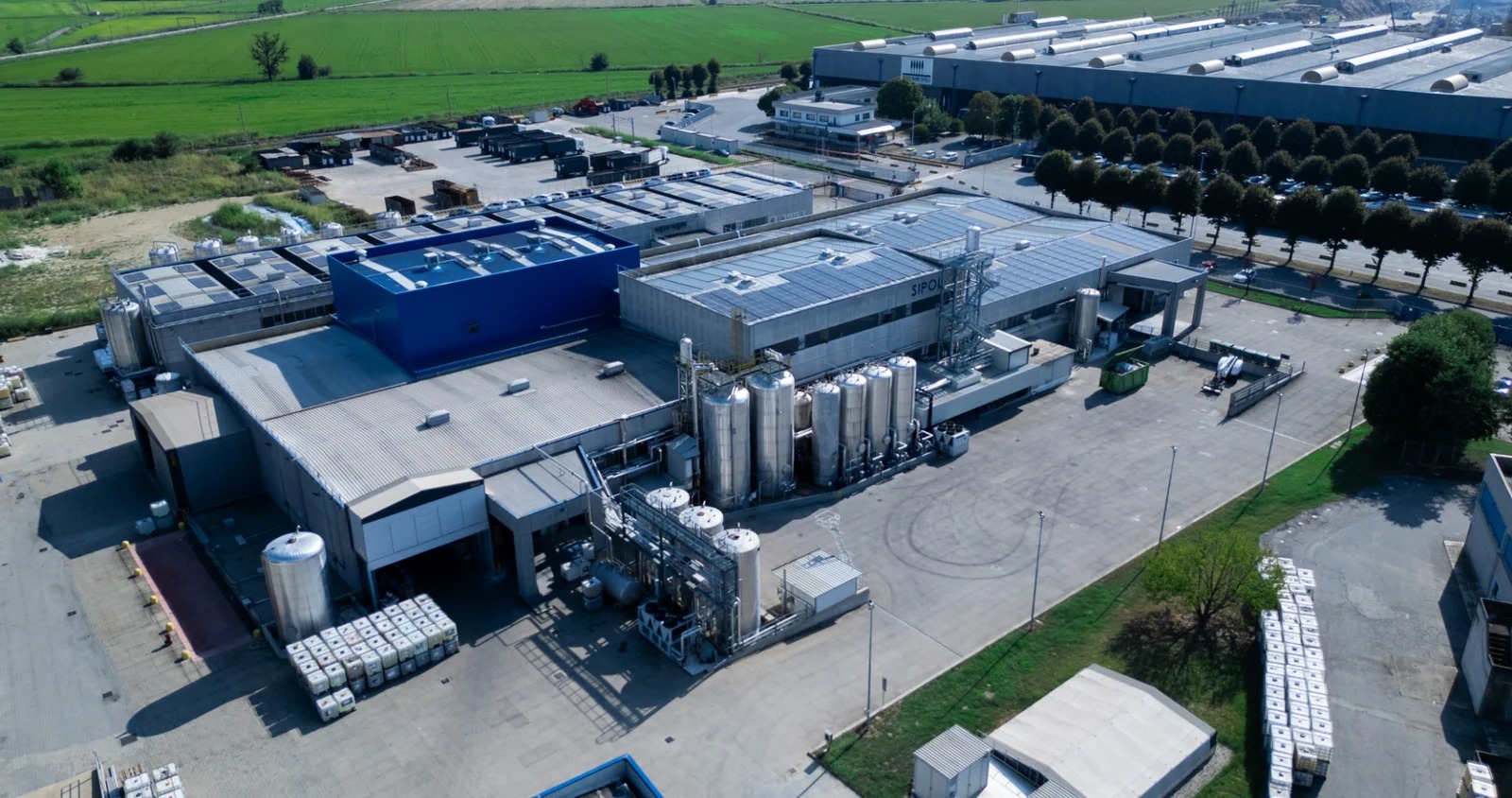
Sipol S.p.A. is an Italian polymer manufacturer based in Mortara, Italy, about 40 kilometers west of Milan. Founded in the 1970s and part of the Tecnogi Group, Sipol operates four polymerization lines with a combined copolyester capacity of 10,000 metric tons per year and a portfolio of more than 150 products.
Sipolprene is a block copolymer built on hard crystalline polyester segments and soft polyether segments. The hard segments provide strength, dimensional stability, and high-temperature performance. The soft segments deliver flexibility, elastic recovery, and toughness at low temperatures. Sixteen standard grades span Shore D 28 to 72, covering the full range from soft rubber-like elastomers to stiff engineering-grade materials.
Cross-references to Hytrel and Arnitel are available for most standard grades. Sipol also produces specialty grades unique to their portfolio, including a PVC modifier grade engineered with a controlled melting point for use in PVC compound applications.
Sipol is ISO 9001, 14001, and 45001 certified, FDA approved, and EcoVadis rated since 2016. Sipolprene grades are RoHS and REACH compliant, with selected grades cleared for food contact and drinking water applications.
PAT has been working with thermoplastic elastomers for decades, and our customers in wire and cable, industrial seals, and hose and tubing are the markets Sipolprene serves.
When a customer is evaluating a material for a jacketing compound, a static seal, or a flexible overmold, we can work through grade selection with them, pull cross-reference data, and get samples moving. We can also provide TDS, SDS, and application guidance to support qualification at your facility.
Sipolprene covers a continuous hardness range from Shore D 28 to 72, divided into two performance categories. Elastomeric grades (Shore D 28–45) behave like soft rubber: high flexibility, excellent fatigue resistance, and strong performance at sub-zero temperatures. Plastomeric grades (Shore D 46–72) behave more like engineering plastics: higher stiffness, better chemical resistance, and greater dimensional stability under sustained load.
Standard HP (High Performance) grades are available across the full hardness range. SP (Specialty) grades include fast-cycle injection molding grades for high-volume production and the unique 35150 PVC modifier grade. Secondary codes allow further tuning: HV for high-viscosity extrusion grades (achieved in the reactor, no solid-state polymerization required), W for UV stabilization, K for enhanced heat stability, L for reduced surface friction, and B for black masterbatch coloring.
Cross-references to Hytrel and Arnitel are available. Contact us for the full cross-reference chart and technical data sheets. How a cross-reference gets validated, spec value by spec value, is covered in matching a TPC-ET spec; the decision between TPC-ET and TPU is covered in what TPC-ET is, and how a copolyester elastomer differs from TPU.
Shore D 28–45. Rubber-like flexibility, excellent fatigue resistance, and low-temperature performance to −60°C. Primary grades: 25170, 25185, 35180, 35195.
Shore D 46–72. Engineering-plastic stiffness with retained elastomeric properties. Better chemical resistance and dimensional stability. Primary grades: 55200, 58210, 63210, 72220.
Modified crystallization rate for shorter injection molding cycle times. Available across mid and plastomeric hardness ranges. Grades: 40171, 45211, 55211.
Engineered with a melting point of 150°C to stay below PVC's thermal degradation threshold. Used in PVC compounding to improve elongation, oil resistance, cold flex, and abrasion resistance. We are not aware of a direct equivalent from another manufacturer.
Soft elastomeric grades for flexible wire and cable jacketing. Good electrical insulation properties, flexibility at −40°C, and UV stability with the W modifier. Cross-references available for common jacketing specifications.
HV-suffix grades developed specifically for hose, belt, and film extrusion. High viscosity achieved in the reactor, with no solid-state polymerization required. Resistant to hydraulic fluid, coolants, oils, and high-temperature air.
TPC-ET holds compression set better than TPU and SEBS under sustained compression, which is why it is specified for static seals, face seals, gaskets, and backup rings. Chemical resistance to oils, greases, fuels, and coolants.
Standard and fast-cycle grades for automotive and industrial injection molding. Excellent adhesion to polar substrates including ABS, PBT, POM, and PVC in 2K overmolding. Useful for handles, grips, flexible connectors, boots, and housings.
Sipolprene 35150 is blended with PVC to improve performance without changing hardness significantly. At 70% blend level: elongation increases from 329% to 765%, oil resistance improves substantially, and cold flex at −40°C improves.
TPC-ET's polar ester chemistry provides strong natural adhesion to ABS, PC, SAN, PBT, and POM in 2K applications. Used to improve adhesion performance in SEBS-based overmolding compounds, which have a known weakness on polar substrates.
Sipolprene is the newer of Sipol's two families. The company's original core business is copolyester and copolyamide hot-melt adhesives, and its filter line serves automotive filter manufacturing worldwide: pleat stabilization and edge sealing in engine air filters, metal-free end caps in eco oil filter elements, and wound-media bonding in diesel fuel filters. Copolyamide grades reach bio-based content up to 80%, and the line carries the automotive declarations (IMDS, GADSL, REACH, RoHS).
PAT supplies the Technipol filter range to North American filter manufacturers. See the filter adhesives page and our selection guide for filter hot melts.