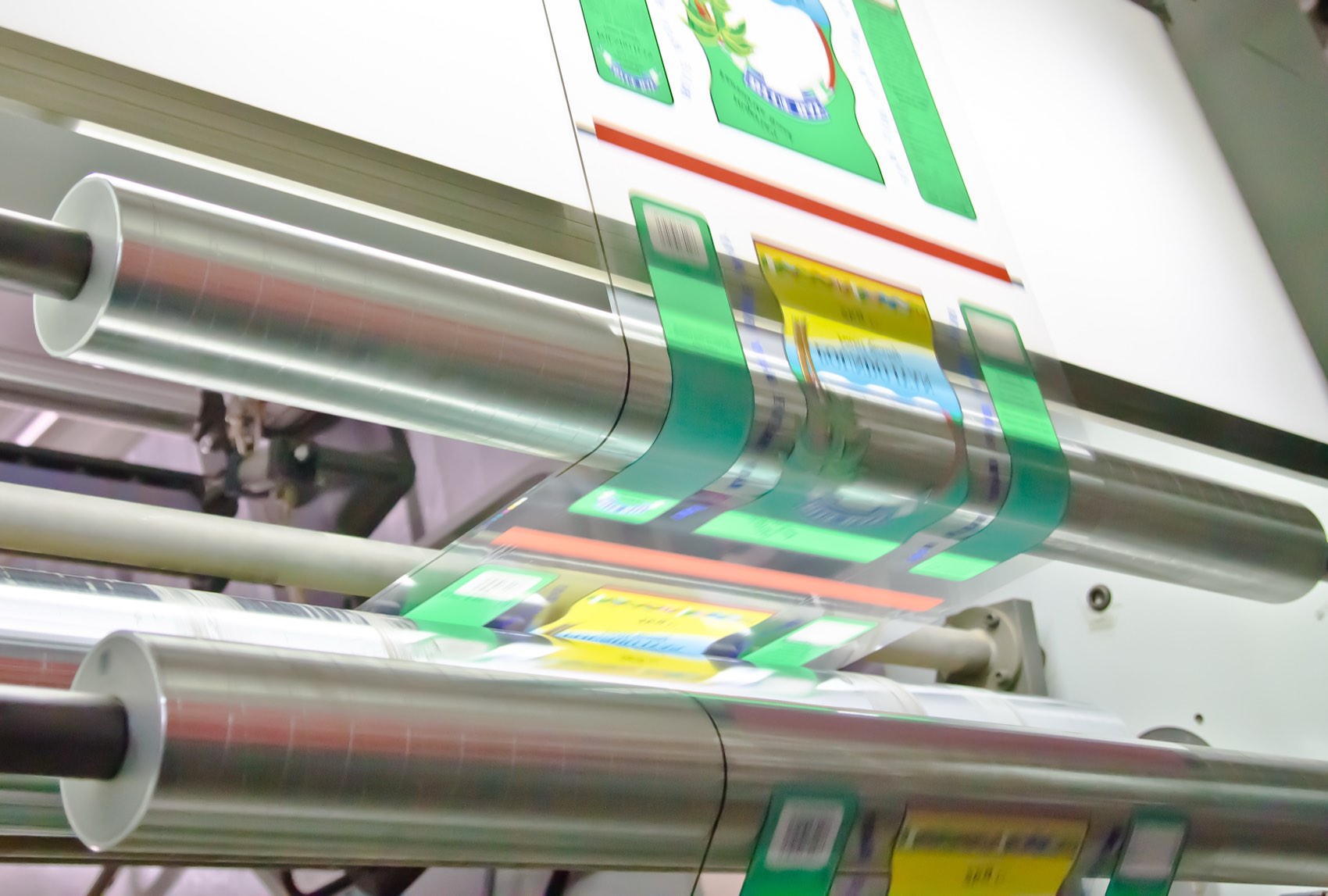
Polypropylene, polyethylene, and TPO are cheap, tough, light, and chemically resistant, which is why they show up in automotive trim and bumpers, packaging film, appliance housings, and countless molded components. They share one inconvenient property: paints, inks, and adhesives do not want to stick to them.
A chlorinated polyolefin adhesion promoter fixes it chemically, often without the surface pre-treatment step the problem usually demands.
Why coatings will not bond to polyolefins
The issue is surface energy. Polypropylene and polyethylene are non-polar, semi-crystalline plastics with low surface energy. A liquid coating or adhesive needs to wet out and form bonds with the surface it sits on, and a low-surface-energy substrate gives it very little to work with. The coating beads up rather than wetting, and even where it does spread, there are no chemical anchor points for it to grab. The film may look fine when it dries and then peel, flake, or fail a tape or crosshatch test in service.
The standard industrial answer is to change the surface physically. Flame treatment and corona treatment both oxidize the top layer of the plastic, raising its surface energy and adding polar groups that a coating can bond to. These methods work and are widely used. They also add equipment, a process step, and a time window, because a treated surface relaxes over time and loses some of the effect if it sits too long before coating.
What a chlorinated polyolefin promoter does
A chlorinated polyolefin adhesion promoter solves the same problem with chemistry instead of energy. The workhorse versions are maleic-anhydride-grafted chlorinated polypropylene, CAS 68609-36-9, and they are designed to be compatible with both sides of the bond. Straight chlorinated polyolefin, CAS 68442-33-1, covers the grades without the maleic graft. Chlorine content across a full range runs from about 2.5 percent to 43 percent, and the number is a recipe property rather than a quality ranking: higher chlorine buys compatibility with other resins, pigment wetting and gloss, and gives up some resistance to fats and greases.
The chlorinated polyolefin backbone is similar enough to the untreated polyolefin surface that it anchors into it and stays put. Grafted onto that backbone are polar groups from the maleic anhydride, and those groups face outward to give the next layer something to bond to. In effect the promoter becomes a tie-coat: one side keyed into the plastic, the other side presenting a polar surface that a paint, ink, or adhesive can grip.
The practical result is the same across the line. Bond strength comes up, tape-test and peel failures come down, and in many applications the flame or corona step can be reduced or removed.
Primer or in the coating
A promoter goes into a process one of two ways. The first is as a thin primer or tie-coat, sprayed or coated onto the polyolefin part before the topcoat or ink. This is the typical route for painting automotive PP and TPO parts. The second is to blend the promoter directly into the coating or ink, so the adhesion chemistry travels with the film and keys into the substrate as the film forms. This is common in flexible-packaging inks printed on polypropylene and polyethylene film.
Where the category is going
Two shifts are changing which grade a new project starts on, and both run the same direction: away from volatile solvent and away from chlorine.
The first is form. The category began solvent-borne and the solvent grades still carry most of the installed base, but the growth is in waterborne dispersions and in UV-curable grades that dissolve the polymer in a reactive acrylate monomer instead of a solvent. VOC regulation drives it, and the waterborne grades now reach 30 percent solids with APEO-free surfactant systems.
The second is chlorine itself. Chlorine free modified polyolefins, written APO, reach adhesion through the same polyolefin compatibility without chlorine on the backbone, and they now cover molded parts and film primers in solvent, water and solid resin form. The constraint that sends a formulator there usually arrives as a customer specification or a corporate materials policy rather than as a single rule banning the chemistry. Chlorine free adhesion promoters for polyolefins sets out the grades and what changes on the line.
Nothing has displaced polyolefin compatibility as the way to get a coating to hold on untreated polypropylene, so the selection question stays the same one: match the carrier to the system, then match the grade to the substrate.
Matching the carrier to the system
A promoter only helps if it is compatible with the system it goes into, which is why these products come in several forms:
- Solid resin that the formulator dissolves into a carrier of their choice
- Solvent-borne solutions ready to use in solvent coatings, inks, and primers
- Waterborne dispersions for waterborne and low-VOC systems
- UV-curable grades carried in a reactive monomer for energy-cure inks and coatings, with no solvent
The form is the first decision, set by your coating or ink chemistry. After that the grade is narrowed to the substrate and the bond you need.
A quick diagnostic
If a part is made of polypropylene, polyethylene, or TPO, and you are seeing paint, ink, or adhesive peel, tape-test or crosshatch failures, or you have been told the part needs flame or corona treatment, that is a chlorinated polyolefin adhesion-promoter application. Where a line is moving to waterborne or to UV cure, the promoter form follows the same move.
Request a SampleFrequently asked
Why won't paint stick to polypropylene?
Polypropylene has low surface energy and a non-polar surface, so coatings cannot wet out or form chemical bonds with it. The result is poor adhesion that often shows up as peeling or tape-test failure. A chlorinated polyolefin adhesion promoter gives the coating a surface it can bond to.
Does a CPO adhesion promoter remove the need for flame or corona treatment?
In many applications it reduces or removes the physical pre-treatment step, because the promoter provides the polar bonding surface chemically. Whether it fully replaces treatment depends on the substrate and the coating, so trial it on the real part.
What forms do chlorinated polyolefin adhesion promoters come in?
Solid resin, solvent-borne solution, waterborne dispersion, and UV-curable. The form is chosen to match the coating or ink system, then the grade is narrowed to the substrate.
Does a CPO adhesion promoter work on polycarbonate or ABS?
No. The mechanism is compatibility with a polyolefin backbone, so a CPO promoter keys into polypropylene, polyethylene and TPO and has nothing to key into on polycarbonate, ABS or a PC/ABS blend. Those substrates are not low surface energy in the same way and take a different route, usually a solvent-based or urethane primer chosen for that resin. Tell us the substrate before the grade is picked and we will say plainly when this chemistry is the wrong answer.
Where to start
P.A.T. Products is the exclusive North American distributor of Tramaco Trapylen adhesion promoters, in solid, solvent-borne, waterborne, and UV-curable forms, chlorinated and chlorine free. The range is organized by application case in our Tramaco catalog, and each page carries the current grades with chemistry, chlorine content, form and solids.
Where a specification excludes chlorine outright, the chlorine free modified polyolefin (APO) grades cover the molded parts and film primer cases in solvent, in water and as solid resin. Chlorine free adhesion promoters for polyolefins lists all thirteen, and sets out the two things that change on the line when you convert.
| Application case | What it covers | Grades |
|---|---|---|
| Printing ink additives | Adhesion additives for solvent-based and UV-curable inks on PP, PE and BOPP film | 186 EAC, 187 EAC, 196 X, 5650 UV, 5800 UV, and the solid 118 S to 196 S range |
| Primers for molded plastics | Painting and coating molded polyolefin parts, in solvent, waterborne and solid form | 130 X, 777, 6600 W to 6800 W, the solid 112 S to 146 S range, and the chlorine free 900-series |
| Primers for films, foils and sheets | Ready-to-use primers for coating TPO and FPO film, foils and sheets | T 4121, 8000, X 8280, X 9100 M, 9352 W, 9703 W |
Tell us the substrate, the coating or ink it has to hold, and the carrier you want, and we will recommend a grade and send a sample so you can run it on the actual part.
See CPO adhesion promoters