Calcium stearate
Low-ash calcium stearate for North American industry. An acid scavenger, lubricant, release agent, and water repellent for PVC, polyolefins, construction, paper, coatings, and greases. US stock, shipping next business day.
Low-ash calcium stearate for North American industry. An acid scavenger, lubricant, release agent, and water repellent for PVC, polyolefins, construction, paper, coatings, and greases. US stock, shipping next business day.
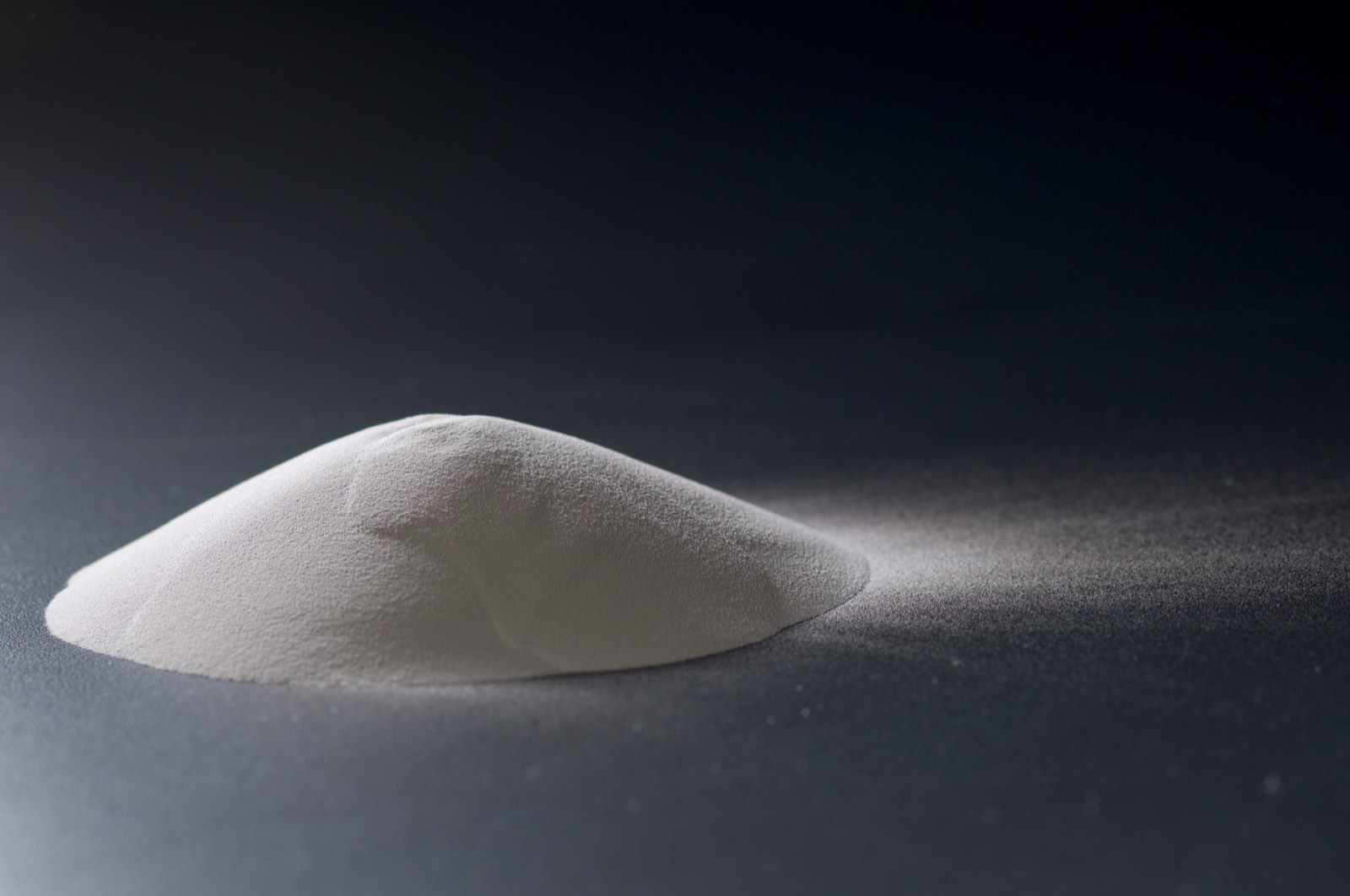
Calcium stearate is the calcium salt of stearic acid, a metal soap, CAS 1592-23-0, EC 216-472-8, food-additive code E470a, formula C36H70CaO4. It is a white to off-white powder, essentially insoluble in water, that melts near 150 to 155 C. Commercial product is a calcium salt of mixed stearic and palmitic acids, made by reacting the fatty acid with calcium oxide or hydroxide, or by precipitation for a finer particle size and lower free fatty acid.
One material does several jobs: acid scavenger and hydrogen-chloride neutralizer, internal and external lubricant, mold-release agent, water repellent, anti-caking and flow aid, and gloss or matting modifier. P.A.T. Products supplies and stocks low-ash calcium stearate for North American industry, with zinc, magnesium, aluminum, and sodium stearates available alongside it.
Low-ash calcium stearate is the grade specified where residual ash and metal content have to stay low. In clear and high-clarity polyolefin film, in biaxially oriented polypropylene, and in capacitor-grade polypropylene, every part per million of ash drives haze and degrades dielectric performance. It is also the workhorse acid scavenger for polyolefins generally, neutralizing acidic catalyst residue that would otherwise cause color shift and equipment corrosion, at dose rates that often run from about 150 to 1,000 parts per million.
The low-ash grade is what we stock and lead with. If your application is clear film, capacitor film, or high-clarity polyolefin, this is the calcium stearate to specify. Tell us your ash and free-fatty-acid targets and we will confirm the grade against them.
All three are stearic-acid metal soaps, and the metal sets the behavior.
Calcium stearate gives the highest thermal stability of the three and is the standard acid scavenger and co-stabilizer, melting near 150 to 155 C. It is the default for PVC stabilization, polyolefin acid scavenging, and construction water repellency.
Zinc stearate gives stronger lubricity and release and is the preferred flatting and anti-settling agent in coatings, melting lower, near 120 to 130 C. In PVC, calcium and zinc are paired in Ca/Zn systems that have replaced lead and tin.
Magnesium stearate is best known as a pharmaceutical tablet lubricant and glidant. Calcium stearate serves the same lubricant and release role in many industrial and food contexts. We can supply all three, plus aluminum and sodium stearates, so you can match the metal to the job.
Acid scavenger and co-stabilizer that neutralizes hydrogen chloride from degradation, plus internal and external lubricant and fusion-rate promoter. The core of Ca/Zn stabilizer systems in pipe, profile, siding, sheet, and cable. Dosing logic and co-stabilizer patterns: calcium stearate in rigid PVC.
Acid scavenger and catalyst-residue neutralizer for polypropylene and polyethylene, protecting color and preventing corrosion, with low-ash grade specified for clear film and capacitor-grade polypropylene.
Integral water repellent and hydrophobing admixture for concrete, masonry, and paving blocks. Reduces permeability and efflorescence and improves workability and durability.
Water-resistance additive and release aid that keeps slurry off conveyor belts and cuts capillary absorption in wallboard, cement board, and dry-mix mortar.
Surface and coating lubricant and slip aid. Gives gloss, prevents dusting and fold-cracking, and is metered as an aqueous dispersion into coating color.
Matting and flatting agent, anti-settling and anti-sag aid, and a flow and degassing aid in powder coatings.
Coatings additives →Release agent, anti-tack and dusting agent on uncured stock, and processing aid.
Tablet and capsule lubricant, glidant, and anti-tack agent in pharma, and an anti-caking and surface-conditioning flow agent in food, with USP-NF and FCC grades for these uses.
Soap thickener in water-resistant calcium greases, and a dry-film lubricant in wire-drawing soaps and metal-forming compounds.
Die-wall and admixed lubricant for pressing and ejecting green compacts.
Lubricant and processing and release aid in pencils, crayons, candles, and wax products.
Calcium stearate is supplied in several forms to suit how you add it. Standard and fine or micronized low-dust powders go into dry compounding, PVC, construction, and powder metallurgy. A 40 to 50 percent aqueous dispersion goes into paper coating and water-based systems with no dissolving step. Granules and pastilles handle and meter cleanly where dust is a concern.
Grades run from low-ash technical, the polymer-additive workhorse, to food and USP-NF-FCC for pharmaceutical and food use, in vegetable or animal origin. Tell us the form and grade your process needs, including any origin, kosher, or halal requirement, and we will match it.
We can supply zinc stearate for lubricity, release, and coatings flatting; magnesium stearate for pharmaceutical lubrication; and aluminum and sodium stearates for thickening, gelling, and specialty uses. If you are weighing one metal against another, tell us the function you need and we will point you to the stearate that fits and send samples to compare.
P.A.T. Products holds healthy stock of low-ash calcium stearate in our US warehouse and ships across the United States, Canada, and Mexico. Stock orders typically ship the next business day, samples typically go out the same business day, and dispersion and the other metal stearates are available alongside the powder. We arrange direct shipments for commercial volumes.
Technical Data Sheets and Safety Data Sheets are available, and a Certificate of Analysis ships with each lot, covering assay (CaO percent), free fatty acid, ash, moisture, and particle size. We can provide origin, non-GMO, kosher, halal, and REACH documentation on request. If you are qualifying a second source, tell us the grade, form, and spec you run now and we will match it.
Both are metal soaps of stearic acid, and they are often used together. Calcium stearate gives higher thermal stability and is the standard acid scavenger and co-stabilizer; it melts near 150 to 155 C. Zinc stearate gives stronger lubricity and release and is the preferred flatting and anti-settling agent in coatings; it melts lower, near 120 to 130 C. In PVC, calcium and zinc stearates are combined in Ca/Zn stabilizer systems that have replaced lead and tin.
Low-ash technical grade is optimized for residual ash, metal content, and free fatty acid, so it will not cloud clear film or hurt electrical properties. It is the grade for polyolefins, clear film, and capacitor-grade polypropylene. Food and USP-NF-FCC grade carries pharmacopeial assay, around 9 to 10.5 percent CaO, edible-source documentation, and good-manufacturing-practice paperwork, for pharmaceutical and food use. Use technical for polymers and construction, USP or FCC for pharma and food.
Both. In PVC it works as an acid scavenger and co-stabilizer, neutralizing the hydrogen chloride released as the polymer degrades, and at the same time as an internal and external lubricant and a fusion-rate promoter. In polyolefins it neutralizes acidic catalyst residue and lubricates. Which role dominates depends on the dose and the other additives in the formulation.
Calcium stearate is CAS 1592-23-0, EC number 216-472-8, and food-additive code E470a. The formula is C36H70CaO4, a molecular weight of about 607, the calcium salt of stearic acid. Commercial product is a calcium salt of mixed stearic and palmitic acids, a white to off-white powder that melts near 150 to 155 C and is essentially insoluble in water.
Calcium stearate is generally recognized as safe for food use in the United States and is generally non-hazardous. It can be made from vegetable or animal fat, and vegetable-origin, kosher, and halal grades exist, so confirm the origin on the specification for your application. As a combustible organic powder it calls for standard dust-handling precautions.
Yes. We stock calcium stearate as powder and can supply low-dust and aqueous-dispersion forms, with samples typically out the same business day. Technical Data Sheets and Safety Data Sheets are available, a Certificate of Analysis ships with each lot covering assay, free fatty acid, ash, moisture, and fineness, and we can provide origin, kosher, halal, and REACH documentation on request. We also supply zinc, magnesium, aluminum, and sodium stearates.
Yes. Calcium soaps are the thickener in calcium greases, the original water-resistant greases, and calcium stearate also works alone as a dry lubricant, the solid film in wire-drawing soaps and metal-forming compounds. The same water resistance that suits it to wet grease service is what makes it a construction water repellent.
Yes. We hold healthy stock of low-ash calcium stearate in our US warehouse. Stock orders typically ship the next business day, and samples typically go out the same business day. Zinc, magnesium, aluminum, and sodium stearates are available alongside it.