ROWATHAL
Polyurethane topcoats for automotive interior foil and PVC synthetic leather. Matt, mar resistant, deep drawable, with an anti-squeak grade for interior trim.
Polyurethane topcoats for automotive interior foil and PVC synthetic leather. Matt, mar resistant, deep drawable, with an anti-squeak grade for interior trim.
ROWATHAL is the polyurethane family. It finishes automotive interior foil in PVC, ABS and TPO, and it finishes PVC synthetic leather. Four grades are published and two of them are waterborne.
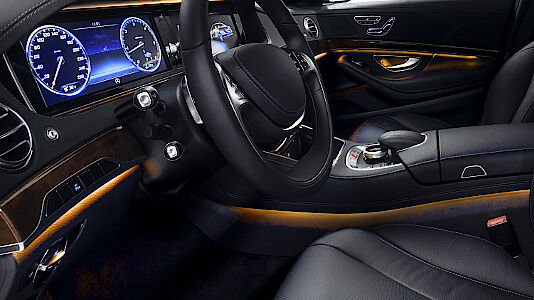
Polyurethane is the chemistry the automotive interior asks for. The surface has to be matt, scratch and mar resistant, chemically resistant, flexible enough to survive deep drawing into a dashboard or door panel, and it has to feel right under a hand. Waterborne and low-solvent systems dominate that sector, which is why the range has moved that way.
M-24793 is the solventborne automotive grade with excellent mar resistance. M-24901W and M-24862W are the waterborne matt automotive grades, and M-24901W adds the anti-squeak surface. M-25078 is the solventborne matt grade for PVC synthetic leather, and it is the one written for hand.
Solids run from 17.6 to 22.0 percent. The waterborne grades use water alone as the carrier, with no cosolvent listed, which is unusual across the wider ROWA range and matters to a plant working to a solvent limit.
Every grade in the published range is SVHC-free.
| Property | Typical value |
|---|---|
| Chemistry | Polyurethane. The solvent grades are aliphatic polyurethane, isocyanate crosslinkable |
| Delivery form | Solution, solventborne or waterborne |
| Solids content | 17.6 to 22.0 percent depending on grade |
| Solvents used | MEK, IPA, PMA and MP in the solvent grades; water alone in the waterborne grades |
| Finish | Matt across the published range |
| Published grades | 4 |
| SVHC status | SVHC-free across the published range |
Dosage: Applied as a coating. Film build is typically 8 to 10 g per square meter dry on the automotive grades. Confirm against the data sheet for the grade.
Typical values from the manufacturer's technical data sheet. They describe the product, they are not a specification. We will send the current TDS and the batch documentation your qualification needs.
Tell us the binder system, the property you are targeting, and the volume you expect. We will confirm the grade, send the documentation, and get a sample of the candidate grade to you.
M-24793 in solvent, M-24901W and M-24862W waterborne. PVC, ABS and TPO foil for dashboards and door panels, where the part is deep drawn after coating.
M-24901W. Interior components rub under vibration and the noise is a warranty issue, so the surface is formulated to slip instead of sticking and releasing.
M-25078, matt, with mar resistance and a pleasant hand. Seat backs, gearshift and trunk covers, plus upholstery for furniture, transit and medical use.
Apparel, bags and footwear, where the tactile result is judged before anything else.
It is specified where the formulation needs matt finish with scratch and mar resistance, deep drawable without cracking the film, chemical resistance and resistance to writing, good hydrolysis resistance, anti-squeak surface on M-24901W, and two of four grades waterborne, with water alone as the carrier.
Stir very well before use and filter before application. Rotogravure and magnet bar are the application methods.
Drying is short: around 60 seconds at 100 degrees C on the solvent grades whose data sheets we hold.
The solvent grades are isocyanate crosslinkable and are run two-component with a ROWASET crosslinker, added at a few grams per hundred grams of lacquer as delivered. Pot life on the sheets we hold is measured in tens of hours, so a mix covers a shift.
Adhesion on a foil substrate usually depends on the primer under it, and the data sheets name the primer families they are matched to. Fix the primer and the topcoat together, not separately.
Package sizes: Made to order in the pack size the run needs. Tell us the volume and we will confirm.
Storage: Dry, at room temperature, in the original airtight container. Shelf life is 6 months in the sealed original pack on the grades whose data sheets we hold. Confirm the figure on the current data sheet for your grade.
Every grade in ROWA's published ROWATHAL range is SVHC-free. The solvent grades are isocyanate crosslinkable, so the crosslinker carries its own classification and the mixed system is not the same hazard as the lacquer in the drum. Refer to the current safety data sheet for both components.
Both, and they are separate applications. Automotive interior foil is PVC, ABS or TPO sheet that gets deep drawn into a dashboard or door panel. Synthetic leather is a coated fabric finished for seat backs, gearshift and trunk covers, upholstery, apparel and bags. M-24793, M-24901W and M-24862W are written for the foil side, M-25078 for the leather side.
The cured film has to stretch with the substrate and come back without cracking or hazing, at the draw ratio the tool works to. That is a property of the polyurethane network, so it is designed in rather than added. If the part has a tight radius, tell us the draw before the grade is fixed.
Interior parts rub against each other under vibration and the stick-slip at that contact is what makes the noise. M-24901W is formulated so the surfaces slide instead of catching and releasing.
On the solvent data sheets we hold it runs to tens of hours after the crosslinker goes in, which covers a shift on one mix. The exact figure and the mixing ratio are both on the sheet for the grade, and the ratio is given as grams of crosslinker per hundred grams of lacquer as delivered.
Usually, with work. Solids differ, the drying window differs and the wet film weight has to be re-established. The plant reason to do it is a solvent limit or an OEM requirement, and three of the four ROWATHAL grades are already waterborne. We run the trial with you before the line changes over.
Yes. We send the Technical Data Sheet (TDS), Safety Data Sheet (SDS), SVHC statement, and ISO 9001 certificate on request, in the manufacturer's current revision. Use Request TDS or SDS above and tell us what your qualification review needs.
Gloss topcoats for synthetic leather applied on release paper by transfer coating.
The acrylic family, including the waterborne anti-graffiti grades for synthetic leather.
The PVDF family, including two waterborne automotive grades with heat-yellowing resistance.
The crosslinkers these two-component systems are cured with.
The full ROWA Lack range PAT supplies and what each chemistry is for.
Where polyurethane wins against acrylic and PVDF, by end use.