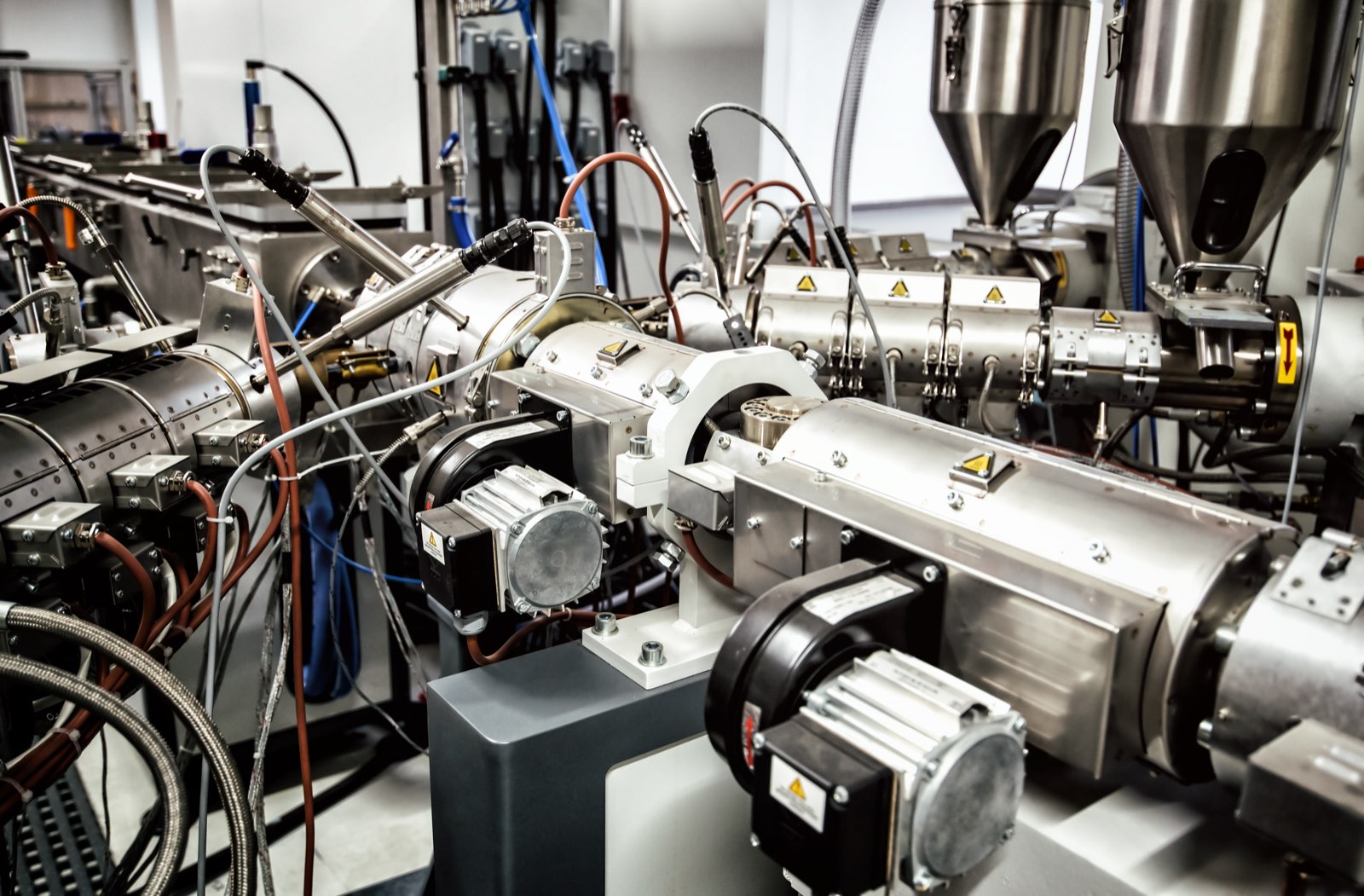
TPU for extrusion
Hose, pneumatic tube, blown and cast film, sheet, and profile. Laripur grades chosen for abrasion, flexibility, and melt strength, from North American stock.
Hose, pneumatic tube, blown and cast film, sheet, and profile. Laripur grades chosen for abrasion, flexibility, and melt strength, from North American stock.
TPU holds up where plasticized PVC and rubber fall short: abrasion resistance that survives drag and flex, kink recovery in tubing, and toughness in thin film.
Air lines, coiled cords, fuel and lubrication lines, and protective conduit that need abrasion resistance and kink recovery.
Blown and cast film for breathable membranes, protective and laminating films, and technical sheet.
Custom profile, edge trim, and tight-tolerance tubing where flex life and surface finish matter.
Abrasion-resistant jacketing over cable, hose, and rope, including retractile cords.
Three variables drive the grade choice:
Polyester for the best abrasion and oil resistance (most hose and tube); polyether for cold flexibility and hydrolysis resistance (wet or cold lines).
Softer grades for flexible tube and film, harder grades for structural profile and jacketing. Extrusion grades commonly sit around Shore A 85 to 95.
Extrusion grades are formulated for melt strength and draw-down so the profile holds shape through the die and cooling. We will point you to the right grade for your line.
For the chemistry trade-offs, see polyester vs polyether TPU.
Every Laripur grade below has a released extrusion version. COIM identifies those versions with an end code after the grade number, and that code has to be on the purchase order when the material is going into a die. Values are typical properties from COIM's own data sheets.
| Grade | Chemistry | Hardness | What COIM lists it for |
|---|---|---|---|
| Laripur 7025 | Polyester | 70 A | Hose, profile and film, and compounding with other thermoplastics |
| Laripur 7560 | PTMG polyether | 77 A | Hose, cable, profile and film, with hydrolysis resistance |
| Laripur 8125 | Polyester | 83 A | Hose, profile, transmission belt and film, built for hydrolysis resistance |
| Laripur 8225 | Polyester | 83 A | Hose, profile, transmission belt and film |
| Laripur 8025 | Polyester | 84 A | Hose, profile, transmission belt and film |
| Laripur 2102-85AE | Polycaprolactone ester | 84 A | Hose, profile, transmission belt and film |
| Laripur 8860EG | PTMG polyether | 86 A | Hose, cable, profile and film, with a UV stabilized 8860EUV version |
| Laripur 9060 | PTMG polyether | 88 A | Cable, profile and film, with halogen free flame retardant versions |
| Laripur 9025 | Polyester | 90 A | Hose, profile, transmission belt and film |
| Laripur 2103-90AE | PTMG polyether | 90 A | Hose, profile, transmission belt and film, with hydrolysis resistance |
| Laripur 4525EG | Polyester | 46 D | Hose, profile, transmission belt and film. Extrusion only, no injection version |
| Laripur 5260 | PTMG polyether | 50 D | Hose, cable, profile and film, with hydrolysis resistance |
| Laripur 5225 | Polyester | 51 D | Hose, profile, transmission belt and film |
| Laripur 5725 | Polyester | 56 D | Hose, profile, transmission belt and film |
| Laripur 71D60 | PTMG polyether | 70 D | Sheet and profile extrusion, with a published cold impact figure |
Browse the full COIM catalog, or tell us the profile, the wall thickness and the line speed and we will confirm the grade.
Send us the drawing and the duty. We will name the grade, send the data sheet with COIM's temperature profile, and ship a sample from North American stock.
Request a SampleTPU is hygroscopic, so it must be dried with a desiccant dryer before extrusion. Skipping this step shows up as bubbles, voids, and reduced strength in the product. Each grade's Technical Data Sheet gives the recommended drying and processing conditions.
Regrind handling, screw design, and die temperatures all affect surface finish on TPU. Our technical team can talk through the setup, and the manufacturer's processing guides are available for the grades we supply.
Technical Data Sheets and Safety Data Sheets are available for every grade, with food-contact statements (FDA 21 CFR 177.2600) for select grades on request. We hold inventory in North American warehouses and ship across the US, Canada, and Mexico, with samples usually out the same business day. Cross-references from other TPU extrusion grades are available on request.
Yes. Thermoplastic polyurethane is hygroscopic and must be dried before extrusion or it will show bubbles, voids, and reduced mechanical strength. Drying with a desiccant dryer before processing is standard practice. Technical Data Sheets give the recommended conditions for each grade.
Polyester-based TPU is the usual choice for pneumatic tube and hose because of its abrasion resistance, kink recovery, and resistance to oils. Where the line runs cold or sees water exposure, polyether grades hold flexibility and resist hydrolysis better.
Yes. TPU is blown and cast into film and extruded into sheet for breathable membranes, protective films, laminating films, and technical sheet. Grade choice depends on the clarity, softness, and barrier behavior the application needs.