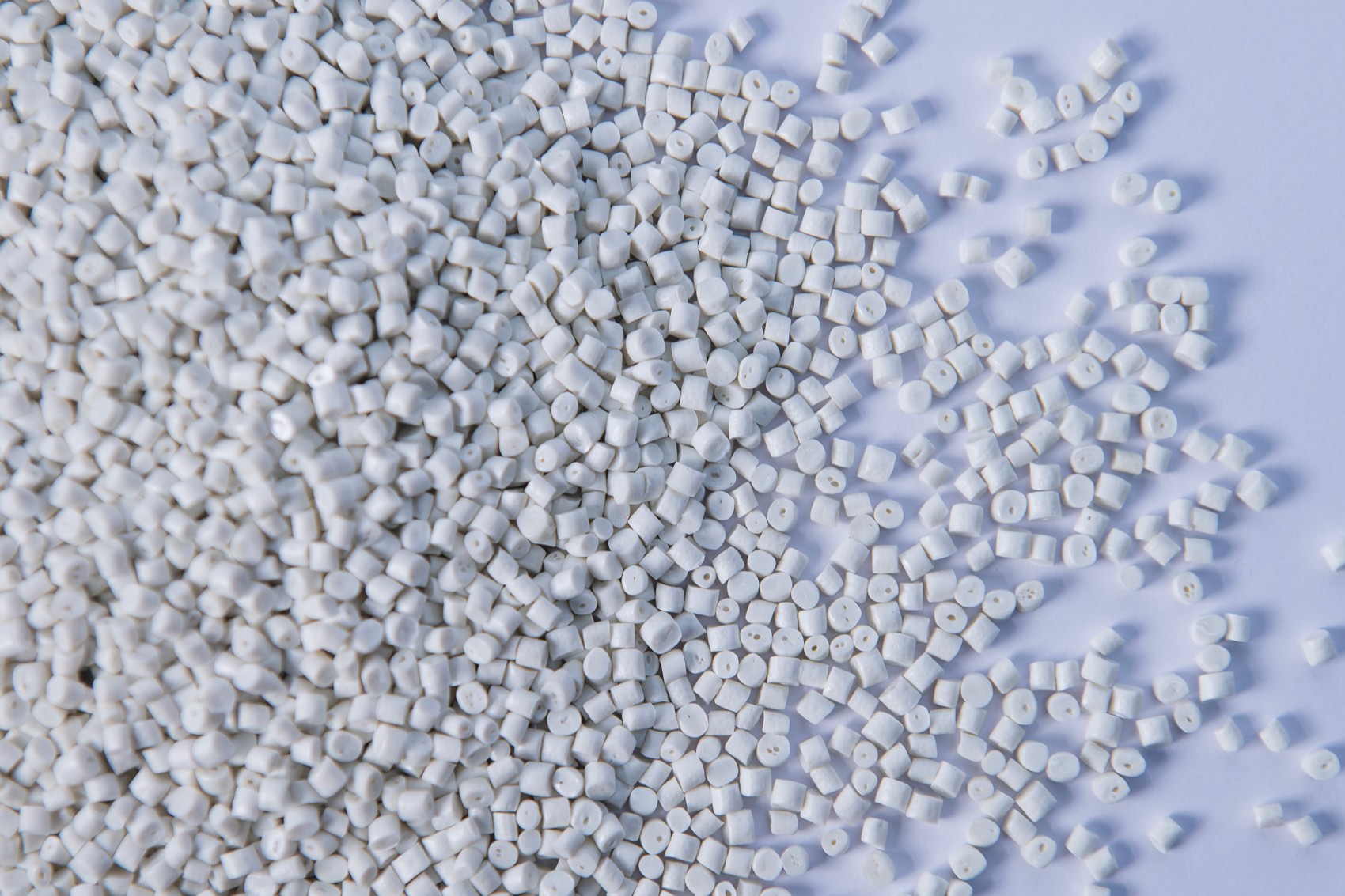
Soft-segment chemistry decides whether a TPU part survives its service life, and hardness does not. The three soft segments are polyester, polyether and caprolactone, and they differ on abrasion, hydrolysis and low-temperature behavior, which is where parts actually fail.
The two families, and one in between
All thermoplastic polyurethane is built from alternating hard and soft segments. The hard segment gives strength and sets the hardness. The soft segment sets the environmental resistance, and it comes in two main chemistries with a third that splits the difference:
- Polyester-based TPU: the abrasion, strength, and oil-resistance leader.
- Polyether-based TPU: the hydrolysis, cold, and microbial-resistance leader.
- Caprolactone-based TPU: a polyester type that keeps most of the strength while improving hydrolysis resistance.
Polyester TPU: abrasion, oil, heat
Polyester grades are the workhorses. They give the highest abrasion resistance, the best mechanical strength, and strong resistance to oils, greases, fuels, and heat. If a part drags, scuffs, or runs in contact with hydrocarbons, polyester is usually the starting point. This is why polyester grades dominate extruded hose and tube, conveyor and drive components, and wear parts.
The trade-off is hydrolysis. The ester bonds react slowly with water, and heat and humidity speed the reaction up. A polyester part in dry or oily service can last for years. The same part in long-term hot, humid, or immersed service can soften and lose strength.
Polyether TPU: hydrolysis, cold, microbial
Polyether grades resist hydrolysis far better, so they hold up in wet, humid, buried, or immersed service where polyester would degrade. They also stay flexible at lower temperatures and resist microbial and fungal attack, which matters for outdoor, marine, and medical-adjacent parts.
Polyether gives up some abrasion and oil resistance relative to polyester, but it is not a weak material. For seals exposed to water-based hydraulic fluids, cold-weather tubing, and parts that live outdoors, it is the safer long-term choice.
Caprolactone TPU: the middle path
Caprolactone grades are a polyester-type chemistry that keeps much of the mechanical strength and abrasion resistance while improving hydrolysis resistance. They are a common answer for parts that see both heavy wear and some moisture, such as demanding dynamic seals, where neither a standard polyester nor a polyether grade is an ideal fit on its own.
Where polyurethane fits: polyester and polyether are the soft segment
A polyester TPU is a polyurethane. The polyester is the soft segment, the flexible block that sets abrasion, hydrolysis and low-temperature behavior. The urethane groups are the hard segment, the rigid block that sets hardness and melting behavior. Every grade on this page has both, which is why a polyester urethane and a polyester thermoplastic polyurethane are the same thing described two ways.
The comparison that decides a grade is polyester soft segment against polyether soft segment, inside the same polyurethane chemistry. Polycaprolactone is a third soft segment, ester-based like the polyester.
One step upstream, the same choice is called a polyester polyol or a polyether polyol. The polyol is what the soft segment is built from, and the trade carries through unchanged: a polyester polyol brings abrasion and oil resistance, a polyether polyol brings hydrolysis resistance and cold flexibility. That holds whether the polyol ends up in a cast polyurethane system or in a TPU pellet, so a cast part and an extruded part built on the same polyol family face the same hydrolysis limit.
Hardness is measured the same way across all of it. A urethane durometer reading and a TPU durometer reading are the same Shore test on the same scales, covered in TPU durometers and what they mean for your part.
A quick decision guide
Start with the environment, then narrow by hardness:
| If the part sees... | Start with |
|---|---|
| Abrasion, drag, oils, fuels, heat (dry service) | Polyester |
| Water, humidity, immersion, water-glycol fluids | Polyether |
| Cold or sub-zero service | Polyether |
| Outdoor, marine, microbial exposure | Polyether |
| Both heavy wear and some moisture | Caprolactone |
Hardness is a separate decision
Two grades at the same Shore hardness can behave very differently if their chemistry differs. Choose the chemistry for the environment first, then choose the hardness for the mechanical job. We cover the hardness side in the versatility of TPU: durometers and their impact on innovation.
Request a SampleFrequently asked
Is polyester or polyether TPU stronger?
Polyester TPU generally has higher abrasion resistance and mechanical strength and better oil, fuel, and heat resistance. Polyether is not weaker in a general sense; it trades some of that abrasion and oil performance for much better hydrolysis resistance, low-temperature flexibility, and microbial resistance. The right choice depends on the environment, not on which wins on paper.
Why does polyester TPU fail in hot water?
The ester bonds in polyester TPU are susceptible to hydrolysis, a reaction with water that breaks the polymer chains. Heat and humidity speed it up, so a polyester grade in long-term hot or humid service can soften and lose strength. Polyether and, to a lesser degree, caprolactone grades resist hydrolysis far better.
What is the difference between polyester and polyurethane?
They are not two competing materials. A polyester TPU is a polyurethane whose soft segment is a polyester, so the polyester is one block inside the polyurethane rather than an alternative to it. The choice that changes how a part behaves is polyester soft segment against polyether soft segment. Upstream that same choice is a polyester polyol against a polyether polyol, and it applies to cast polyurethane systems as well as to TPU.
What is caprolactone TPU?
Caprolactone TPU is a polyester-type thermoplastic polyurethane built on a polycaprolactone soft segment. It keeps much of the strength and abrasion resistance of polyester grades while improving hydrolysis resistance, which makes it a common middle-ground choice for demanding seals.
Named grades in each family
P.A.T. Products is the North American distributor for COIM's Laripur TPU, and the line covers all three families. Each grade below has its own page with the typical properties from COIM's own data sheet. The chemistry in the middle column is what COIM states on that grade's sheet.
| Grade | Chemistry | Hardness | Where it belongs |
|---|---|---|---|
| Laripur 7025 | Polyester | 70 A | Soft touch overmoulding and technical items in dry service |
| Laripur 8025 | Polyester | 84 A | Sport soles, wheels and screen elements |
| Laripur 9025 | Polyester | 90 A | The abrasion and oil answer at the top of the Shore A scale |
| Laripur 8125 | Polyester | 83 A | A polyester COIM builds for hydrolysis resistance, when the part gets wet but the duty is still abrasive |
| Laripur 7560 | PTMG polyether | 77 A | Soft seals and technical items in wet service |
| Laripur 9060 | PTMG polyether | 88 A | Cable and film, with halogen free flame retardant versions |
| Laripur 5760 | PTMG polyether | 56 D | Ski boots and technical items, cold and wet at the same time |
| Laripur 2102-85AE | Polycaprolactone ester | 84 A | Bellows, watch belts and seals |
| Laripur E 107-93A | Polycaprolactone ester | 93 A | Heavy duty hydraulic seals, with compression set published at three conditions |
The pairs are the useful part. Laripur 9025 and Laripur 9060 sit within two points of each other on hardness and differ in chemistry, as do Laripur 5725 and Laripur 5760 at Shore 56 D. If a part is failing in wet service, that is the swap to trial first.
Tell us the environment the part lives in and we will recommend a chemistry and grade, send a sample, and provide a cross-reference if you are moving off another brand.
View the TPU product page Browse all Laripur grades