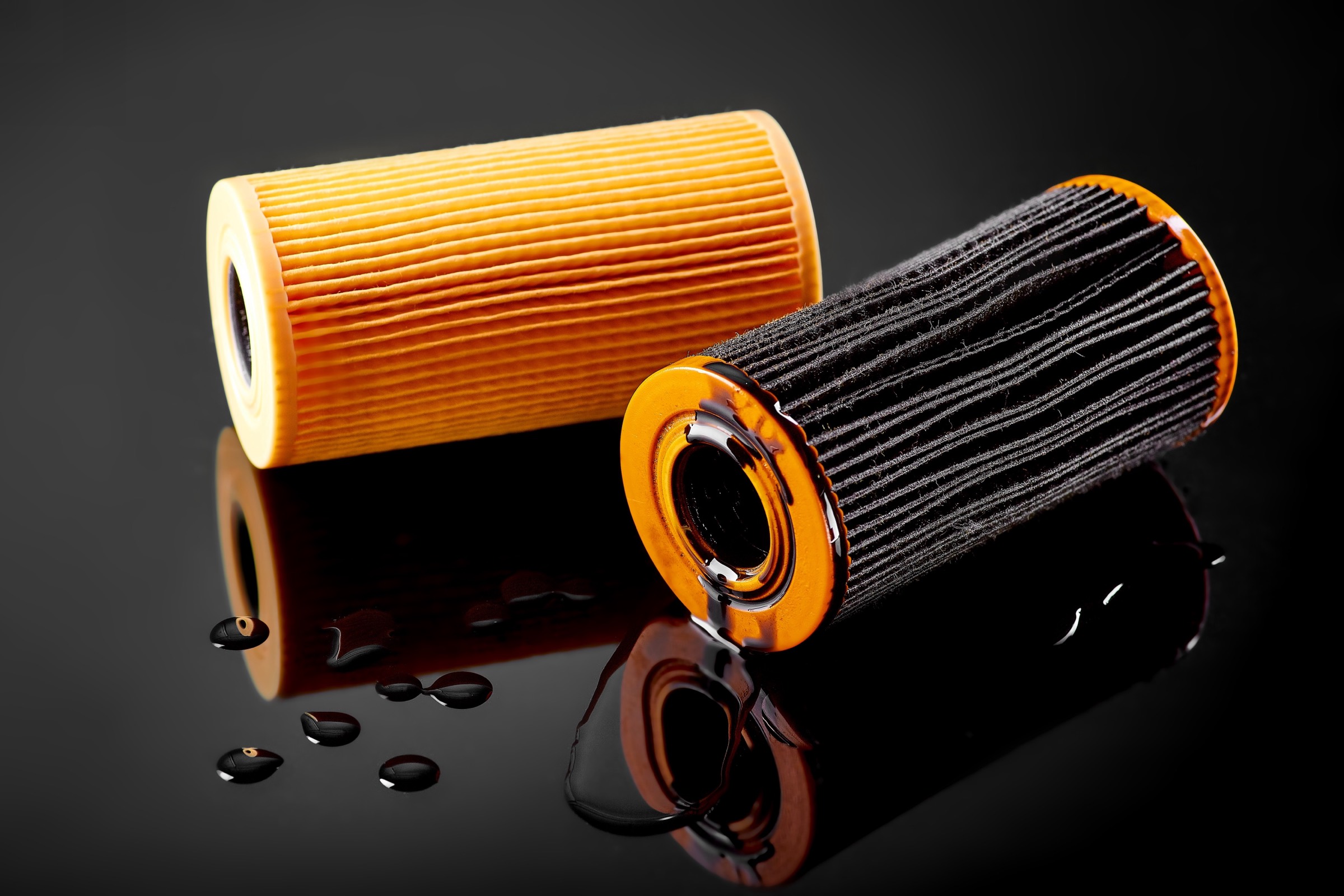
Technipol PA 2174
Amber copolyamide hot melt for the automotive filter industry, 174 °C softening point and 4.0 Pa·s at 205 °C. Quick setting, with extrusion and melter profiles.
Amber copolyamide hot melt for the automotive filter industry, 174 °C softening point and 4.0 Pa·s at 205 °C. Quick setting, with extrusion and melter profiles.
Technipol PA 2174 is an amber copolyamide hot-melt adhesive with a softening point of 174 °C and a Brookfield viscosity of 4.0 Pa·s at 205 °C. Sipol makes it for the automotive filter industry.
Sipol describes a quick setting time with good flexibility, wettability and chemical resistance. The softening point sits 24 °C above the 150 °C of Technipol PA 2150, on the same extrusion and melter profiles.
The data sheet gives both an extrusion and a melter profile. The melter runs the tank at 200 to 210 °C and the hose and nozzle at 210 to 220 °C, where 4.0 Pa·s at 205 °C gives a fluid bead.
More than 80 percent of its raw materials come from renewable, non-edible resources, according to Sipol.
It is also written as copolyamide hot melt adhesive, co-polyamide hot melt, polyamide hot melt adhesive, thermoplastic polyamide adhesive, and CoPA.
| Property | Typical value |
|---|---|
| Softening point | 174 °C (Sipol method MI 13) |
| Brookfield viscosity | 4.0 Pa·s at 205 °C (Sipol method MI 12, Brookfield CAP 2000+ cone and plate) |
| Density | 0.98 g/cm³ (ISO 1183) |
| Renewable raw materials | More than 80 percent, from non-edible renewable resources (Sipol data sheet) |
| Color | Amber |
| Form | Granules |
Typical values from the manufacturer's technical data sheet. They describe the product, they are not a specification. We will send the current TDS and the batch documentation your qualification needs.
Tell us the part or the process, the property you are targeting, and the volume you expect. We will confirm the grade, send the documentation, and get a sample of the candidate grade to you.
The industry Sipol makes PA 2174 for.
Sipol's extrusion profile runs from 50 to 80 °C under the hopper to 190 to 210 °C at the nozzle.
Melter profile with the tank at 200 to 210 °C and the hose and nozzle at 210 to 220 °C.
Sipol lists good chemical resistance among the grade's properties.
Sipol's suggested extrusion profile: under the hopper 50 to 80 °C, feeding zone 110 to 140 °C, compression zone 150 to 170 °C, metering zone 180 to 200 °C, die or hose 180 to 200 °C, nozzle 190 to 210 °C.
Sipol's suggested melter profile: pre-heating grid 175 to 185 °C, tank 200 to 210 °C, hose 210 to 220 °C, nozzle 210 to 220 °C.
Both profiles are starting points. Equipment, bead size and line speed move the final settings.
Package sizes: 25 kg bags with an aluminum film moisture barrier, 500 kg cardboard octabins with an inner PE liner, and 500 kg and 1000 kg big bags..
Storage: Stable for 24 months unopened in the original packaging, kept in a cool, dry place and protected from light. Material held at around 5 to 10 °C or below should stand at 15 to 20 °C for at least 24 hours before use.
Read the safety data sheet before handling.
Sipol's melter profile for Technipol PA 2174 runs the pre-heating grid at 175 to 185 °C, the tank at 200 to 210 °C and the hose and nozzle at 210 to 220 °C. The extrusion profile climbs from 50 to 80 °C under the hopper to 190 to 210 °C at the nozzle. The grade softens at 174 °C and measures 4.0 Pa·s at 205 °C. Treat both profiles as starting points.
Technipol PA 2174 softens at 174 °C and measures 4.0 Pa·s at 205 °C. Technipol PA 2150 softens at 150 °C and measures 7.5 Pa·s at 190 °C. The two data sheets carry the same extrusion profile and the same melter profile. PA 2150's sheet adds hardness, tensile and flexural data and a measured 86 percent bio-based carbon.
Technipol PA 2174 softens at 174 °C; Technipol PA 2188 softens at 188 °C and runs a hotter melter, 230 to 240 °C at the hose and nozzle. Both measure 4.0 Pa·s, PA 2174 at 205 °C and PA 2188 at 232 °C. PA 2188's data sheet names its filter operations, from air filter edge sealing to oil filter end caps, and gives an open time of 5 to 6 s.
Yes. We send the Technical Data Sheet (TDS), Safety Data Sheet (SDS), and IMDS data on request, in the manufacturer's current revision. Use Request TDS or SDS above and tell us what your qualification review needs.
Engine air filter grade at 150 °C with the same machine profiles.
The 188 °C grade for edge sealing, pleat bonding and end caps.
Filter grade at 172 °C and 3.5 Pa·s at 232 °C.
The Technipol and Technipol PA range by softening point and use.
Air, oil and diesel filter bonding and the hot melts that do each job.
How to choose a hot melt for pleat, edge and end-cap bonding.