Filter manufacturing adhesives
Technipol copolyester and copolyamide hot melts for engine air, oil, and diesel filter production. Pleat stabilization, edge sealing, and metal-free end caps, with bio-based grades up to 80%.
Technipol copolyester and copolyamide hot melts for engine air, oil, and diesel filter production. Pleat stabilization, edge sealing, and metal-free end caps, with bio-based grades up to 80%.
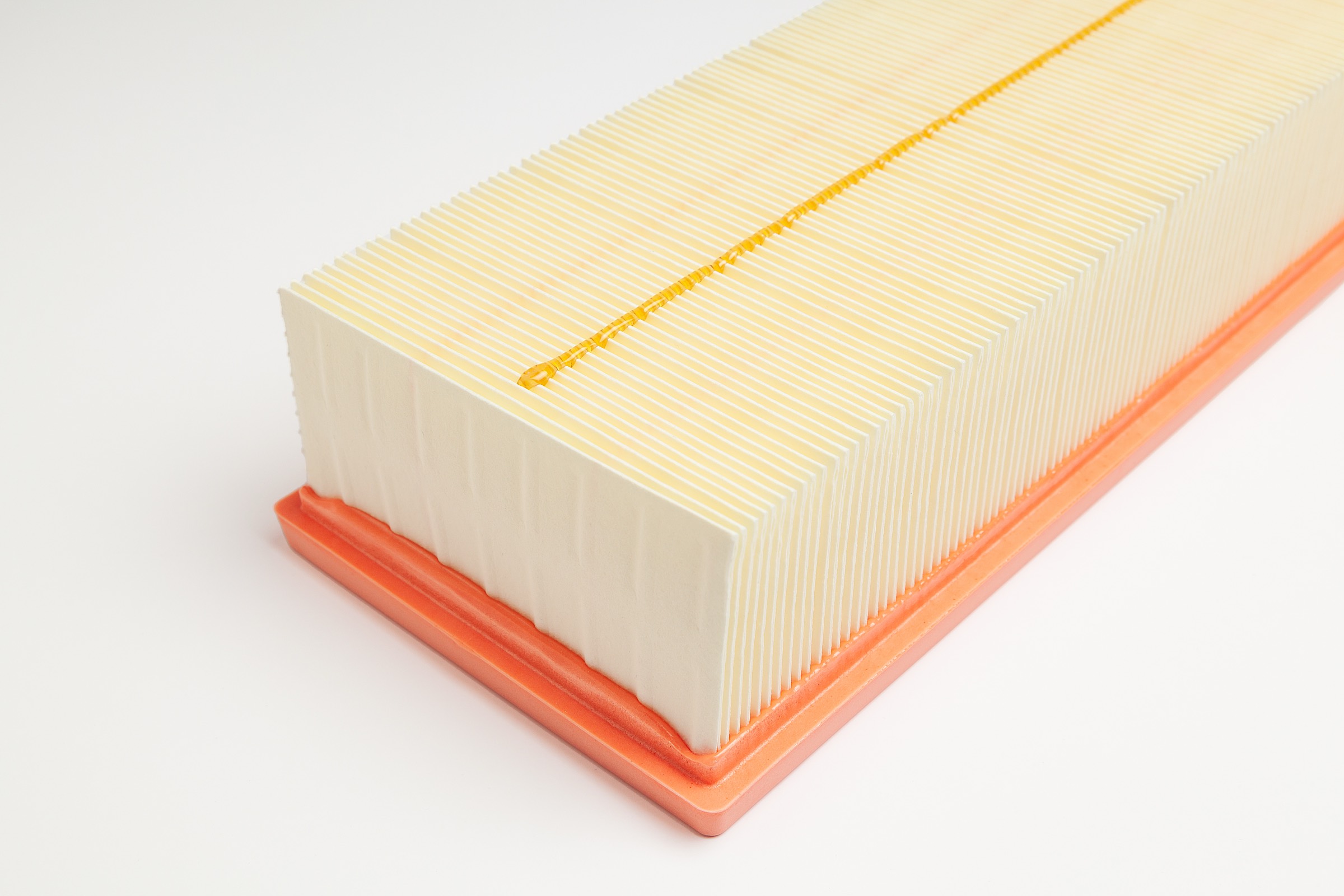
Every pleated or wound filter element depends on adhesive to work. The hot melt holds pleat spacing so the media does not collapse under flow, seals the edges so unfiltered fluid cannot bypass, joins the first and last pleats into a closed element, and in modern cartridge designs forms the end caps themselves.
P.A.T. Products supplies Technipol® copolyester and Technipol® PA copolyamide hot-melt adhesives for filter manufacturing, made by Sipol S.p.A. of Mortara, Italy, our partner for Sipolprene TPC-ET elastomers. The filter line is Sipol's original core business: purpose-polymerized hot melts engineered for the temperatures, fluids, and production speeds of automotive filter plants, with direct support from the manufacturer's technical team.
Flexible, tough grades applied by extruder or tank unit, with elongation above 500% for vibration resistance. All copolyester filter grades can be foamed, which cuts adhesive consumption and weight at the same bond performance. Melting points run roughly 154 to 185°C across the range.
A ladder of softening points from roughly 131 to 215°C with strong resistance to hot oil and fuel. The range is developed from non-edible agricultural feedstocks with bio-based content up to 80%.
Selection follows three questions: what temperature and medium the filter must survive, how the line applies the adhesive (extruder, tank unit, or spray), and what the qualification tests demand. Our guide to hot-melt adhesives in filter manufacturing walks the full logic. If you already know your requirements, skip the reading:
Keeping pleated paper in place, sealing edges, and resisting heat and fuel vapors while airflow runs to hundreds of cubic meters per hour. Standard copolyester grades (Technipol 170/G, 180/G) and the flexible Technipol 32, plus the full copolyamide range across all paper types. All copolyester grades foamable.
Joining first and last pleats, sealing pleats, and forming metal-free end caps so spent elements can be incinerated. Grades engineered for hot oil at 140 to 155°C and 4 to 6 bar per ISO 4548-6: Technipol 180/D and 32, and copolyamides PA 2174 through PA 2215.
Holding wound media in place with chemical resistance across diesel formulations, 90°C/168 h ageing, pressure, and vibration. Technipol 157's low viscosity allows extruder, tank unit, or spray application; PA 2206 covers the copolyamide side.
The same bonding jobs exist in heavy-duty, industrial, and HVAC filtration. If your element passes a heat, fluid, or vibration qualification, the selection logic carries over. Tell us the test and we will match a grade.
The Technipol line is supported with IMDS entries and GADSL compliance, REACH and RoHS status, ISO 9001, 14001, and 45001 certification, an EcoVadis rating held since 2016, and product carbon footprint data. Bio-based content, up to 80% on most copolyamide grades, comes from non-edible agricultural feedstocks and supports sustainability reporting on the finished filter.
Tell us what your qualification package requires and we will pull the documents with the manufacturer.
Talk to an ExpertWe bring the Technipol filter range to North American filter manufacturers with the model we run on every line we carry: samples for qualification, technical data per grade, one accountable contact, and direct access to the manufacturer's filter-application specialists for line trials and troubleshooting. Volumes scale from qualification quantities to production supply.
They are structural components of the filter. In pleated elements the adhesive holds pleat spacing and seals edges so the media survives airflow, vibration, and temperature. In oil filter elements it joins and seals pleats and can form the end caps themselves. In wound diesel elements it holds the media in place against fuel, pressure, and vibration.
Both families serve all three filter types. The choice follows service temperature, the medium, and the application method: copolyesters are flexible, tough, and foamable; copolyamides offer softening points to roughly 215°C, strong oil and fuel resistance, and bio-based content up to 80%.
Yes. In eco-style cartridge elements the adhesive forms the end caps, so the spent element can be incinerated. The adhesive must survive hot oil at 140 to 155°C and 4 to 6 bar per ISO 4548-6, which is what filter-grade hot melts are engineered for.
Yes: IMDS entries, GADSL compliance, REACH, RoHS, ISO 9001/14001/45001, an EcoVadis rating held since 2016, and carbon footprint data. Tell us what your qualification requires.