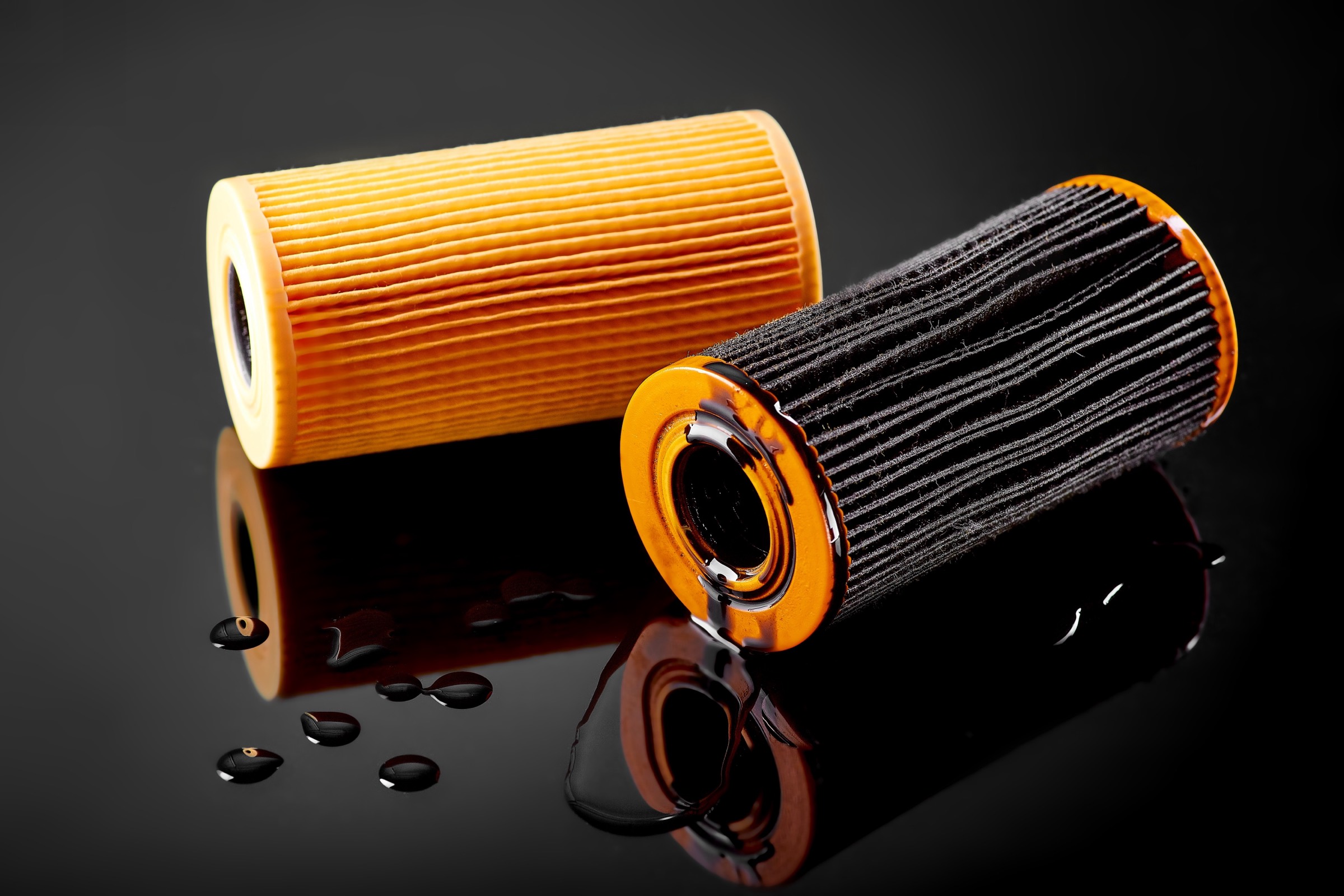
Technipol PA 2162
Amber copolyamide hot melt for the automotive filter industry, 188 °C softening point and 8.0 Pa·s at 232 °C. Quick setting, flexible, chemically resistant.
Amber copolyamide hot melt for the automotive filter industry, 188 °C softening point and 8.0 Pa·s at 232 °C. Quick setting, flexible, chemically resistant.
Technipol PA 2162 is an amber copolyamide hot-melt adhesive with a softening point of 188 °C and a Brookfield viscosity of 8.0 Pa·s at 232 °C. Sipol makes it for the automotive filter industry.
Sipol describes a quick setting time with good flexibility, wettability and chemical resistance. Its 188 °C softening point matches Technipol PA 2188, the filter grade whose data sheet names edge sealing, pleat bonding and end caps.
Viscosity is measured at 232 °C, which tells you where the melt has to run. At that temperature PA 2162 is twice as viscous as PA 2188, 8.0 against 4.0 Pa·s, which gives a heavier bead that flows less into the media.
More than 80 percent of its raw materials come from renewable, non-edible resources, according to Sipol.
It is also written as copolyamide hot melt adhesive, co-polyamide hot melt, polyamide hot melt adhesive, thermoplastic polyamide adhesive, and CoPA.
| Property | Typical value |
|---|---|
| Softening point | 188 °C (Sipol method MI 13) |
| Brookfield viscosity | 8.0 Pa·s at 232 °C (Sipol method MI 12, Brookfield CAP 2000+ cone and plate) |
| Density | 0.98 g/cm³ (ISO 1183) |
| Renewable raw materials | More than 80 percent, from non-edible renewable resources (Sipol data sheet) |
| Color | Amber |
| Form | Granules |
Typical values from the manufacturer's technical data sheet. They describe the product, they are not a specification. We will send the current TDS and the batch documentation your qualification needs.
Tell us the part or the process, the property you are targeting, and the volume you expect. We will confirm the grade, send the documentation, and get a sample of the candidate grade to you.
The industry Sipol makes PA 2162 for.
Sipol describes a quick setting time, so parts can move on soon after bonding.
Sipol lists good chemical resistance among the grade's properties.
The data sheet gives the viscosity at 232 °C and no machine profile. Set the melter or extruder from that point and confirm the profile in a line trial.
Package sizes: 25 kg bags with an aluminum film moisture barrier, 500 kg cardboard octabins with an inner PE liner, and 500 kg and 1000 kg big bags..
Storage: Stable for 24 months unopened in the original packaging, kept in a cool, dry place and protected from light. Material held at around 5 to 10 °C or below should stand at 15 to 20 °C for at least 24 hours before use.
Read the safety data sheet before handling.
Technipol PA 2162 softens at 188 °C and Sipol measures its viscosity at 232 °C, where it is 8.0 Pa·s. The data sheet gives no melter or extruder profile, so the 232 °C measuring point is the reference for setting up a line. Expect to run it hotter than the lower-softening filter grades such as Technipol PA 2150, whose nozzle runs at 210 to 220 °C.
Both soften at 188 °C. Technipol PA 2162 measures 8.0 Pa·s at 232 °C and Technipol PA 2188 measures 4.0 Pa·s at the same temperature, so PA 2162 lays down a heavier, less fluid bead. PA 2188's data sheet adds a full mechanical table, an open time of 5 to 6 s at 215 °C, and named filter operations from edge sealing to end caps.
The two data sheets give the same typical values for Technipol PA 2162 and Technipol PA 162, a 188 °C softening point and 8.0 Pa·s at 232 °C, and both state more than 80 percent renewable raw materials. Sipol positions PA 2162 for the automotive filter industry in bags and octabins, and PA 162 as a rod cement for lasting machines in footwear. Order by the grade named for your use.
Yes. We send the Technical Data Sheet (TDS), Safety Data Sheet (SDS), and IMDS data on request, in the manufacturer's current revision. Use Request TDS or SDS above and tell us what your qualification review needs.
Same 188 °C softening point at half the viscosity, with named filter operations.
Automotive filter grade at 172 °C and 3.5 Pa·s at 232 °C.
Same typical values, supplied as rod for footwear lasting machines.
The Technipol and Technipol PA range by softening point and use.
Air, oil and diesel filter bonding and the hot melts that do each job.
How to choose a hot melt for pleat, edge and end-cap bonding.