Technipol 170
White copolyester rod cement for automatic lasting machines. 3.9 mm rod, melting point 170 °C, applied at 230 to 240 °C. Short-open-time 170/N and 171 granules.
White copolyester rod cement for automatic lasting machines. 3.9 mm rod, melting point 170 °C, applied at 230 to 240 °C. Short-open-time 170/N and 171 granules.
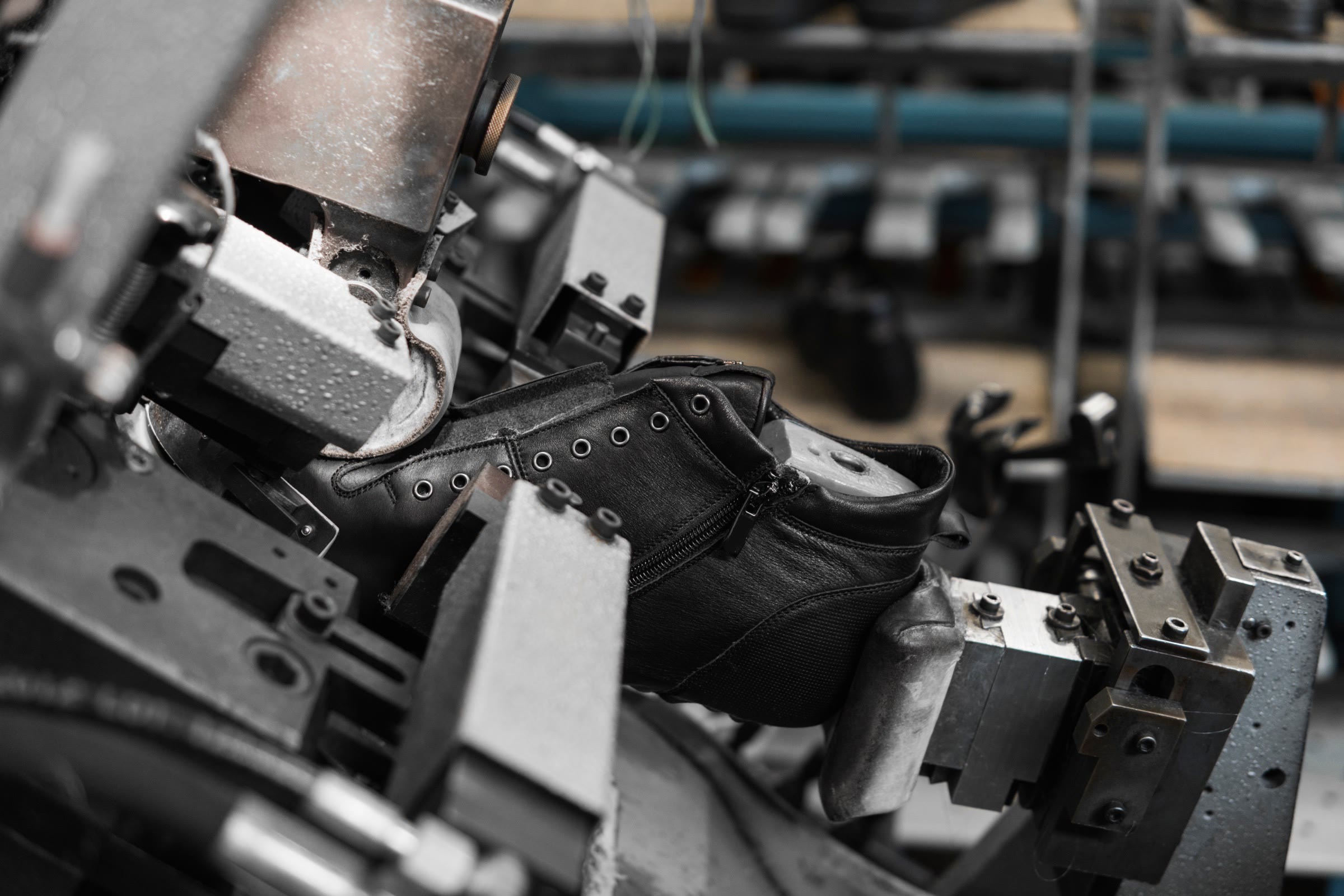
Technipol 170 is a white copolyester hot-melt adhesive extruded into a 3.9 mm rod, with a melting point of 170 °C and an indicative application temperature of 230 to 240 °C. Sipol makes it for automatic lasting machines, where it bonds during the lasting operation in footwear production.
Sipol credits it with a quick setting time, good flexibility, excellent wettability, and high adhesion to leather and to both synthetic and regenerated materials. Its footwear literature ties the quick set to a short closing time of the lasting machine blades.
Brookfield viscosity is 36 Pa·s at 210 °C and the melt flow index 40 g/10 min at 210 °C under 0.325 kg. The rod diameter is held at 3.9 ± 0.1 mm and comes on reels, 12 to a 25 kg box.
Technipol 170/N is the same white rod developed with a very short open time, to raise the production rate further. Its data sheet gives the same melting point, application temperature, viscosity and diameter as Technipol 170.
Technipol 171 is the white granule grade used mainly as the raw material for extruding the rod cement. It carries the same 170 °C melting point, 40 g/10 min MFI and 36 Pa·s at 210 °C, with a density of 1.25 g/cm³, and comes in bags, octabins and big bags.
It is also written as copolyester hot melt adhesive, co-polyester hot melt, polyester hot melt adhesive, thermoplastic copolyester adhesive, CoPES, and lasting rod cement.
| Property | Typical value |
|---|---|
| Rod diameter | 3.9 ± 0.1 mm |
| Melting temperature | 170 °C (ISO 11357-3) |
| Indicative application temperature | 230 to 240 °C |
| MFI | 40 g/10 min at 210 °C, 0.325 kg (ISO 1133) |
| Brookfield viscosity | 36 Pa·s at 210 °C (Brookfield CAP 2000+ cone/plate, Sipol method MI 12) |
| Density (171 granules) | 1.25 g/cm³ (ISO 1183) |
| Color | White |
| Form | Rod on reels (170, 170/N); granules (171) |
| Versions | Technipol 170 rod; Technipol 170/N very short open time rod; Technipol 171 granules for rod extrusion |
Typical values from the manufacturer's technical data sheet. They describe the product, they are not a specification. We will send the current TDS and the batch documentation your qualification needs.
Tell us the part or the process, the property you are targeting, and the volume you expect. We will confirm the grade, send the documentation, and get a sample of the candidate grade to you.
The rod feeds automatic lasting machines during the lasting operation.
Sipol rates its adhesion to leather high.
The same high adhesion rating covers synthetic and regenerated upper materials.
Technipol 170/N has a very short open time to raise production rate.
Technipol 171 granules are the raw material for extruding the rod.
Technipol 170 and 170/N run on automatic lasting machines at an indicative application temperature of 230 to 240 °C. The rod is 3.9 ± 0.1 mm in diameter.
Footwear construction uses a wide variety of materials, so Sipol recommends preliminary trials to homologate the grade on the actual materials before production.
Material stored at around 5 to 10 °C or below should be held at 15 to 20 °C for at least 24 hours before use.
Package sizes: Technipol 170 and 170/N come in 25 kg net cardboard boxes of 12 reels of around 2.08 kg each. Technipol 171 granules come in 25 kg bags with an aluminum moisture barrier, 500 kg cardboard octabins with an inner PE liner, and 500 kg and 1000 kg big bags..
Storage: Stable for 12 months unopened in the original packaging, kept in a cool, dry place and protected from light. Material stored at around 5 to 10 °C or below should be held at 15 to 20 °C for at least 24 hours before use.
No organo-tin compounds are used in manufacturing Technipol 170, 170/N or 171, and Sipol provides a declaration of the total absence of tin compounds on request. Read the safety data sheet before handling.
Technipol 170 melts at 170 °C and Sipol gives an indicative application temperature of 230 to 240 °C on the lasting machine. At 210 °C its Brookfield viscosity is 36 Pa·s and its melt flow index is 40 g/10 min under 0.325 kg. The short open time version, Technipol 170/N, carries the same application temperature, so a line can switch between them without resetting.
Open time. Technipol 170/N is the version Sipol developed with a very short open time to raise the production rate further. Both are white 3.9 mm rods melting at 170 °C, applied at 230 to 240 °C and running 36 Pa·s at 210 °C. Choose 170/N when the lasting cycle sets the pace of the line, and trial it on the production materials.
Technipol 171 is the white granule version, used mainly as the raw material for extruding the rod cement that automatic lasting machines use. It shares the 170 °C melting point, 40 g/10 min MFI and 36 Pa·s at 210 °C of Technipol 170, has a density of 1.25 g/cm³, and comes in 25 kg bags, octabins and big bags.
Yes. Sipol states that no organo-tin compounds are used in manufacturing Technipol 170, 170/N or 171, and it issues a declaration of the total absence of tin compounds on request. Add the tin-free declaration to the document request alongside the data sheet and the safety data sheet when a restricted-substances list asks for it.
Sipol recommends it. Technipol 170 is rated for high adhesion to leather and to synthetic and regenerated materials, but footwear construction uses a wide variety of materials, so Sipol advises preliminary trials to homologate the grade on each combination. Run the trial at the 230 to 240 °C indicative application temperature on the production lasting machine.
Yes. We send the Technical Data Sheet (TDS), Safety Data Sheet (SDS), and Tin-free declaration on request, in the manufacturer's current revision. Use Request TDS or SDS above and tell us what your qualification review needs.
Amber copolyamide lasting rod, softening point 172 °C.
Amber copolyamide rod for toe lasting machines with tracers, softening point 188 °C.
Biodegradable hot melt for toe puffs and counters, melting point 64 °C.
The full Technipol range, by chemistry and application.
Lasting rods, folding grades and toe puff adhesives.