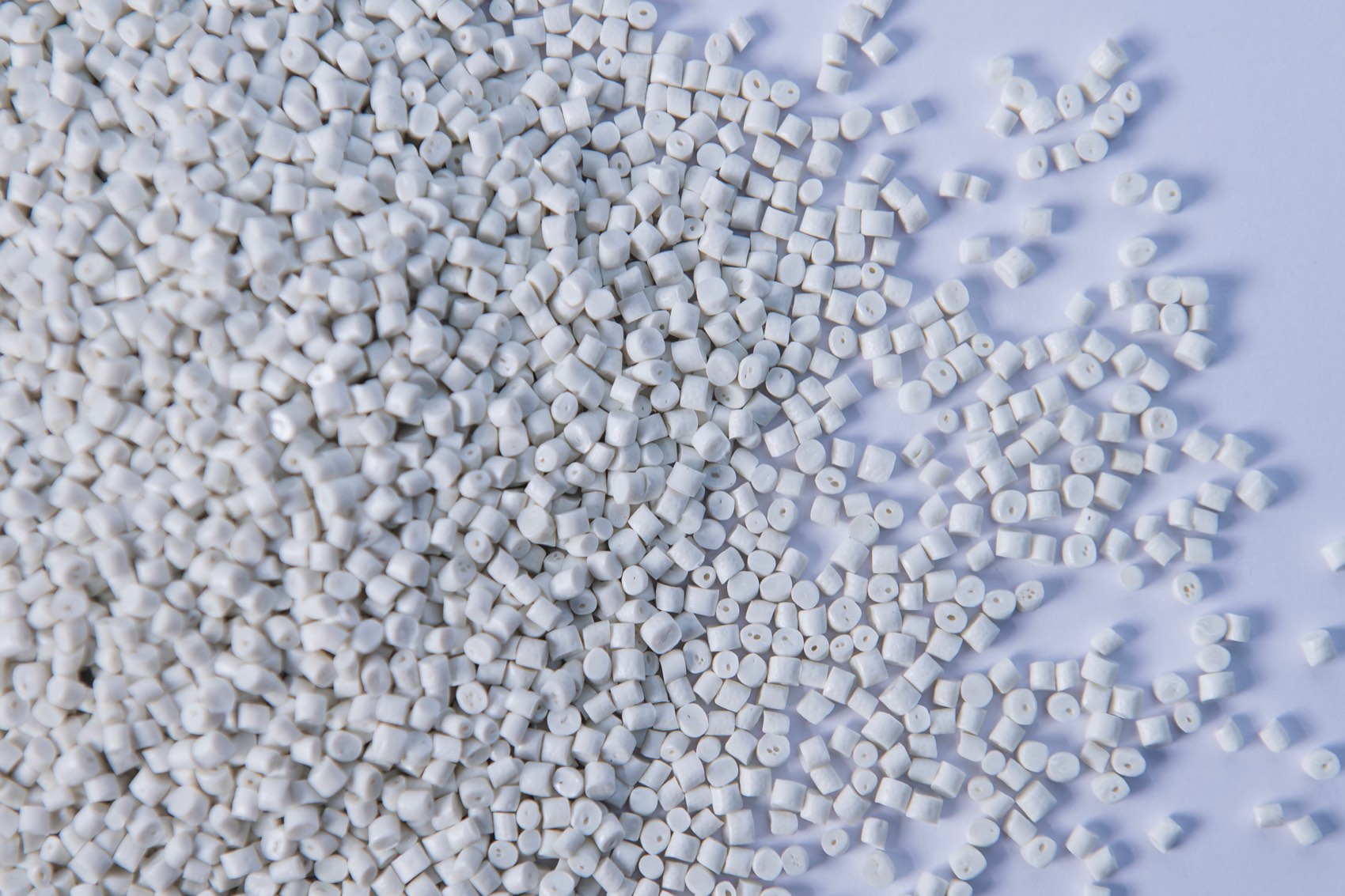
Sipolprene S grades with renewable content
Experimental Sipolprene S copolyester elastomers with 19 to 51 percent renewable carbon by ASTM D6866, Shore D 25 to 63, natural grades meeting FDA and EU 10/2011.
Experimental Sipolprene S copolyester elastomers with 19 to 51 percent renewable carbon by ASTM D6866, Shore D 25 to 63, natural grades meeting FDA and EU 10/2011.
Sipolprene S is a family of thermoplastic copolyester elastomers (TPC) made partly from renewable resources, with renewable carbon contents of 19 to 51 percent calculated according to ASTM D6866. The grades run from Shore D 25 to Shore D 63, melting at 150 to 209 °C. Sipol lists every one as an experimental grade, and the data sheets are marked provisional.
The eight numbered grades come in pairs that share a property table and differ in renewable content. S 2571 and S 2572 are Shore D 28 at 33 and 49 percent; S 4681 and S 4682 are Shore D 46 at 30 and 51 percent; S 5501 and S 5502 are Shore D 54 at 25 and 49 percent; S 6311 and S 6312 are Shore D 63 at 19 and 46 percent. S 2552 is a ninth experimental grade at Shore D 25 and 51 percent, melting at 150 °C.
Water absorption is 0.20 percent after 24 hours of immersion on the eight paired grades. Their data sheets also carry two figures by Sipol's own methods: a breathability of 0.8 to 4.5 g per square meter per 24 hours, and a hydrolysis test giving a 69 to 110 percent rise in melt flow after 7 days in water at 80 °C, which is the figure to weigh for hot, wet service.
Each natural grade comes with a standard stabilization package, and Sipol states it is in compliance with American FDA and European EU 10/2011 food contact regulations. Sipol describes the rheology as suitable for injection molding, and the eight paired data sheets also give an extrusion profile.
It is also written as TPC, thermoplastic copolyester, thermoplastic copolyester elastomer, bio-based TPC, bio-based copolyester elastomer, renewable content TPE, TPEE, and copolyester elastomer.
| Property | Typical value |
|---|---|
| Grades | S 2571, S 2572, S 4681, S 4682, S 5501, S 5502, S 6311, S 6312, S 2552; all experimental |
| Renewable source content | 19 to 51 percent Bio C / Total C (calculated according to ASTM D6866) |
| Shore D hardness | 25 to 63 instantaneous across the family (ISO 868) |
| Melting temperature | 150 to 209 °C (ISO 11357-3) |
| Glass transition temperature | -57 to -4 °C on the paired grades (ISO 11357-2) |
| Vicat softening, A/50 | 79 to 192 °C on the paired grades (ISO 306) |
| Melt flow index (MFI) | 12 to 26 g/10 min at 230 °C, 2.16 kg on the paired grades; 15 g/10 min at 200 °C for S 2552 (ISO 1133) |
| Stress at break | 11 to 40 MPa (ISO 527) |
| Elongation at break | 361 to 600 percent (ISO 527) |
| Flexural modulus | 25 to 291 MPa (ISO 178) |
| Notched Izod impact, -40 °C | No break for S 2571, S 2572, S 4681 and S 4682; 158 J/m for S 5501 and S 5502; 40 J/m for S 6311 and S 6312 (ISO 180) |
| Compression set, 23 °C / 70 °C | 26 / 71, 34 / 73, 39 / 64 and 43 / 67 percent for the Shore D 28, 46, 54 and 63 pairs (ISO 815:1991) |
| Molding shrinkage, perpendicular to flow | 0.97 to 2.0 percent on the paired grades (ISO 294-4) |
| Density | 1.09 to 1.21 g/cm³ (ISO 1183) |
| Water absorption | 0.20 percent, 24 h immersion at 23 °C, paired grades (Sipol method MI 08) |
| Breathability | 4.5 g/(m²·24 h) for the Shore D 28 pair, 1.8 for the Shore D 46 and 54 pairs, 0.8 for the Shore D 63 pair (Sipol method MI 18) |
| Hydrolysis resistance | Melt flow increase after 7 days immersion at 80 °C of 89, 69, 93 and 110 percent for the Shore D 28, 46, 54 and 63 pairs (Sipol method MI 20) |
| Chemical resistance, 14 days at room temperature (ASTM D 543) | Shore D 28 pair, antifreeze, soap solution and isododecane A, ethanol and mineral oil B; Shore D 46 pair, B on all five; Shore D 54 pair, antifreeze and isododecane A, ethanol, mineral oil and soap solution B; Shore D 63 pair, antifreeze, ethanol, mineral oil and isododecane A, soap solution B. A is excellent resistance, B good resistance |
| Color | Natural |
Typical values from the manufacturer's technical data sheet. They describe the product, they are not a specification. We will send the current TDS and the batch documentation your qualification needs.
Tell us the part or the process, the property you are targeting, and the volume you expect. We will confirm the grade, send the documentation, and get a sample of the candidate grade to you.
| Grade | Shore D, instantaneous / 15 s | Melting point | MFI, 2.16 kg | Flexural modulus | Renewable content, ASTM D6866 |
|---|---|---|---|---|---|
| Sipolprene S 2552 | 25 / 22 | 150 °C | 15 g/10 min at 200 °C | 25 MPa | 51 percent |
| Sipolprene S 2571 | 28 / 26 | 161 °C | 19 g/10 min at 230 °C | 33 MPa | 33 percent |
| Sipolprene S 2572 | 28 / 26 | 161 °C | 19 g/10 min at 230 °C | 33 MPa | 49 percent |
| Sipolprene S 4681 | 46 / 43 | 183 °C | 12 g/10 min at 230 °C | 98 MPa | 30 percent |
| Sipolprene S 4682 | 46 / 43 | 183 °C | 12 g/10 min at 230 °C | 98 MPa | 51 percent |
| Sipolprene S 5501 | 54 / 50 | 195 °C | 26 g/10 min at 230 °C | 158 MPa | 25 percent |
| Sipolprene S 5502 | 54 / 50 | 195 °C | 26 g/10 min at 230 °C | 158 MPa | 49 percent |
| Sipolprene S 6311 | 63 / 60 | 209 °C | 22 g/10 min at 230 °C | 291 MPa | 19 percent |
| Sipolprene S 6312 | 63 / 60 | 209 °C | 22 g/10 min at 230 °C | 291 MPa | 46 percent |
Values are the manufacturer's published typical figures. Ask for the current technical data sheet on any grade and we will send it with the matching safety data sheet.
Each natural grade is stated in compliance with FDA and EU 10/2011 and carries 19 to 51 percent renewable carbon.
Sipol describes every S grade's rheology as suitable for injection molding, from Shore D 25 to 63.
The eight paired data sheets give extrusion profiles from 150 °C at the feed to 225 °C at the die.
Dry the paired grades at 90 °C for 2 to 3 hours in a dehumidifying dryer, to a processing moisture content of 0.15 percent. The S 2552 data sheet gives no drying or processing conditions.
Suggested injection molding profiles, rear zone to nozzle. The Shore D 28 pair runs 160, 170, 175 and 180 °C with the mold at 20 to 30 °C. The Shore D 46 pair runs 175, 185, 190 and 195 °C with the mold at 25 to 35 °C. The Shore D 54 pair runs 190, 200, 210 and 215 °C, and the Shore D 63 pair 200, 210, 220 and 225 °C, both with the mold at 30 to 40 °C.
Suggested extrusion profiles, feeding zone to head or die. The Shore D 28 pair runs 150 to 170, 165 to 175, 170 to 185 and 170 to 185 °C. The Shore D 46 pair runs 175 to 190, 185 to 195, 190 to 205 and 190 to 205 °C. The Shore D 54 pair runs 190 to 205, 205 to 215, 210 to 225 and 210 to 225 °C. The Shore D 63 pair runs 195 to 210, 210 to 220, 210 to 225 and 210 to 225 °C.
Package sizes: 25 kg bags with an aluminum film moisture barrier, 500 kg cardboard octabins with an inner PE liner, and 500 kg and 1000 kg big bags..
Storage: Stable for 12 months unopened in the original packaging, kept cool and dry and protected from light. Material held at around 5 to 10 °C or below should sit at 15 to 20 °C for at least 24 hours before use.
Sipol states each natural Sipolprene S grade, with its standard stabilization package, is in compliance with American FDA and European EU 10/2011 food contact regulations. Renewable source content is calculated according to ASTM D6866. Every S grade is experimental. Read the safety data sheet before handling.
Sipol states the renewable source content of each Sipolprene S grade as a percentage of bio-based carbon in total carbon, calculated according to ASTM D6866. The figures run from 19 percent for S 6311 to 51 percent for S 4682 and S 2552. Within each pair the property tables match, so S 4682 at 51 percent carries the same Shore D 46 and 183 °C melting point as S 4681 at 30 percent.
Sipol lists every Sipolprene S grade, S 2552 and S 2571 through S 6312, as an experimental grade. The eight paired grades are on provisional data sheets, revision 0 dated 5 September 2022, and S 2552 is on a sheet dated 17 September 2024. Treat the numbers as typical values for evaluation, and expect qualification work before a production specification is set.
Each Sipolprene S data sheet states that the natural grade, with its standard stabilization package, is in compliance with American FDA and European EU 10/2011 food contact regulations. That covers all nine grades, S 2552 included, from Shore D 25 to 63 and from 19 to 51 percent renewable carbon by ASTM D6866.
The Sipolprene S data sheets give a hydrolysis test by Sipol method MI 20, the rise in melt flow after 7 days in water at 80 °C. The Shore D 46 pair, S 4681 and S 4682, rise least at 69 percent; the Shore D 28 pair rise 89 percent, the Shore D 54 pair 93 percent and the Shore D 63 pair 110 percent. Water absorption at 23 °C is 0.20 percent on all eight.
Yes. We send the Technical Data Sheet (TDS), Safety Data Sheet (SDS), and Food contact declaration (FDA, EU 10/2011) on request, in the manufacturer's current revision. Use Request TDS or SDS above and tell us what your qualification review needs.
Five grades developed for water vapor breathability, Shore D 40 to 53.
A standard Shore D 28 grade with FDA and EU 10/2011 statements, next to the S 2571 and S 2572 pair.
A standard Shore D 45 grade with FDA and EU 10/2011 statements, next to the S 4681 and S 4682 pair.
The Sipolprene range from soft to hard, and where copolyester elastomer fits against TPU.
What the TPC-ET name means and how the family differs from TPU.
How to match a copolyester elastomer specification by hardness, melt flow and version.