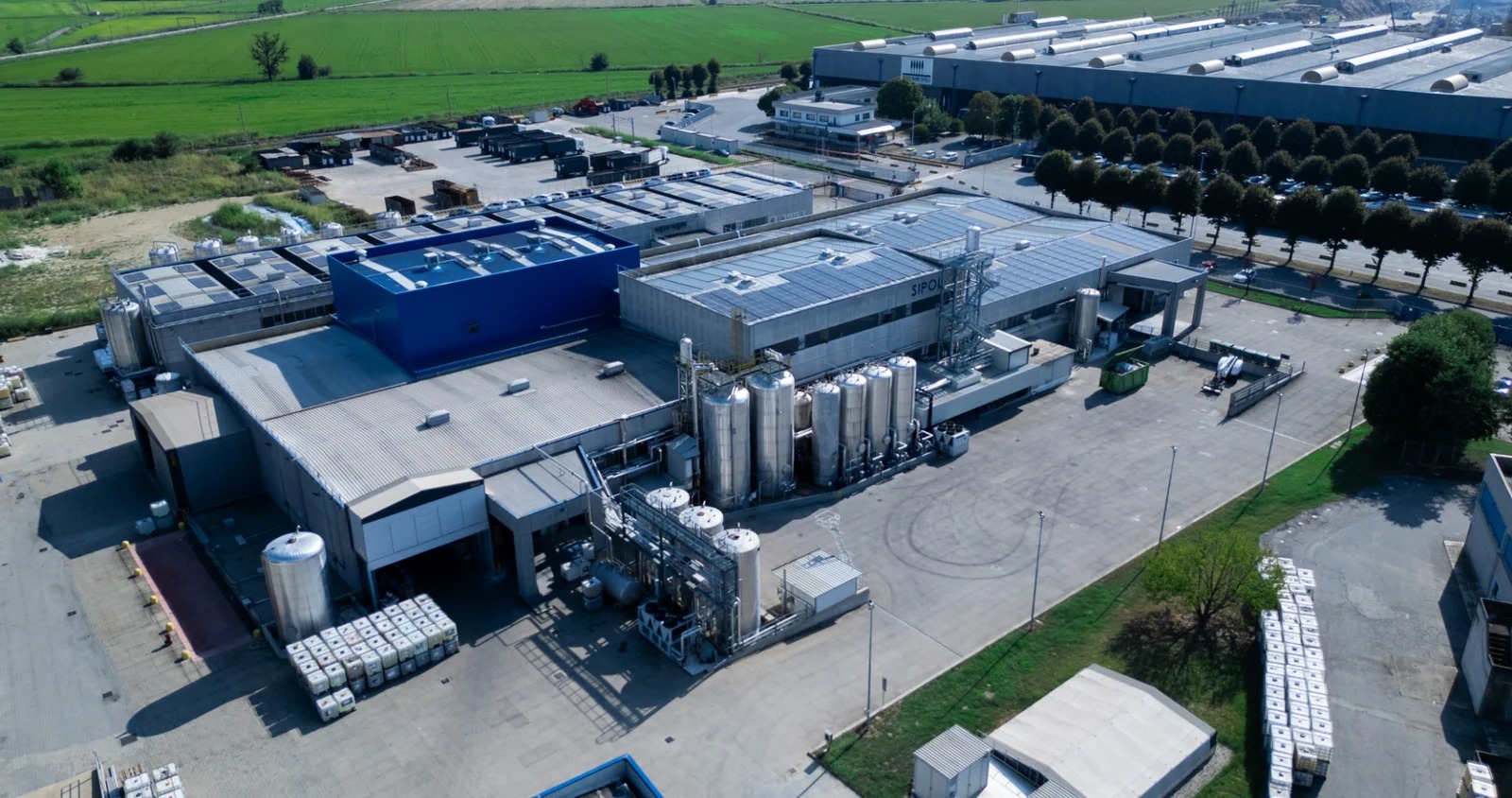
TPC-ET is a thermoplastic copolyester elastomer: a block copolymer of hard crystalline polyester segments and soft polyether segments. The hard segments carry strength, dimensional stability and heat performance. The soft segments carry flexibility, elastic recovery and toughness in the cold. It processes on standard thermoplastic equipment, with no vulcanization step, and behaves like a rubber in service.
The name comes from ISO 18064, the standard that names thermoplastic elastomers by their chemistry. TP marks a thermoplastic elastomer, C marks the copolyester category, and the ET after the hyphen says the soft segment is a polyether.
Against a thermoplastic polyurethane, a TPC-ET carries a maximum service temperature near 185°C rather than roughly 110°C, and it holds compression set and creep resistance as the temperature climbs. Those two numbers decide most of the material choices further down this page: a gasket that relaxes under years of bolt load, a connector living next to an engine, a jacket that has to stay flexible at -40°C.
Working a copolyester elastomer spec right now?
Send the hardness, the melting point and how the part is made. We will name the grade, send the data sheet, and ship material to test on your own line. The full range sits on the TPC-ET copolyester elastomers page, sixteen grades with Shore D and melting point on each.
Request a SampleWhat the letters in TPC-ET mean
ISO 18064, now in its third edition of April 2022, defines TPC as a thermoplastic copolyester elastomer: a block copolymer of alternating hard and soft segments, with ester linkages in the hard segments and ester, ether or carbonate linkages in the soft segments. The suffix after the hyphen names the soft-segment chemistry, and that is the only thing the suffix does.
| Designation | Soft segment |
|---|---|
| TPC-ET | Polyether |
| TPC-ES | Polyester |
| TPC-EE | Both ester and ether linkages |
| TPC-CE | Polycarbonate |
TPC-CE joined the list in the 2022 edition. The 2014 edition carried the first three only.
TPC-ET is the commercial workhorse of that set, which is why buyers, distributors and data sheets use the full designation as though it were the name of the material rather than one branch of a category. A grade sheet that says TPC-ET is telling you the hard block is a crystalline polyester and the soft block is a polyether.
TPC‑ET, TEEE, COPE and TPE‑E all name the same material
Four acronyms are in circulation for one class of polymer, and a supplier search on any one of them misses the grades indexed under the other three.
- TPC-ET. The ISO 18064 designation, and the one that appears on European data sheets and in specifications written against the standard.
- TEEE. Thermoplastic ether-ester elastomer, which describes the two blocks in the order the chemistry runs.
- COPE. Copolyester elastomer, the older shop-floor shorthand in North America.
- TPE-E, also written TPEE. Thermoplastic polyester elastomer, common in Asian producer literature and in market reports.
Search on all four when you are comparing suppliers or building a qualification list. P.A.T. Products supplies the range under the Sipolprene name and answers to any of the four on an inquiry.
Where TPC-ET sits among the thermoplastic elastomers
TPE is the class, not a material. ISO 18064 divides it into seven categories by chemistry, and both TPC and TPU are members of it.
| Category | What it is |
|---|---|
| TPC | Copolyester. Ester linkages in the hard segment, ester, ether or carbonate in the soft segment. |
| TPU | Polyurethane. Urethane linkages in the hard segment, ether, ester or carbonate in the soft segment. |
| TPA | Polyamide. Amide linkages in the hard segment. |
| TPS | Polystyrene. A styrene block copolymer, the material usually sold as plain "TPE" compound. |
| TPO | Polyolefin. All segments olefinic or aliphatic, or a polyolefin blended with an uncrosslinked rubber. |
| TPV | Vulcanizate. A thermoplastic blended with a rubber that is crosslinked during mixing. |
| TPZ | Anything that fits none of the above. |
Two consequences follow for a buyer. A quotation for "TPE" with no category letter is almost always a styrenic compound, TPS, which is a different material from either family on this page. And a TPC and a TPU are siblings inside one class, which is why the two get cross-shopped on the same part and why the comparison below turns on service conditions instead of on chemistry families being far apart.
How TPC-ET differs from TPU
Both are block copolymers with a hard crystalline segment and a flexible soft segment, and both can carry a polyether soft block. The difference sits in the hard segment: crystalline polyester in a TPC-ET, urethane in a TPU. That one substitution sets the heat, the compression set and the creep behavior.
Where TPC-ET wins
- Continuous heat. The crystalline hard segment holds its structure at temperatures where TPU softens. Parts that live hot, under-hood components, high-temperature air ducting, hot-fluid contact, run longer in TPC-ET.
- Compression set under sustained load. A seal's job is to push back, for years. TPC-ET holds compression set better than TPU and SEBS under sustained compression, which is why it is specified for static seals, face seals, gaskets and backup rings.
- Creep resistance. Under continuous stress, the crystalline network resists slow deformation better, so clipped, bolted and press-fit parts keep their dimensions.
- Deep cold. Elastomeric TPC-ET grades stay flexible to around -60°C, below where most TPU grades stiffen.
- Fatigue and spring behavior. High resilience and fatigue resistance suit flexing parts: bellows, boots, energy-return components, living hinges.
- Adhesion in 2K overmolding. The polar ester chemistry bonds to ABS, PC, SAN, PBT and POM, where non-polar TPEs struggle.
Where TPU keeps the advantage
- Abrasion. Polyester TPU is the reference for sliding wear: hose covers, scraper blades, load wheels, footwear outsoles.
- Soft hardnesses. TPU reaches down into the Shore A range. A soft, rubbery hand means TPU.
- Cost. TPU generally carries a lower price per kilogram. If TPU meets the service conditions, it is usually the economical answer.
- Optics and feel. Transparent grades and soft-touch surfaces are TPU strengths, which is part of why footwear and consumer overmolds stay there.
The soft-segment choice inside the TPU family is a separate decision with its own consequences, and it is covered in polyester vs polyether TPU.
The hardness overlap, read correctly
TPC-ET is quoted in Shore D. The range P.A.T. Products supplies runs Shore D 28 to 72, split into two behavior families: elastomeric grades from Shore D 28 to 45 that act like a soft rubber with strong fatigue and cold performance, and plastomeric grades from Shore D 46 to 72 that act like an engineering plastic with elastomer toughness.
TPU is quoted mostly in Shore A and reaches into Shore D at the top. The Laripur line P.A.T. Products supplies runs Shore A 66 to Shore D 77 across polyester, polyether and caprolactone chemistries. The soft end of a copolyester elastomer therefore lands near the firm end of a TPU, and inside that overlap hardness stops being the deciding variable. Sustained heat, sustained compression or long-term stress favor the copolyester. Wear and softness favor the urethane.
One special case: TPC-ET inside PVC
A PVC-modifier TPC-ET grade with a controlled melting point near 150°C compounds into PVC below PVC's degradation threshold. At high blend levels it raises elongation, improves oil resistance and cold flex, and adds abrasion resistance without a large change in hardness. If you compound PVC and keep hitting the limits of plasticizer adjustment, this is a different lever. The grade sits in the Sipolprene range.
Request a SampleHow to decide on a real part
Ask three questions in order. What is the hottest temperature the part sees continuously, and for how long? Does the part sit under sustained compression or stress it must recover from? Does it need a soft Shore A feel or heavy sliding wear resistance?
Heat, compression and creep point to TPC-ET. Softness and abrasion point to TPU. Both materials are legitimate answers for seals, jackets, hose and molded flexible parts in between, and the data sheet values on the specific grades settle it.
Where a copolyester elastomer does not belong
Not hydraulics. TPC-ET is the wrong material for oleo-dynamic and hydraulic service, and we would sooner say so here than sell a trial that fails on your bench. Thermoplastic polyurethane is the correct family for hydraulic hose and hydraulic seals.
Not the softest end. The range starts at Shore D 28. Below that, a TPU or another elastomer family fits better.
Not very high viscosity work. The Sipolprene range covers melt flow indices from roughly 10 to 35 grams per 10 minutes, so grades below MFI 10 are not part of it.
Where to buy it
P.A.T. Products supplies both families in North America, Laripur TPU and Sipolprene TPC-ET, so the recommendation follows the part rather than the product line. The TPC-ET copolyester elastomers page carries the sixteen-grade table with hardness and melting point on each, the Laripur catalog carries the typical properties and processing profile on each TPU, and the Sipol partner page covers the producer. If you are working from an existing copolyester spec, see matching a TPC-ET spec.
Frequently asked
What is TPC-ET?
TPC-ET is a thermoplastic copolyester elastomer: a block copolymer of hard crystalline polyester segments and soft polyether segments. The hard segments carry strength, dimensional stability and heat performance. The soft segments carry flexibility, elastic recovery and toughness in the cold. It processes on standard thermoplastic equipment, with no vulcanization step, and behaves like a rubber in service.
What does the ET in TPC-ET stand for?
A polyether soft segment. ISO 18064 sets the naming: TP marks a thermoplastic elastomer, C marks the copolyester category, and the suffix after the hyphen names the chemistry of the soft segment. ET is polyether, ES is polyester, EE is a soft segment carrying both ester and ether linkages, and CE is polycarbonate. TPC-ET is the commercial workhorse of that set, which is why the full designation gets used as if it were the name of the material.
Are TPC-ET, TEEE, COPE and TPE-E the same material?
Yes. TPC-ET is the ISO 18064 designation. TEEE reads as thermoplastic ether-ester elastomer, COPE as copolyester elastomer, and TPE-E, sometimes written TPEE, as thermoplastic polyester elastomer. Producers and distributors pick different ones, and a data sheet that says any of the four is describing the same class of block copolymer. Search on all of them when you are comparing suppliers, because a grade indexed under one acronym often will not surface under another.
What is the difference between TPU, TPE and TPC-ET?
TPE is the whole class of thermoplastic elastomers, not a specific material. ISO 18064 divides it into seven categories, and TPU and TPC are two of them. TPU is the urethane category, with urethane linkages in the hard segment. TPC is the copolyester category, with ester linkages in the hard segment. So a TPC-ET is a TPE and a TPU is a TPE, and the two are siblings rather than alternatives from different families. Anything sold simply as a TPE with no category letter is usually a styrenic compound, TPS, which is a different material again.
When should I use TPC-ET instead of TPU?
When the part runs hotter than TPU handles comfortably, when a seal or gasket has to hold compression set under sustained load, when long-term stress causes creep, or when service reaches very low temperatures. TPU keeps the advantage on abrasion, on soft Shore A hardnesses, and on cost per pound.
Is TPC-ET harder than TPU?
The scales overlap and sit differently. TPC-ET is quoted in Shore D, and the range P.A.T. Products supplies runs Shore D 28 to 72. TPU is quoted mostly in Shore A and reaches into Shore D at the top, and the Laripur line runs Shore A 66 to Shore D 77. The soft end of a copolyester elastomer therefore lands near the firm end of a TPU. Inside that overlap, hardness stops being the differentiator and the environment decides.
Can P.A.T. Products cross-reference a copolyester elastomer grade from another supplier?
Yes. If you are qualifying a second source or moving off another copolyester elastomer brand, we match a Sipolprene grade by hardness, melting point and processing route. That includes grades specified under the incumbent trade names Hytrel, Arnitel, Keyflex and Riteflex, which are the registered trademarks of their respective owners. We do not publish a grade-to-grade mapping, because hardness and melting point alone do not settle whether a substitution survives in a real part. Send the grade you run now and we will name the closest Sipolprene grade and ship material to test. Cross-references are available on request.
Can TPC-ET be blended into PVC?
Yes, with a grade engineered for it. A PVC-modifier grade with a controlled melting point near 150°C compounds into PVC below PVC's degradation threshold, and it raises elongation, oil resistance, cold flex and abrasion resistance without a large change in hardness.
Can I use TPC-ET for hydraulic hose or hydraulic seals?
No. Copolyester elastomer is the wrong material for oleo-dynamic and hydraulic service. Thermoplastic polyurethane is the correct family there, and P.A.T. Products will say so rather than sell a trial that fails on your bench.
Working through a TPU-or-TPC-ET decision?
Tell us the service temperature, the load and the environment. We will recommend a Laripur or Sipolprene grade and send a sample for qualification.
See the sixteen Sipolprene grades