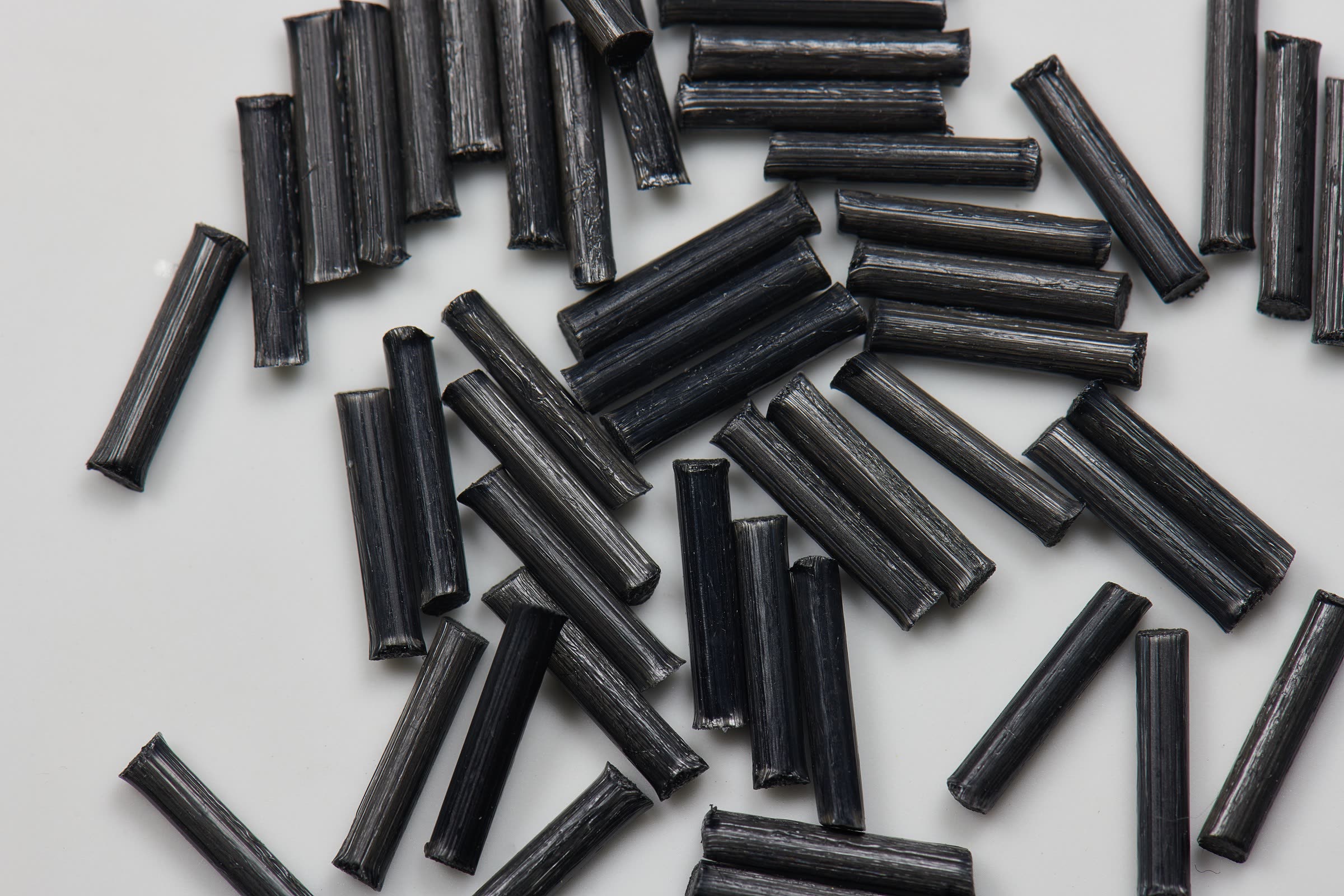
Sipolprene 55200
TPC-ET at Shore D 53 with a 198 °C melting point and MFI 20, for injection molding and extrusion. Natural grade stated FDA and EU 10/2011 food-contact compliant.
TPC-ET at Shore D 53 with a 198 °C melting point and MFI 20, for injection molding and extrusion. Natural grade stated FDA and EU 10/2011 food-contact compliant.
Sipolprene 55200 is a thermoplastic copolyester elastomer (TPC-ET) at Shore D 53, with a 198 °C melting point and a melt flow of 20 g/10 min at 230 °C, 2.16 kg. Sipol designed it as a medium-modulus ether ester elastomer whose rheology suits both injection molding and extrusion.
The natural grade carries Sipol's standard stabilization package. Sipol's data sheet states it is in compliance with American FDA and European EU 10/2011 food contact regulations.
Flexural modulus is 190 MPa and elongation at break 590 percent. Notched Izod is no break at 23 °C and at -40 °C, and the glass transition sits at -20 °C, so impact toughness holds through cold service.
The 198 °C melting point and 177 °C Vicat A/50 set the ceiling for heat exposure. Compression set is 42 percent at 23 °C and 61 percent at 70 °C (ISO 815), the figures to check for any part that has to hold a squeeze over time.
Three versions have their own Sipol data sheets. 55200 B is a black dry blend and 55200 W a UV-stabilized dry blend, both with the natural grade's mechanical values. 55200 HV - IP 948 is a high-viscosity version at MFI 13 g/10 min for extrusion, which Sipol lists as an experimental grade on a provisional sheet. A heat-stabilized dry blend is available on request.
It is also written as TPC-ET, thermoplastic copolyester elastomer, TPEE, TEEE, COPE, copolyester elastomer, thermoplastic polyester elastomer, and ether ester elastomer.
| Property | Typical value |
|---|---|
| Melting temperature | 198 °C (ISO 11357-3) |
| Crystallization temperature | 147 °C (ISO 11357-3) |
| Glass transition temperature | -20 °C (ISO 11357-2) |
| Vicat softening temperature A/50 | 177 °C (ISO 306) |
| Melt flow index (MFI) | 20 g/10 min at 230 °C, 2.16 kg (ISO 1133) |
| Melt volume rate (MVR) | 17 cm³/10 min at 230 °C, 2.16 kg (ISO 1133) |
| Shore D hardness | 53 instantaneous, 50 after 15 s (ISO 868) |
| Stress at break | 43 MPa (ISO 527) |
| Elongation at break | 590 % (ISO 527) |
| Flexural modulus | 190 MPa (ISO 178) |
| Notched Izod impact at 23 °C | No break (ISO 180) |
| Notched Izod impact at -40 °C | No break (ISO 180) |
| Abrasion loss | 24 mm³ at 5 N vertical load (ISO 4649) |
| Compression set at 23 °C | 42 % (ISO 815:1991) |
| Compression set at 70 °C | 61 % (ISO 815:1991) |
| Density | 1.19 g/cm³ (ISO 1183) |
| Water absorption | 0.40 % after 24 h immersion at 23 °C (Sipol method MI 08) |
| Color | Natural |
| Form | Granules |
| Versions | 55200 B (black dry blend), 55200 W (UV-stabilized dry blend), 55200 HV - IP 948 (high viscosity, experimental) |
| 55200 HV - IP 948 | MFI 13 g/10 min at 230 °C, 2.16 kg (ISO 1133); tear strength 147 N/mm (ASTM D 1004); Taber abrasion 50 mg/1000 cycles (ASTM D 1044, H-18, 1 kg); other values as the natural grade |
Typical values from the manufacturer's technical data sheet. They describe the product, they are not a specification. We will send the current TDS and the batch documentation your qualification needs.
Tell us the part or the process, the property you are targeting, and the volume you expect. We will confirm the grade, send the documentation, and get a sample of the candidate grade to you.
Sipol's suggested profile runs 180 to 195 °C at the rear zone up to 225 °C at the nozzle, with the mold at 30 to 40 °C.
The extrusion profile climbs from 190 to 205 °C at the feed to 210 to 225 °C at the head and die.
The natural grade is stated in compliance with FDA and EU 10/2011 food contact regulations.
55200 B is a black dry blend with the natural grade's mechanical values.
55200 W is the UV-stabilized dry blend.
55200 HV - IP 948 drops the melt flow to 13 g/10 min on the same extrusion profile.
Dry before processing. Sipol recommends 2 to 3 hours at 90 °C in a dehumidifying dryer and gives a processing moisture content of 0.15 percent.
For injection molding, Sipol suggests the rear zone at 180 to 195 °C, the center zone at 205 °C, the front zone at 215 °C and the nozzle at 225 °C, with the mold at 30 to 40 °C.
For extrusion, the suggested profile is feed zone 190 to 205 °C, compression zone 205 to 215 °C, metering zone 210 to 225 °C and head or die 210 to 225 °C. The HV - IP 948 sheet gives the same profile at MFI 13.
Package sizes: 25 kg bags with an aluminum film moisture barrier, 500 kg cardboard octabins with an inner PE liner, and 500 kg or 1000 kg big bags..
Storage: Stable for 12 months unopened in the original packaging, kept in a cool, dry place and protected from light. Material held at around 5 to 10 °C or below should sit at 15 to 20 °C for at least 24 hours before use.
Sipol states the natural grade is in compliance with American FDA and European EU 10/2011 food contact regulations. Read the safety data sheet before handling.
Sipolprene 55200 melts at 198 °C. For injection molding Sipol suggests 180 to 195 °C at the rear zone, 205 °C center, 215 °C front and 225 °C at the nozzle, with the mold at 30 to 40 °C. For extrusion the profile runs 190 to 205 °C at the feed, 205 to 215 °C in compression, and 210 to 225 °C through metering and the die. Dry first for 2 to 3 hours at 90 °C in a dehumidifying dryer.
Sipol's data sheet states that natural Sipolprene 55200 is in compliance with American FDA and European EU 10/2011 food contact regulations. The 55200 HV - IP 948 sheet carries the same statement. The 55200 B and 55200 W dry-blend sheets do not, so a food-contact part should be specified in the natural grade. Ask for the food contact declaration along with the TDS and SDS.
The natural grade at MFI 20 g/10 min (230 °C, 2.16 kg) is rated for extrusion as well as molding. Sipolprene 55200 HV - IP 948 is the high-viscosity version at MFI 13 g/10 min, with more melt strength in the die. Sipol lists it as an experimental grade on a provisional data sheet, so plan a trial before you specify it.
No, Sipolprene 55200 should not be used for hydraulic hose. Copolyester elastomers are not the material for hydraulic hose or oleodynamic service. Thermoplastic polyurethane is the material for hydraulic hose. The limit applies equally to the 55200 HV - IP 948 extrusion version at MFI 13 g/10 min.
Sipolprene 54205 is one Shore D point harder at 54 against 53, melts at 204 °C against 198 °C, and has a Vicat of 182 °C against 177 °C. Its compression set at 23 °C is 22 percent against 42 percent for 55200, and abrasion loss is 18 mm³ against 24 mm³. Sipolprene 55200 has the higher elongation at break, 590 percent against 500.
Yes. We send the Technical Data Sheet (TDS), Safety Data Sheet (SDS), and Food contact declaration (FDA, EU 10/2011) on request, in the manufacturer's current revision. Use Request TDS or SDS above and tell us what your qualification review needs.
Shore D 54 with a 204 °C melt and a lower compression set at 23 °C.
Shore D 54 with a 213 °C melt and a 172 °C crystallization temperature.
The next step up in stiffness, Shore D 58 and 280 MPa flexural modulus.
The Sipolprene range by hardness and melting point, and where copolyester elastomer does not fit.
What the TPC-ET name means and how copolyester elastomer differs from TPU.
Matching an existing specification by Shore D hardness, melt viscosity and version suffix.