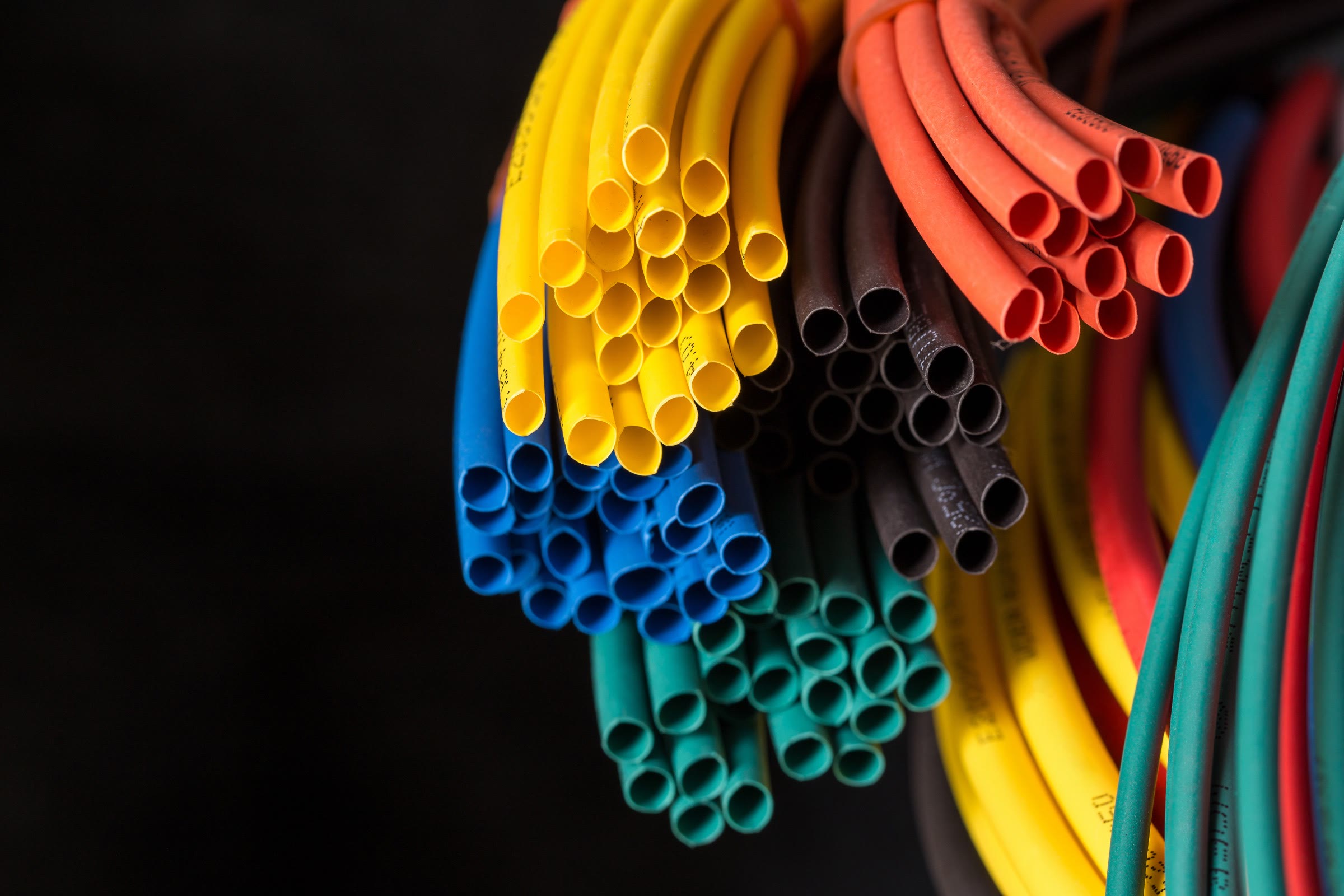
Technipol PA 7115
Copolyamide hot melt for heat-shrink tubing and sleeve, 120 °C softening point, 100 Pa·s at 160 °C. Very high adhesion to PE and PP.
Copolyamide hot melt for heat-shrink tubing and sleeve, 120 °C softening point, 100 Pa·s at 160 °C. Very high adhesion to PE and PP.
Technipol PA 7115 is an amber copolyamide hot-melt adhesive with a softening point of 120 °C, a melting temperature of 100 °C and a Brookfield viscosity of 100 Pa·s at 160 °C. In the electrical and electronics sector Sipol reports it in use for heat-shrink tubing (HST) and heat-shrink sleeve (HSS) production.
Sipol credits it with very high adhesion on non-polar substrates, for example PE and PP, and very high resistance to both the physical curing processes of PE and the expansion and shrinking operations that follow.
Sipol characterizes the grade by high viscosity, a low softening point and very good flexibility. The data sheet also gives electrical values, a surface resistivity of 1.17 × 10¹¹ Ω, a volume resistivity of 1.39 × 10¹³ Ω·cm and a relative permittivity of 4.00.
e-Technipol PA 7115 carries identical typical values on its own data sheet. Both state more than 60 percent raw materials from non-edible renewable resources.
It is also written as copolyamide hot melt adhesive, co-polyamide hot melt, polyamide hot melt adhesive, heat shrink tubing adhesive, thermoplastic polyamide adhesive, and CoPA.
| Property | Typical value |
|---|---|
| Softening point | 120 °C (Sipol method MI 13) |
| Melting temperature | 100 °C (ISO 11357-3) |
| Brookfield viscosity | 100 Pa·s at 160 °C (Sipol method MI 12, Brookfield CAP 2000+ cone and plate) |
| Density | 0.98 g/cm³ (ISO 1183) |
| Surface resistivity | 1.17 × 10¹¹ Ω at 23 °C (IEC 62631-3-1:2016) |
| Volume resistivity | 1.39 × 10¹³ Ω·cm at 23 °C (IEC 62631-3-1:2016) |
| Relative permittivity | 4.00 (ASTM D150:2018) |
| Renewable raw materials | More than 60 percent, from non-edible renewable resources (Sipol data sheet) |
| Color | Amber |
| Form | Granules |
| Versions | Technipol PA 7115, e-Technipol PA 7115 (identical typical values) |
Typical values from the manufacturer's technical data sheet. They describe the product, they are not a specification. We will send the current TDS and the batch documentation your qualification needs.
Tell us the part or the process, the property you are targeting, and the volume you expect. We will confirm the grade, send the documentation, and get a sample of the candidate grade to you.
Sipol reports PA 7115 in use in HST production.
Sipol reports PA 7115 in use in HSS production.
Very high adhesion on non-polar substrates, per the data sheet.
Very high resistance to the physical curing of PE and the expansion and shrinking that follow.
The data sheet gives viscosity at 160 °C, 100 Pa·s, a melting temperature of 100 °C and a softening point of 120 °C, and no machine profile. Confirm the application temperature in a trial on the actual line.
Package sizes: 25 kg bags with an aluminum film moisture barrier, and 500 kg cardboard octabins with an inner PE liner..
Storage: Stable for 12 months unopened in the original packaging, kept in a cool, dry place and protected from light. Material held at around 5 to 10 °C or below should stand at 15 to 20 °C for at least 24 hours before use.
Read the safety data sheet before handling.
Sipol reports Technipol PA 7115 in use in heat-shrink tubing and heat-shrink sleeve production. The data sheet credits it with very high adhesion on non-polar substrates such as PE and PP, and very high resistance to the physical curing processes of PE and the expansion and shrinking operations that follow. It softens at 120 °C, melts at 100 °C and measures 100 Pa·s at 160 °C.
Yes. Sipol describes very high adhesion of Technipol PA 7115 on non-polar substrates, and names PE and PP as the examples. It is also described as highly resistant to the physical curing processes of PE and to the expansion and shrinking operations that follow. Confirm adhesion on your own PE or PP compound in a trial.
Sipol's data sheet gives Technipol PA 7115 a surface resistivity of 1.17 × 10¹¹ Ω and a volume resistivity of 1.39 × 10¹³ Ω·cm, both at 23 °C by IEC 62631-3-1:2016, and a relative permittivity of 4.00 by ASTM D150:2018. The data sheet gives no dielectric strength or comparative tracking index for this grade.
Technipol PA 7115 softens at 120 °C and measures 100 Pa·s at 160 °C; Technipol PA 7110 softens at 112 °C and measures 74 Pa·s at the same temperature. PA 7115's data sheet adds the PE and PP adhesion, the resistance to PE curing and shrinking, the heat-shrink use and the electrical values, none of which appear on the PA 7110 sheet. PA 7115 states more than 60 percent renewable raw materials, PA 7110 more than 80.
Yes. We send the Technical Data Sheet (TDS) and Safety Data Sheet (SDS) on request, in the manufacturer's current revision. Use Request TDS or SDS above and tell us what your qualification review needs.
Lower-softening, high-viscosity copolyamide at 112 °C and 74 Pa·s at 160 °C.
Electronics copolyamide for low pressure molding and potting, UL94 V0 on its data sheet.
Electronics copolyamide with low-temperature flexibility to minus 50 °C.
The Technipol and Technipol PA range by softening point and use.
What the adhesive liner of heat-shrink tubing has to do, and the grade Sipol names for it.