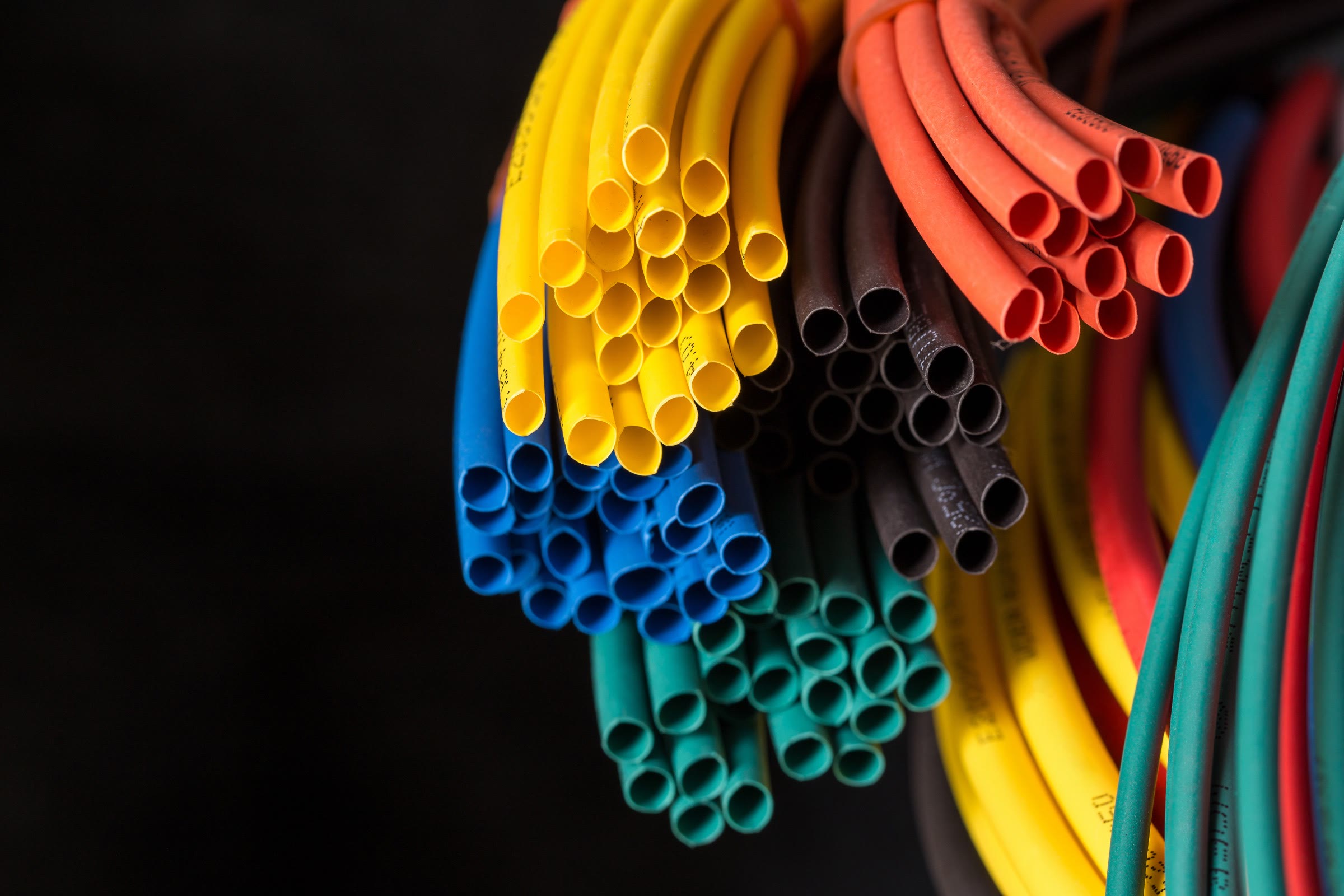
Heat-shrink tubing adhesive
Technipol PA 7115, the copolyamide hot-melt liner for heat-shrink tubing and sleeves. Bonds polyethylene and polypropylene, comes through crosslinking and expansion, and flows at shrink temperature.
Technipol PA 7115, the copolyamide hot-melt liner for heat-shrink tubing and sleeves. Bonds polyethylene and polypropylene, comes through crosslinking and expansion, and flows at shrink temperature.
Technipol PA 7115 is a copolyamide hot melt made for the adhesive layer of heat-shrink tubing and heat-shrink sleeves. It softens at 120 °C, flows at 100 Pa·s at 160 °C, and Sipol states very high adhesion to polyethylene and polypropylene, both non-polar substrates.
Sipol's data sheet states very high resistance to the physical curing that crosslinks the polyethylene jacket and to the expansion and shrinking steps that follow, and records that the grade is used in heat-shrink tubing and sleeve production in the electrical and electronics sector. P.A.T. Products supplies it to tubing and sleeve makers across the United States, Canada and Mexico.
The liner typically goes through crosslinking and expansion together with the polyethylene jacket. Technipol PA 7115 is built to come through those steps without losing adhesion.
A softening point of 120 °C and a melting point of 100 °C put the liner in its flow range at shrink temperature, so it fills around the substrate as the jacket recovers.
Very high adhesion to polyethylene and polypropylene lets the sleeve seal to cable jackets and pipe coatings made from them.
Volume resistivity of 1.39 × 10¹³ Ω·cm and a relative permittivity of 4.00, with very good flexibility.
| Property | Technipol PA 7115 | Technipol PA 7110 | Method |
|---|---|---|---|
| Softening point | 120 °C | 112 °C | MI 13 |
| Melting temperature | 100 °C | not stated | ISO 11357-3 |
| Brookfield viscosity at 160 °C | 100 Pa·s | 74 Pa·s | MI 12 |
| Density | 0.98 g/cm³ | 0.98 g/cm³ | ISO 1183 |
| Surface resistivity, 23 °C | 1.17 × 10¹¹ Ω | not stated | IEC 62631-3-1 |
| Volume resistivity, 23 °C | 1.39 × 10¹³ Ω·cm | not stated | IEC 62631-3-1 |
| Relative permittivity | 4.00 | not stated | ASTM D150 |
| Renewable raw materials (non-edible) | more than 60% | more than 80% | Sipol TDS |
| Color | Amber | Amber |
Typical values from Sipol's technical data sheets, revision dated 17 September 2024. Not specification limits.
Technipol PA 7110 is the sister grade: the same amber copolyamide family at a lower softening point (112 °C) and viscosity (74 Pa·s at 160 °C), with more than 80 percent renewable raw materials. Both are also listed under Sipol's e-Technipol PA name for electrical and electronics customers.
Tell us the jacket material, the shrink temperature and the substrates the sleeve has to seal. We will confirm the grade and arrange trial material.
Request a SampleTechnipol PA 7115 granules ship in 25 kg bags with an aluminum moisture barrier or 500 kg octabins with a polyethylene liner; PA 7110 also comes in 500 kg and 1000 kg big bags. Product keeps 12 months unopened in a cool, dry place out of light. TDS and SDS are available for both grades, along with Sipol's REACH and RoHS statements.
Dual-wall heat-shrink tubing carries a hot-melt liner inside a crosslinked polyolefin jacket. When the tube is heated the jacket recovers and the liner melts and flows to seal the joint. Technipol PA 7115 from Sipol is a copolyamide hot melt used for that liner in heat-shrink tubing and sleeve production. It softens at 120 °C and bonds strongly to polyethylene and polypropylene.
Yes. Sipol's data sheet for Technipol PA 7115 states very high adhesion to non-polar substrates such as polyethylene and polypropylene. It also states very high resistance to the physical curing of polyethylene and to the expansion and shrinking operations that follow, which is what a heat-shrink liner goes through.
100 Pa·s Brookfield at 160 °C, with a softening point of 120 °C and a melting point of 100 °C. That high viscosity at a low softening point keeps the liner in place on the jacket and lets it flow at shrink temperature. Technipol PA 7110 runs lower, at 74 Pa·s at 160 °C and a 112 °C softening point.
Sipol's data sheet for Technipol PA 7115 gives a surface resistivity of 1.17 × 10^11 Ω and a volume resistivity of 1.39 × 10^13 Ω·cm at 23 °C (IEC 62631-3-1), and a relative permittivity of 4.00 (ASTM D150).
Partly. Technipol PA 7115 contains more than 60 percent raw materials from renewable, non-edible sources, and Technipol PA 7110 more than 80 percent, per Sipol's data sheets.