Technipol PA 6136
Copolyamide hot melt used in road marking, 135 °C softening point, 5 Pa·s at 190 °C and Shore D 34. Fast setting, short open time, good low-temperature resistance.
Copolyamide hot melt used in road marking, 135 °C softening point, 5 Pa·s at 190 °C and Shore D 34. Fast setting, short open time, good low-temperature resistance.
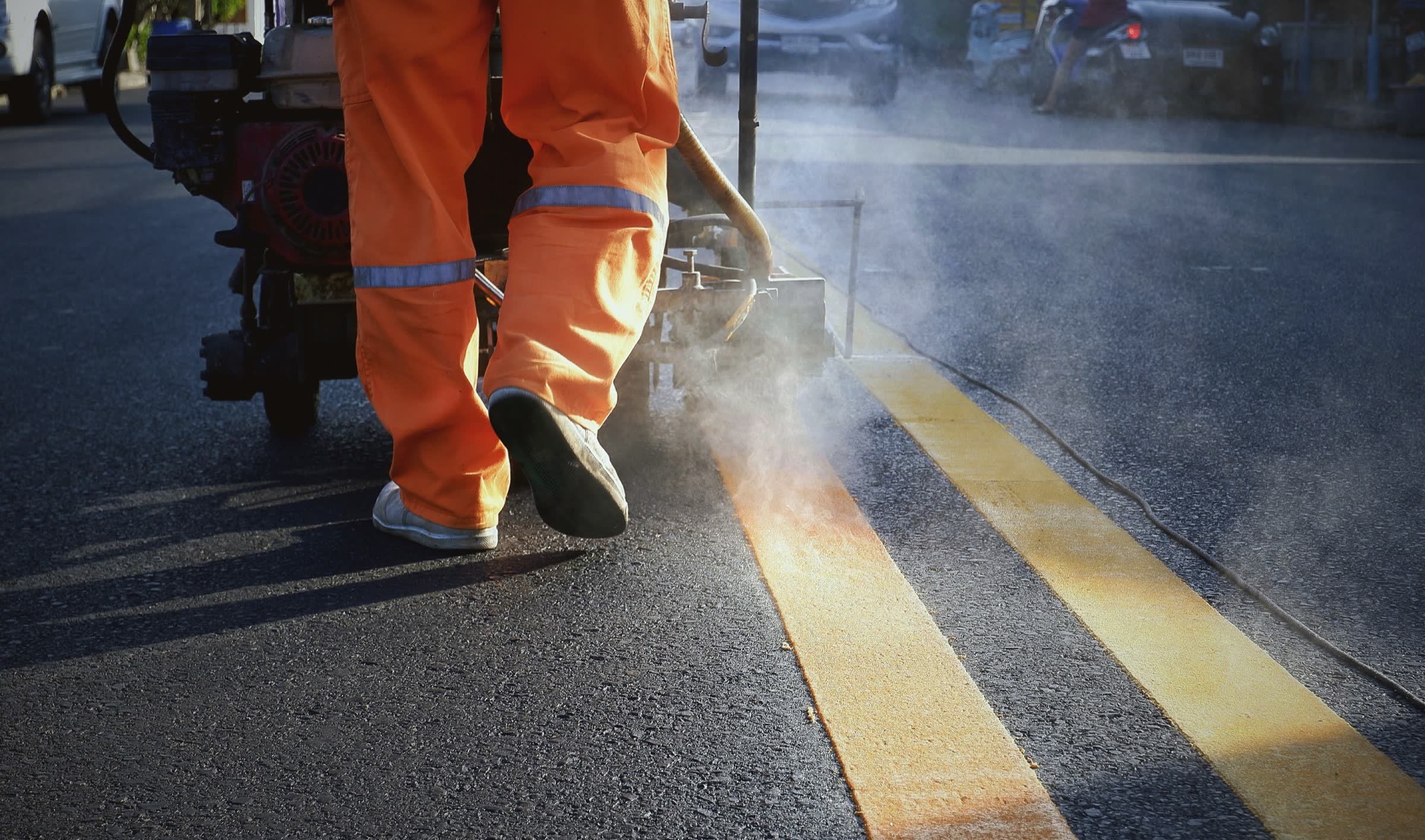
Technipol PA 6136 is a copolyamide hot-melt adhesive with a softening point of 135 °C, a Brookfield viscosity of 5 Pa·s at 190 °C and a Shore D hardness of 34. Sipol states that it is used in road marking.
Sipol describes a low viscosity at application temperature, a fast setting time, a short open time and excellent resistance to low temperatures.
Against Technipol PA 6135, its road-marking sibling at the same 135 °C softening point, PA 6136 is the firmer grade. Viscosity is 5 against 2.6 Pa·s at 190 °C, hardness Shore D 34 against 26, flexural modulus 30 against 15 MPa and stress at break 5 against 3 MPa. Elongation at break is 175 percent.
Sipol also lists excellent adhesion to leather, wood, paper and cardboard, and pre-treated metal. The data sheet gives 77 percent bio-based carbon as a share of total carbon by ASTM D6866, and more than 70 percent raw materials from non-edible renewable sources.
It is also written as copolyamide hot melt adhesive, co-polyamide hot melt, polyamide hot melt adhesive, thermoplastic polyamide adhesive, and CoPA.
| Property | Typical value |
|---|---|
| Softening point | 135 °C (Sipol method MI 13) |
| Brookfield viscosity | 5 Pa·s at 190 °C (Sipol method MI 12, Brookfield CAP 2000+ cone and plate) |
| Density | 0.98 g/cm³ (ISO 1183) |
| Shore D hardness | 34 instantaneous, 27 after 15 s (ISO 868) |
| Elongation at break | 175 percent (ISO 527) |
| Stress at break | 5 MPa (ISO 527) |
| Flexural modulus | 30 MPa (ISO 178) |
| Renewable source content | 77 percent bio-based carbon of total carbon (ASTM D6866) |
| Renewable raw materials | More than 70 percent, from non-edible renewable sources (Sipol data sheet) |
| Form | Granules |
Typical values from the manufacturer's technical data sheet. They describe the product, they are not a specification. We will send the current TDS and the batch documentation your qualification needs.
Tell us the part or the process, the property you are targeting, and the volume you expect. We will confirm the grade, send the documentation, and get a sample of the candidate grade to you.
The use Sipol states for PA 6136.
Sipol lists excellent resistance to low temperatures.
Named on the data sheet with excellent adhesion.
Sipol lists excellent adhesion to each.
Named on the data sheet with excellent adhesion.
The data sheet gives viscosity at 190 °C, 5 Pa·s, and no machine profile. Sipol describes a fast setting time and a short open time, so the bond has to be closed quickly after the melt is applied. Confirm the application temperature in a trial on the actual equipment.
Package sizes: 25 kg bags with an aluminum film moisture barrier, 500 kg cardboard octabins with an inner PE liner, and 500 kg big bags..
Storage: Stable for 24 months unopened in the original packaging, kept in a cool, dry place and protected from light. Material held at around 5 to 10 °C or below should stand at 15 to 20 °C for at least 24 hours before use.
Read the safety data sheet before handling.
Sipol states that Technipol PA 6136 is used in road marking, on the strength of a low viscosity at application temperature, a fast setting time, a short open time and excellent resistance to low temperatures. It softens at 135 °C and measures 5 Pa·s at 190 °C. The data sheet does not describe the marking formulation, so the loading and the role in the mix are settled with the formulator.
Technipol PA 6136 is the firmer and stronger grade of the pair, Shore D 34 against 26, 30 MPa flexural modulus against 15, and 5 MPa stress at break against 3. It is also more viscous, 5 against 2.6 Pa·s at 190 °C. Both soften at 135 °C. PA 6135 stretches further, 200 percent against 175 percent elongation.
Technipol PA 6136 carries a measured 77 percent bio-based carbon as a share of total carbon, by ASTM D6866, on Sipol's data sheet. Sipol separately states that more than 70 percent of its raw materials come from non-edible renewable sources. The ASTM D6866 value is the one to quote where a tested carbon figure is required.
Yes. We send the Technical Data Sheet (TDS) and Safety Data Sheet (SDS) on request, in the manufacturer's current revision. Use Request TDS or SDS above and tell us what your qualification review needs.
The softer, more fluid road-marking grade, Shore D 26 and 2.6 Pa·s at 190 °C.
Copolyamide at 138 °C with extrusion and melter profiles.
Harder copolyamide at 150 °C and Shore D 43, with 86 percent bio-based carbon.
The Technipol and Technipol PA range by softening point and use.