Technipol Bio 1120
Aliphatic copolyester certified OK Compost INDUSTRIAL, HOME and SOIL. Melting point 114 °C, Shore D 61. Renewable-content versions 1124, 1125 and 1129.
Aliphatic copolyester certified OK Compost INDUSTRIAL, HOME and SOIL. Melting point 114 °C, Shore D 61. Renewable-content versions 1124, 1125 and 1129.
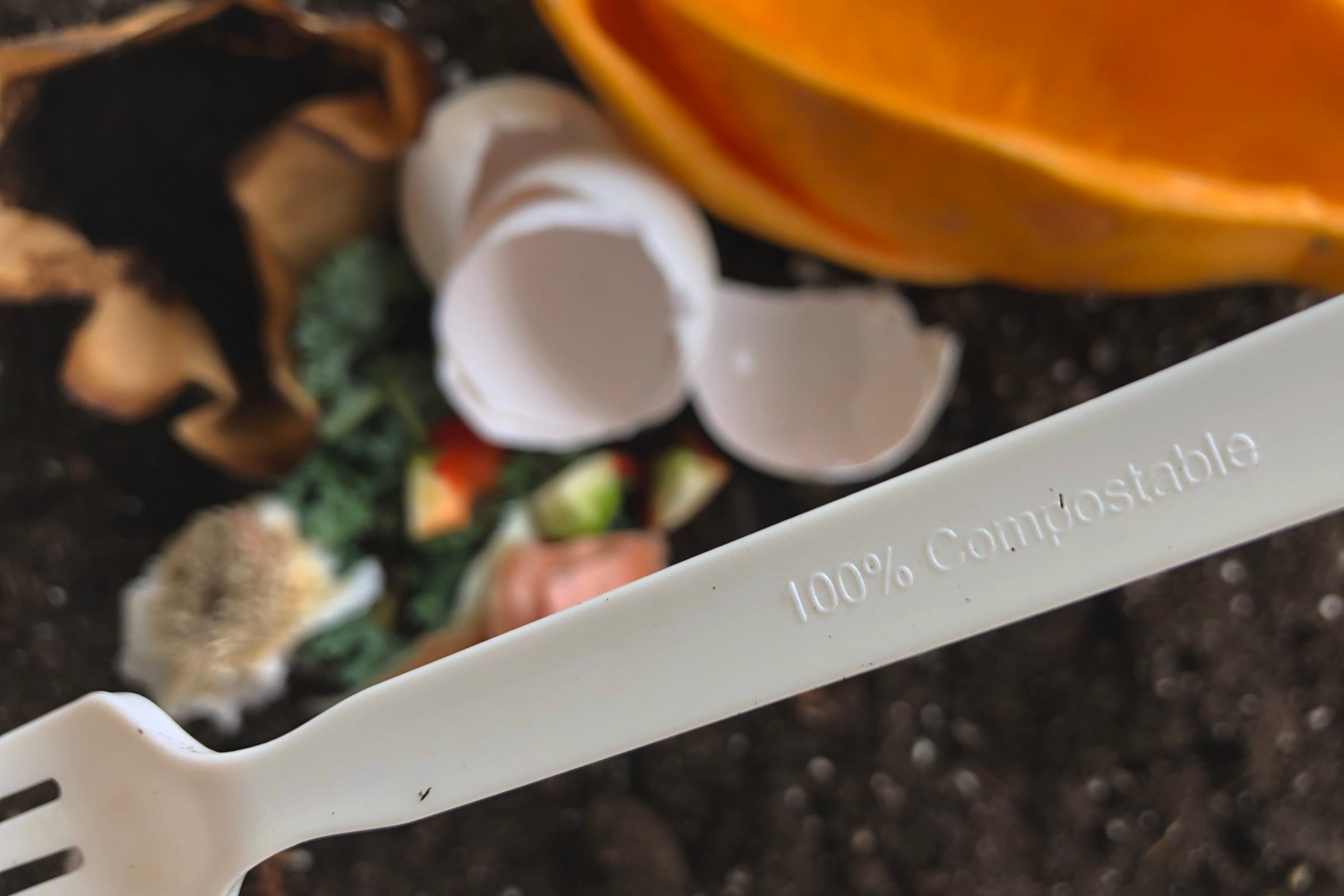
Technipol Bio 1120 is an aliphatic copolyester, listed by Sipol as PBS, with a melting point of 114 °C and a Shore D hardness of 61, certified OK Compost INDUSTRIAL, OK Compost HOME and OK Compost SOIL by TÜV Austria. Sipol formulated it for biodegradable and compostable compounds, and it is usable for injection molding.
Sipol states good compatibility with other biodegradable polymers such as polylactic acid and starch. It works as the support polymer for masterbatches in both granule and powder form. Sipol also states that its Technipol Bio grades comply with both European and US food contact regulations.
Stress at break is 50 MPa with elongation at break of 450% and a flexural modulus of 450 MPa. Notched Izod impact is 46 J/m at 23 °C and 32 J/m at -40 °C, with a glass transition at -32 °C. The 114 °C melt keeps processing low, with an injection nozzle at 115 °C and an extrusion die at 110 to 130 °C.
Three versions add renewable content from inedible-grade sources on the same property table and the same certification. Technipol Bio 1124 carries more than 40%, Technipol Bio 1125 more than 50%, and Technipol Bio 1129 more than 95%. Sipol's data sheets for 1125 and 1129 are marked provisional.
It is also written as PBS, polybutylene succinate, aliphatic copolyester, compostable copolyester, biodegradable copolyester, compostable polyester, and aliphatic polyester.
| Property | Typical value |
|---|---|
| Melting temperature | 114 °C (ISO 11357-3) |
| Crystallization temperature | 66 °C (ISO 11357-3) |
| Glass transition temperature | -32 °C (ISO 11357-2) |
| Vicat softening temperature | 99 °C, A/50 (ISO 306) |
| MFI | 22 g/10 min at 190 °C, 2.16 kg (ISO 1133) |
| MVR | 17 cm³/10 min at 190 °C, 2.16 kg (ISO 1133) |
| Shore D hardness | 61 instantaneous, 59 after 15 s (ISO 868) |
| Stress at break | 50 MPa (ISO 527) |
| Elongation at break | 450% (ISO 527) |
| Flexural modulus | 450 MPa (ISO 178) |
| Abrasion resistance | 64 mm³, vertical load 5 N (ISO 4649) |
| Izod impact, notched, 23 °C | 46 J/m (ISO 180) |
| Izod impact, notched, -40 °C | 32 J/m (ISO 180) |
| Compression set, 23 °C | 33% (ISO 815:1991) |
| Compression set, 70 °C | 46% (ISO 815:1991) |
| Density | 1.26 g/cm³ (ISO 1183) |
| Water absorption | 0.44%, 23 °C for 24 h immersion (Sipol method MI 08) |
| Certification | OK Compost INDUSTRIAL, OK Compost HOME, OK Compost SOIL (TÜV Austria) |
| Renewable content | Bio 1124 above 40%; Bio 1125 above 50%; Bio 1129 above 95% (inedible-grade sources) |
| Form | Granules |
| Versions | Technipol Bio 1120; Bio 1124; Bio 1125 (provisional data sheet); Bio 1129 (provisional data sheet) |
Typical values from the manufacturer's technical data sheet. They describe the product, they are not a specification. We will send the current TDS and the batch documentation your qualification needs.
Tell us the part or the process, the property you are targeting, and the volume you expect. We will confirm the grade, send the documentation, and get a sample of the candidate grade to you.
Certified OK Compost INDUSTRIAL, HOME and SOIL, for compounds that need all three.
Sipol states good compatibility with polylactic acid and starch.
Support polymer for masterbatches in granules or powder.
Molded with the nozzle at 115 °C and the mold at 20 to 30 °C.
Bio 1124, 1125 and 1129 carry more than 40, 50 and 95% renewable content.
Dry before processing at 60 °C for 2 to 3 hours in a dehumidifying dryer, to a processing moisture content of 0.15%.
For injection molding, Sipol suggests 100 °C at the rear zone, 105 °C at the center zone, 110 °C at the front zone and 115 °C at the nozzle, with the mold at 20 to 30 °C.
For extrusion, Sipol suggests 95 to 105 °C in the feeding zone, 105 to 125 °C in the compression zone, and 110 to 130 °C in the metering zone and at the head and die. The same profiles apply to Bio 1124, 1125 and 1129.
Package sizes: 25 kg bags with an aluminum film barrier against moisture, 500 kg cardboard octabins with an inner PE liner, and 500 kg and 1000 kg big bags..
Storage: Stable for 6 months unopened in the original packaging, kept in a cool, dry place and protected from light. Material stored at around 5 to 10 °C or below should be held at 15 to 20 °C for at least 24 hours before use.
Technipol Bio 1120, 1124, 1125 and 1129 are certified OK Compost INDUSTRIAL, OK Compost HOME and OK Compost SOIL by TÜV Austria. Sipol states that its Technipol Bio grades comply with both European and US food contact regulations. Read the safety data sheet before handling.
Yes. Technipol Bio 1120 is certified OK Compost HOME by TÜV Austria, alongside OK Compost INDUSTRIAL and OK Compost SOIL, according to Sipol's data sheet. The renewable-content versions, Bio 1124, Bio 1125 and Bio 1129, state the same three certifications. Certification applies to the resin; a finished compound or article containing it needs its own assessment. Ask for the current certificate with the data sheet.
Renewable content. The four share one property table, a 114 °C melting point, Shore D 61, 22 g/10 min at 190 °C and a 450 MPa flexural modulus, and the same OK Compost certification. Technipol Bio 1124 carries more than 40% content from inedible-grade renewable sources, Bio 1125 more than 50% and Bio 1129 more than 95%. Sipol marks the 1125 and 1129 data sheets provisional.
Technipol Bio 1120 melts at 114 °C. Sipol's injection profile runs 100 °C at the rear zone up to 115 °C at the nozzle, with the mold at 20 to 30 °C. The extrusion profile runs 95 to 105 °C in the feeding zone up to 110 to 130 °C at the head and die. Dry first at 60 °C for 2 to 3 hours in a dehumidifying dryer.
Technipol Bio 1120 is aliphatic and stiff, at Shore D 61, 450 MPa flexural modulus and 50 MPa stress at break. Technipol Bio 1160 is aromatic-aliphatic and much softer, at Shore D 34, 60 MPa flexural modulus and 17 MPa, with no break in notched Izod at -40 °C. Both melt at 114 to 115 °C, blend with PLA and starch, and state OK Compost INDUSTRIAL, HOME and SOIL certification.
Yes. Sipol states that Technipol Bio 1120 can be used as the support polymer for masterbatches in both granule and powder form, with good compatibility with polylactic acid and starch. That makes it a carrier for color or additive concentrates going into compostable compounds. Its MFI is 22 g/10 min at 190 °C under 2.16 kg, and the carrier itself is certified OK Compost INDUSTRIAL, HOME and SOIL.
Yes. We send the Technical Data Sheet (TDS), Safety Data Sheet (SDS), OK Compost certificate, and Food contact declaration (EU and US) on request, in the manufacturer's current revision. Use Request TDS or SDS above and tell us what your qualification review needs.
Softer aromatic-aliphatic certified grade at Shore D 34, also as a powder.
Copolyester carrier for PET masterbatch.
The Technipol Bio range and its certifications.
PET carriers and compostable carriers side by side.