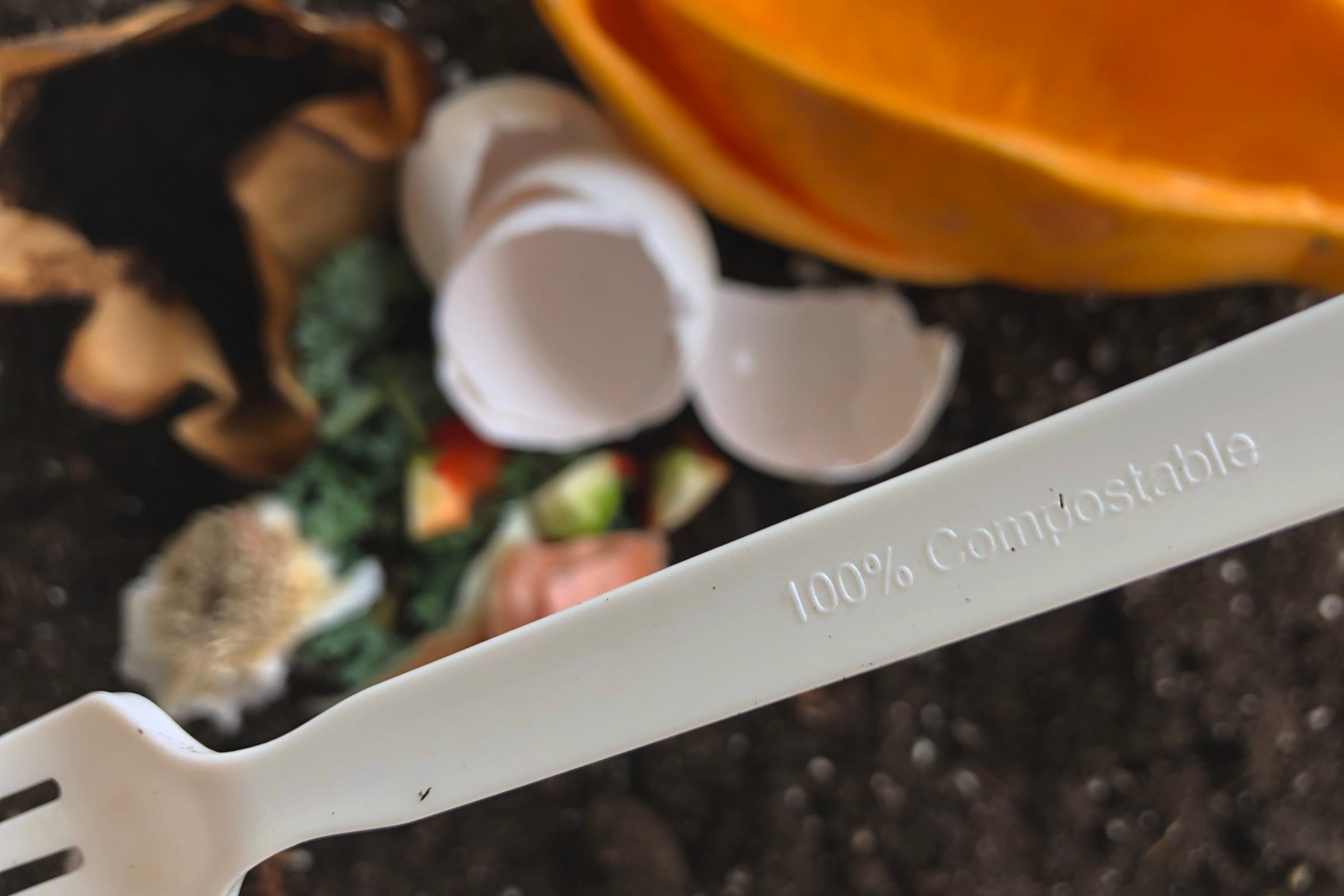
Compostable copolyesters
Technipol Bio PBS and PBAT resins for compostable compounds, masterbatches and injection molding, certified OK Compost Industrial, Home and Soil, with bio-based versions up to more than 95 percent renewable.
Technipol Bio PBS and PBAT resins for compostable compounds, masterbatches and injection molding, certified OK Compost Industrial, Home and Soil, with bio-based versions up to more than 95 percent renewable.
Technipol Bio is Sipol's line of biodegradable and compostable copolyesters: PBS and PBAT resins for compostable compounds, masterbatches and injection molding, and PBSe hot melts for low-temperature bonding. Five grades carry TÜV Austria OK Compost certification for industrial composting, home composting and soil.
The resins are compatible with polylactic acid (PLA) and starch, and Sipol states that all Technipol Bio grades meet European and US food contact requirements. P.A.T. Products supplies the line to compounders, masterbatch makers and molders across the United States, Canada and Mexico.
Aliphatic copolyester, melting at 114 °C. Stiff and strong for a compostable resin: Shore D 61, flexural modulus 450 MPa, stress at break 50 MPa and 450 percent elongation. Vicat softening at 99 °C.
Technipol Bio 1120 →Aromatic-aliphatic copolyester, melting at 115 °C. Soft and tough: Shore D 34, flexural modulus 60 MPa, and no break in notched Izod at 23 °C or at -40 °C. Also as Technipol Bio 1160/P, in powder.
Technipol Bio 1160 →The bio-based versions carry the same typical properties as their base grade on Sipol's data sheets. Technipol Bio 1124 and 1129 are the PBS with more than 40 and more than 95 percent renewable raw materials; Technipol Bio 1164 is the PBAT with more than 40 percent. A compound can move to the bio-based version with no change in the stated typical properties.
| Grade | Polymer | Melting point | MFI, g/10 min (2.16 kg) | Shore D | Renewable content | OK Compost |
|---|---|---|---|---|---|---|
| Technipol Bio 1120 | PBS | 114 °C | 22 at 190 °C | 61 | none stated | Industrial, Home, Soil |
| Technipol Bio 1124 | PBS | 114 °C | 22 at 190 °C | 61 | more than 40% | Industrial, Home, Soil |
| Technipol Bio 1129 | PBS | 114 °C | 22 at 190 °C | 61 | more than 95% | Industrial, Home, Soil |
| Technipol Bio 1160 | PBAT | 115 °C | 20 at 160 °C | 34 | none stated | Industrial, Home, Soil |
| Technipol Bio 1164 | PBAT | 115 °C | 20 at 160 °C | 34 | more than 40% | Industrial, Home, Soil |
| Technipol Bio 707 | PBSe | 64 °C | 30 at 150 °C | 54 | more than 60% | not stated |
| Technipol Bio 709 | PBSe | 64 °C | 30 at 150 °C | not stated | more than 95% | not stated |
Typical values from Sipol's technical data sheets (melting point ISO 11357-3, MFI ISO 1133, instantaneous Shore D ISO 868); polymer names as Sipol publishes them. Renewable content is the share of raw materials from renewable, non-edible sources as each data sheet states it. OK Compost certification by TÜV Austria as stated on each data sheet. Not specification limits.
Tell us the other polymers in the blend, the process and the certification the finished part needs. We will match the Technipol Bio grade and arrange trial material.
Request a SampleAs a component blended with PLA or starch, where Sipol's data sheets state good compatibility.
As the carrier polymer for color and additive masterbatches going into compostable products, in granules or in powder.
Masterbatch carriers →All PBS and PBAT grades are usable for injection molding. Technipol Bio 1160's suggested profile runs 105 to 120 °C from rear zone to nozzle with the mold at 20 to 30 °C.
Technipol Bio 707 and 709 melt at 64 °C and apply at 120 to 160 °C, for toe puffs, counters and heat-sensitive textiles.
Footwear hot melts →Technipol Bio granules ship in 25 kg bags with an aluminum moisture barrier, 500 kg lined octabins, or 500 kg and 1000 kg big bags. Shelf life for Technipol Bio 1160 is 6 months unopened in a cool, dry place out of light, shorter than for the conventional Technipol grades, so order quantities should match use.
Available on request: TDS and SDS for every grade, TÜV Austria OK Compost certificates for the certified grades, Sipol's food contact statements, and a tin-free declaration for Technipol Bio 707 and 709.
Both, by grade. Sipol lists Technipol Bio 1160 and 1164 as PBAT, an aromatic-aliphatic copolyester, and Technipol Bio 1120, 1124, 1125 and 1129 as PBS, an aliphatic copolyester. Technipol Bio 707 and 709 are PBSe hot melts. All are biodegradable and compostable copolyesters made by Sipol in Italy.
The data sheets for Technipol Bio 1120, 1124, 1129, 1160 and 1164 each state certification by TÜV Austria as OK Compost INDUSTRIAL, OK Compost HOME and OK Compost SOIL. Certificates are available on request.
Stiffness. Technipol Bio 1120 (PBS) is Shore D 61 with a flexural modulus of 450 MPa and 50 MPa stress at break. Technipol Bio 1160 (PBAT) is Shore D 34 with a flexural modulus of 60 MPa and does not break in notched Izod at -40 °C. Both melt at about 115 °C and blend with PLA and starch.
Yes. Sipol's data sheets for the PBS and PBAT grades state they can be used as the support polymer for masterbatches in granules and in powder form, and Technipol Bio 1160/P is supplied as powder.
Yes. Technipol Bio 1124 and 1129 carry the same typical properties as PBS grade 1120 with more than 40 and more than 95 percent renewable raw materials. Technipol Bio 1164 does the same for PBAT grade 1160 at more than 40 percent.