Pantone, RAL and standards matching
Send a code, a chip or a part. We match it into your own system to a CIELAB Delta E 1.0 tolerance, and the sample is free. The codes below are ones we have already matched.
Send a code, a chip or a part. We match it into your own system to a CIELAB Delta E 1.0 tolerance, and the sample is free. The codes below are ones we have already matched.
Every code on this page has been matched at our plant in Hermon, Maine. None of them is a stock item: the same Pantone number is a different formulation in a plastisol than it is in a cast urethane, so a shade is built for the system it has to work in. A code that is not on this page gets matched the same way as one that is.
What we need from you is the target, the system, and enough of a standard to read on a spectrophotometer. The match and the sample are free and there is no minimum order to try one.
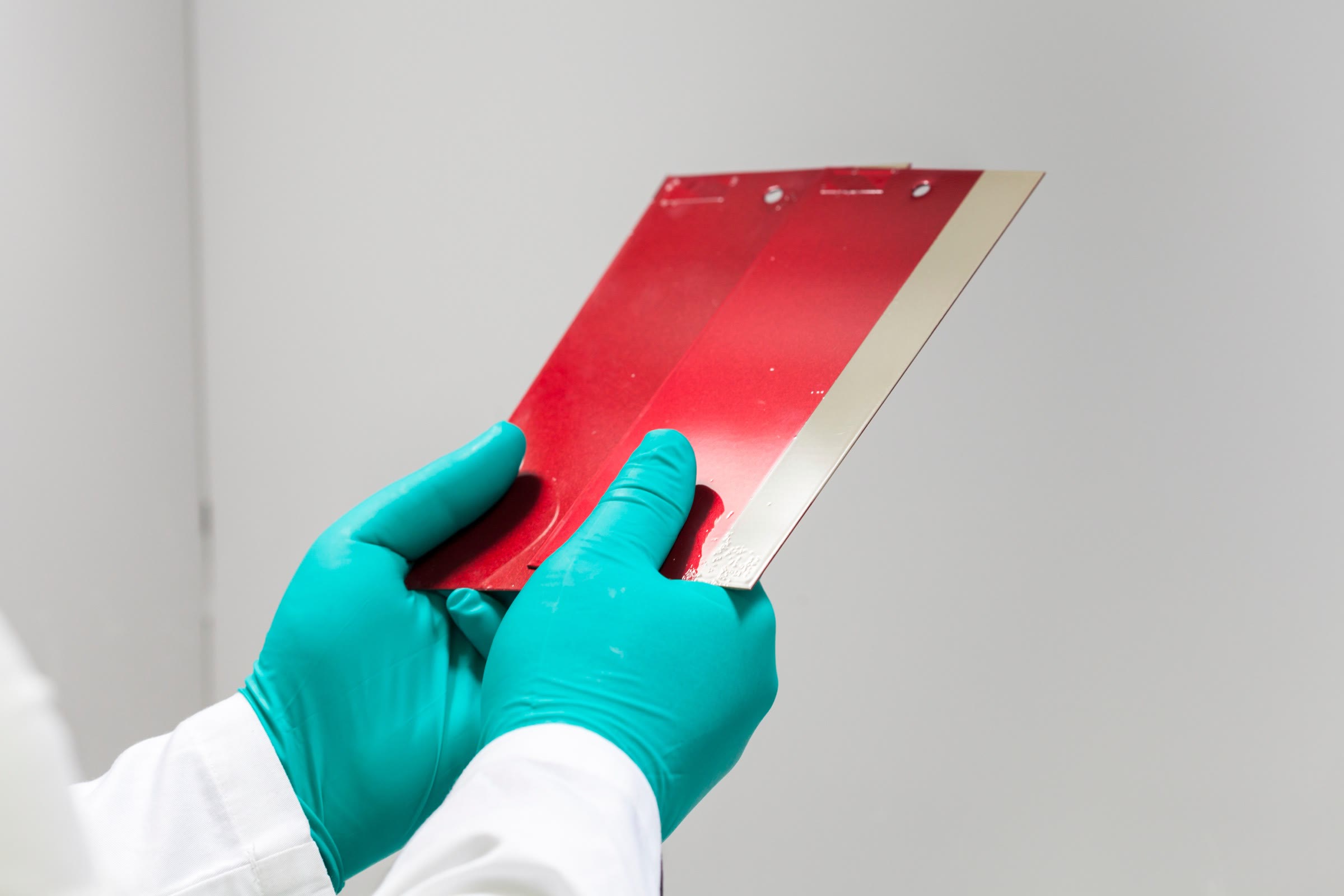
A little over half of the standards that arrive here are a physical part or a wet sample instead of a code. A part carries the substrate, the finish and the geometry the eye is actually judging, which a printed chip cannot. Post it to us and we will read it, match it in your system, and send the sample back.
Request a Color MatchPantone. Both the solid coated and uncoated books and the TPX textile book. The codes below are the ones already on record here.
RAL. The classic four-digit set, matched most often on European-specified equipment and on architectural and machinery work.
Federal Standard 595. Matched in production. FED-STD-595 was cancelled in 2017 and continues as AMS-STD-595; the chip numbers carry over and we match either way. Name the chip and we work to it.
MUTCD. The traffic control color set, where the shade on a delineator, a barrier or a channelizing device is mandated by the manual and not chosen.
APWA uniform color code. The underground utility marking colors, read by a crew before a shovel goes in the ground.
AR 670-1. The coyote, tan and black shades on military footwear and equipment, alongside the Berry Amendment documentation those contracts require.
Anything physical. A part, an off-cut, a wet sample, a paint chip, a competitor's component. If it can be read on a spectrophotometer it can be matched, and if it cannot, we will tell you that before you send it.
The textile book, 82 codes. These come up most often on footwear, apparel-adjacent components and anything specified by a designer working from a fabric book.
Coated and uncoated, 75 codes including the cool grays. C is the coated book and U the uncoated; they are different targets for the same number, so tell us which one the specification means.
16 codes from the classic set.
The code is half the question. The other half is the chemistry, because a dispersion is built around a carrier and the carrier belongs to the system. Each of these carries the carrier logic, the dosing and the documentation for its own lane.
| System | Carrier | Where it fits |
|---|---|---|
| Plastisol | Phthalate-free plasticizer | Dip molding, rotocast, flexible PVC, coated fabric. The system matched most often here |
| Cast urethane | Plasticizer or polyether polyol | Wheels, rollers, screens, seals and wear parts, colored through the cross-section |
| Polyurethane foam | Polyether polyol, polyol side | Flexible and integral-skin foam, where the skin ships as it leaves the mold |
| Spray polyurethane | Polyether polyol, resin side | Bedliners, linings, traffic and utility components. A plasticizer carrier is the wrong answer here |
| TPU and thermoplastic | Solid carrier resin, pelletized | Extrusion, injection molding and compounding, where the process melts its resin |
| Epoxy and polyurea | Selected for the side it meters into | Flooring, casting, gelcoat and cultured marble. Settle the carrier first |
The whole color operation, both formats and how a match is run, is on pigments and color. To start one, use the color match request.
No. These are codes we have matched, not a stock list. Every one is made to order into the system you name, because the same Pantone number is a different formulation in a plastisol than it is in a cast urethane. A code that is not on this page is matched the same way.
It gets matched. Send a code, a chip, a printed swatch or a physical part and we will build a dispersion to it in your system.
Pantone, RAL, Sherwin-Williams and Federal Standard 595 have all been matched in production here. FED-STD-595 was cancelled in 2017 and continues as AMS-STD-595; the chip numbers carry over and we match either way. Regulatory color sets including MUTCD for traffic devices, the APWA underground utility colors and AR 670-1 for military footwear are matched to the published standard.
Delta E 1.0 or better, measured CIELAB against the approved standard on a spectrophotometer at D65 illuminant and a 10 degree observer. The measured reading ships on the certificate of analysis with every batch. Ask which Delta E formula a tolerance refers to before you accept it, because Delta E*ab and Delta E 2000 are not the same number for the same pair of samples.
Yes, and it is how most of this work arrives. A little over half of the standards sent here are a physical part or a wet sample. A part carries the substrate and the finish the eye is judging, which a code cannot.
The match and the sample are free and there is no minimum order to trial one. What we need is the target, the system it has to run in, and enough of a standard to read on a spectrophotometer.