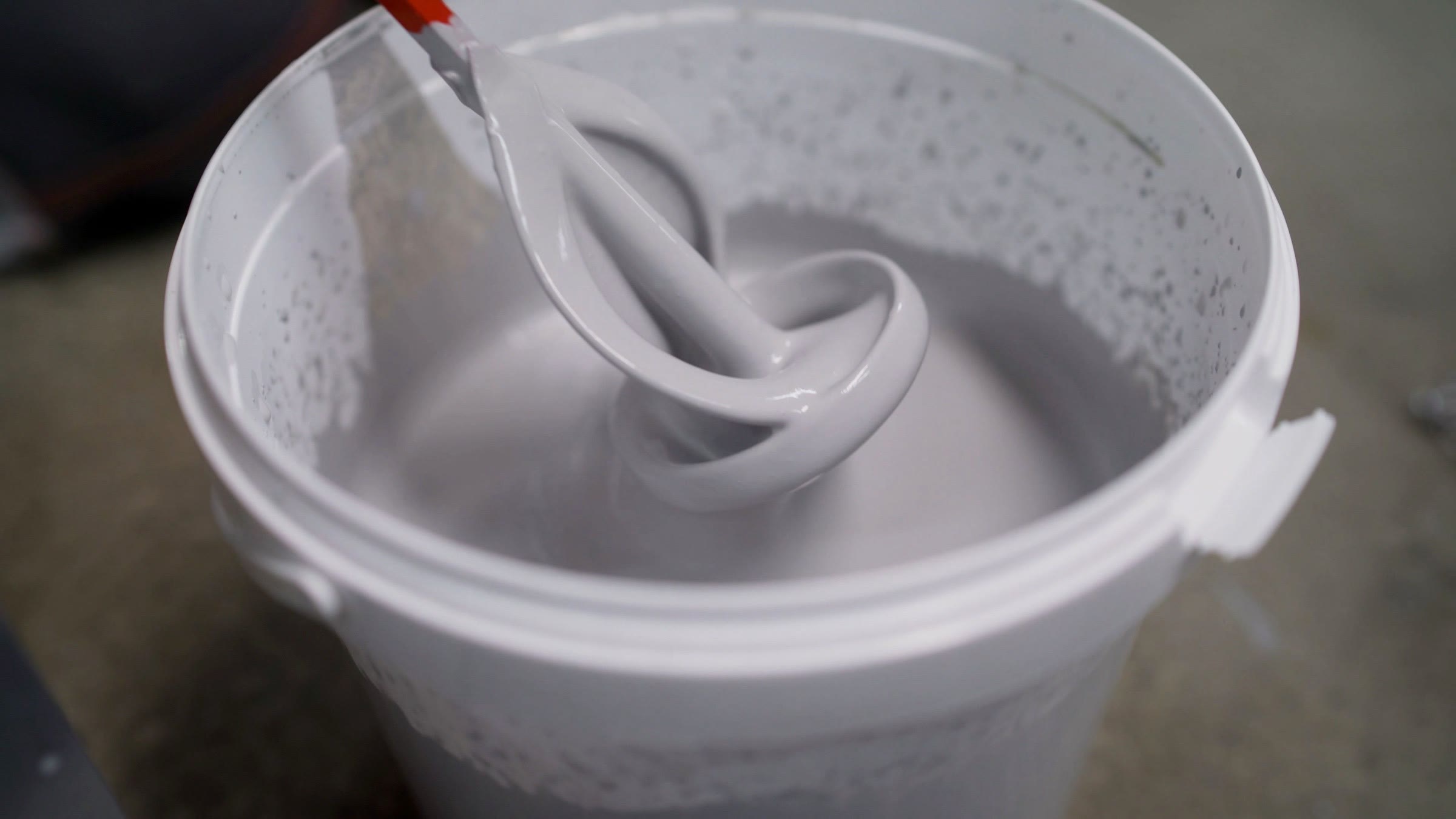
Liquid color for epoxy and polyurea
The carrier question decides this one. Tell us whether the color goes in the resin side or the amine side and what the system has to do, and we will match into it.
The carrier question decides this one. Tell us whether the color goes in the resin side or the amine side and what the system has to do, and we will match into it.
Epoxy, polyurea and unsaturated polyester are systems this operation matches into on request rather than lines with a long shelf behind them.
The carrier decides whether a trial in these systems works. An epoxy or a polyurea is a two-part system and the color meters into one side of it. A dispersion that was right for a cast urethane can be exactly wrong here, and sampling a polyol-carried or plasticizer-carried product into an epoxy is a known way to spend three weeks proving nothing.
So the first thing to settle is which side the color goes in and what the carrier is allowed to be. A carrier that is unremarkable in one of these systems can shift pot life, cure profile or final hardness in another. Tell us the system and the side and the carrier is chosen against it before anything is blended.
What travels across from the rest of the book is the matching itself: the standard is read the same way, the tolerance is the same, and the certificate carries the same measured reading. What is new for your system is the carrier, and that is exactly the part we want in front of us before a sample ships.
| Property | Typical value |
|---|---|
| Form | Liquid pigment dispersion |
| Carrier | Selected for the side of the system it meters into, and for what the system tolerates |
| Metering point | The resin side or the amine side, decided with you before blending |
| Color tolerance | ΔE 1.0 or better, CIELAB against the approved standard, D65 illuminant, 10 degree observer |
| Addition rate | Confirmed on your own system at the sample stage |
| Match turnaround | About a week on a new match |
| Country of origin | Blended in Hermon, Maine |
Dosage: Confirmed on your own system at the sample stage. These systems differ too much from one another for a published figure to be worth anything, and the addition rate has to be set against the pot life and cure you are working to.
Typical values from the manufacturer's technical data sheet. They describe the product, they are not a specification. We will send the current TDS and the batch documentation your qualification needs.
Tell us the binder system, the property you are targeting, and the volume you expect. We will confirm the grade, send the documentation, and get a sample of the candidate grade to you.
Poured, broadcast and self-leveling systems, including the safety and hazard color codes those floors carry.
Color for identification, opacity or tamper evidence in a cured block.
Fast-set systems where the color goes in on the side the equipment meters.
Molded surfaces where the gelcoat is the finished face of the part.
Through-color and veining in a cast decorative part.
Matching into a customer-supplied epoxy or polyurea, which is the most reliable way to run this.
It is specified where the formulation needs the carrier settled before the sample rather than after, the same matching standard and tolerance as the rest of the book, matching into your own supplied system rather than a generic one, a measured ΔE on the certificate for every batch, and free samples and no minimum to trial one.
Settle which side the color meters into first. That decides the carrier, and the carrier is what makes or breaks a trial in these systems.
Send a sample of your own system where you can. Matching into a customer-supplied epoxy or polyurea removes the substrate and the cure variable at once, and it is the way this works best.
Check pot life and cure on the colored system, not only the shade. The objection that stops a color trial in these systems is often not about color at all: it is whether the addition moved the working time, the exotherm or the final hardness. Test for that in the same trial.
Judge the shade on a cured piece from your own process. An epoxy reads differently wet, part-cured and fully cured, and a gelcoat reads differently again off a mold.
Package sizes: Pails and drums, with small trial quantities available. Tell us the volume and the pack and we will confirm.
Storage: Store in the original closed container at room temperature, out of direct sun and away from freezing. Stir before use after a long standstill.
Blended in the United States and supplied as Berry Amendment, REACH, RoHS and California Proposition 65 compliant. Documentation for a specific requirement is available on request; name the requirement and we will confirm what the grade carries.
Ask before you try it. A carrier chosen for a cast urethane can be the wrong thing in an epoxy, and sampling the wrong carrier into an epoxy system is a known way to lose weeks and learn nothing about the color. Tell us the system and which side the color meters into and we will send something built for it.
That depends on your system and your equipment, and it is the first thing to decide. It sets the carrier, and the carrier is what a trial in these systems actually turns on.
It can, and that is the question worth testing in the same trial as the shade. Any addition to a two-part system has the potential to move working time, exotherm or final hardness. Test the colored system the way you would test any formulation change.
We match into them on request, and the matching capability is the same one used across the rest of the book. What we are not going to do is imply a long track record in epoxy or polyurea that we do not have. Send your system and a target and you will get a real answer quickly.
Yes, and for these chemistries it is the recommended route. Send a sample of your own epoxy or polyurea with the target and the match is run in your material, which is the only way to be certain about both the shade and the cure.
Yes. We send the Technical Data Sheet (TDS), Safety Data Sheet (SDS), Certificate of Analysis, Proposition 65 statement, and REACH and RoHS statement on request, in the current revision. Use Request TDS or SDS above and tell us what your qualification review needs.
The proven cast lane, and where the carrier reasoning comes from.
Polyurea sprays alongside these systems and takes the same carrier discipline.
The largest lane here, for a very different chemistry.
The epoxy system in full, including the carrier and the guardrail.
The selection question worked through.
What the dispersant is doing, and why a carrier is not interchangeable.