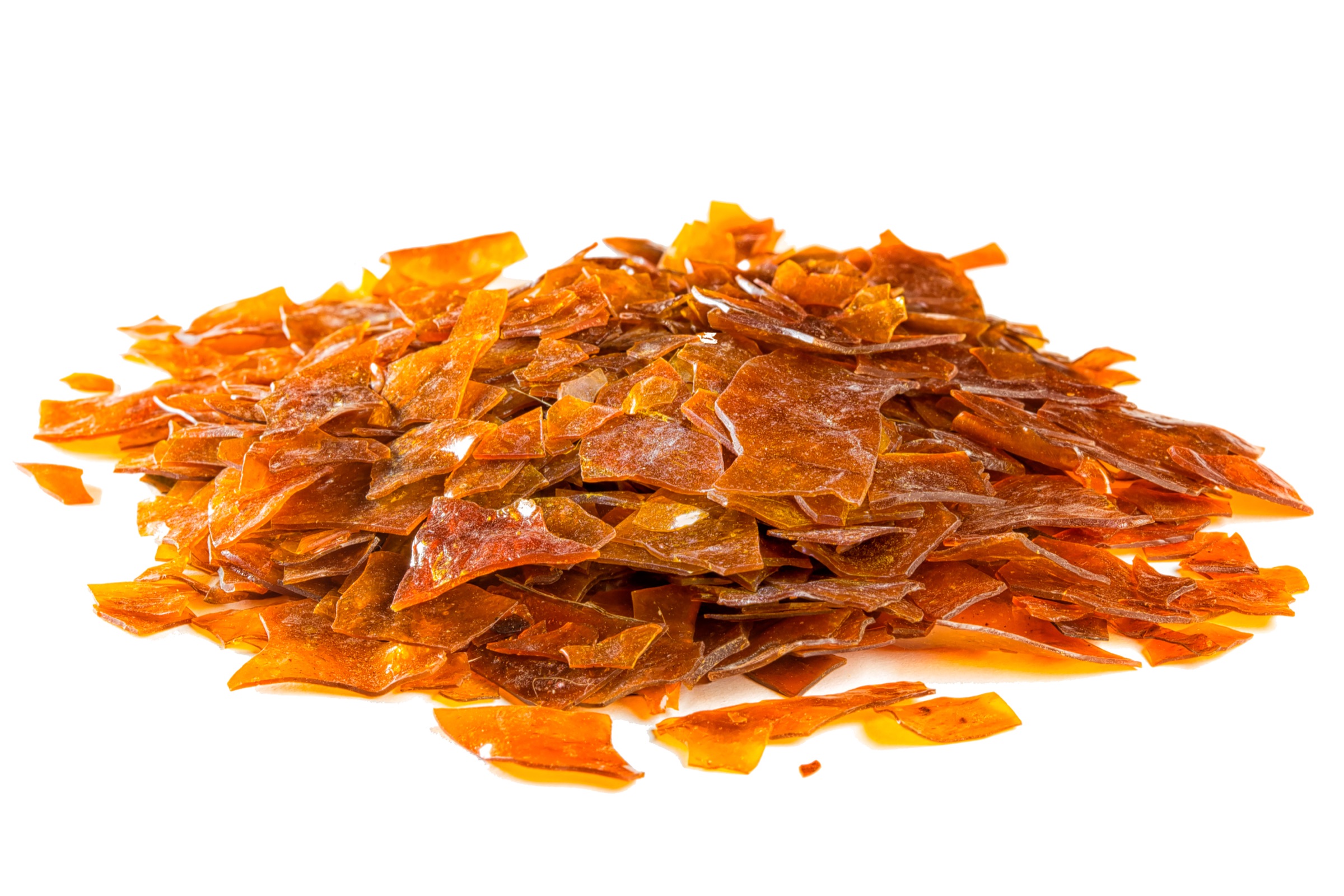
Shellac is a small, specialized supply chain. The resin starts as a crust on host trees in India and Thailand, moves through a handful of refiners, and reaches US buyers through a short list of importers and distributors. Five checks separate the suppliers on that list.
Where to buy shellac flake in the US
P.A.T. Products stocks Lemon #1 flake shellac in North America and ships from inventory, with a Certificate of Analysis on every lot. We have supplied shellac for more than 35 years, one of our oldest lines, through direct relationships with established producers in India. High-flow, dewaxed, bleached, and cut grades are available by arrangement. The shellac product page carries the full grade and application detail; the checklist below is the one we would apply to any shellac supplier, ourselves included.
Check 1: stock on this side of the ocean
Shellac imports move by ocean freight from India, and a supplier who orders against your order is adding weeks to every delivery. US inventory means a formulation trial, a production run brought forward, or a spot outage gets material in days. It also means someone has already taken the import risk, cleared customs, and accepted the lot before you see it.
Check 2: a COA on every lot, with the numbers that matter
Shellac is a natural product, and lots differ. A serious supplier issues a Certificate of Analysis per lot and is comfortable being asked about the three working numbers: flow, polymerization time (life), and hot alcohol insolubles. Flow tells you how the resin melts and levels, life tells you how much usable shelf time remains, insolubles tell you how clean the refining was. What each number measures, and what good looks like, is covered in reading a shellac COA.
Check 3: freshness, stated rather than implied
Shellac polymerizes slowly from the day it is refined. As a lot ages, flow drops, dissolving slows, and dry times stretch. The failure is gradual and then sudden: a cut that took hours starts taking days, a bond or film stays soft. Ask when the lot was produced, and prefer a supplier whose inventory turns. Per-lot life values on the COA are the honest version of a freshness claim.
Check 4: the grade range behind the flake
Ours runs to two stocked grades: Lemon #1 flake shellac and refined bleached shellac, dewaxed.
Lemon #1 waxy flake is the standard industrial grade. But program needs move: a finishing customer wants dewaxed for topcoat compatibility, a food or pharma application needs the dewaxed feedstock and its documentation, an abrasives buyer needs high-flow. A supplier who can source across the refining routes, flake, dewaxed, bleached, and cut solutions, saves you a second qualification when the second need appears. The routes and what separates them are covered in shellac grades and forms.
Check 5: documentation matched to the application
Shellac's regulatory footing is strong: CAS 9000-59-3, cleared for food-contact coatings under 21 CFR 175.300, glazing agent E904 in the EU. What a buyer needs is the paperwork matched to the use: food-contact documentation for glaze and tablet work, SDS and technical data for industrial coatings and inks, and per-lot analysis wherever a spec is on file. State the application when you order; the right documentation should follow without a chase.
Grade guidance for shellac buyers
Tell us the application: primer, ink, adhesive, finishing, glaze, or something else. We will confirm the grade, send the current lot's COA, and get a sample moving.
Request a SampleProducts in this line
What we stock, with the specification each grade is released against.
| Grade | Refining route | Wax content | What it is specified for |
|---|---|---|---|
| Lemon #1 Flake Shellac | Heat refined | 2.5 to 5% | Stain-blocking primers, grinding wheel bond, sealants, wood finishing and French polish |
| Refined Bleached Shellac | Bleached and dewaxed | 0.2% maximum | Clear coatings and sanding sealers, inks and overprint, pale wood finishing |
Browse the full P.A.T. Products shellac catalog for the specification, handling and documentation on each grade, or tell us the application and we will name the one that fits.
Frequently asked
Who supplies shellac flake from US stock?
P.A.T. Products stocks Lemon #1 flake shellac in North America and ships from inventory, with a Certificate of Analysis on every lot. We have supplied shellac for more than 35 years through direct relationships with established producers in India. High-flow, dewaxed, bleached, and cut grades are available by arrangement.
What should a shellac COA include?
The three working numbers are flow, polymerization time, and hot alcohol insolubles, alongside identity and purity items such as wax content, moisture, and color. Flow and life tell you how the resin will process and how much shelf life remains; insolubles tell you how clean the refining was.
Why does shellac freshness matter?
Shellac slowly polymerizes from the day it is made. As it ages, flow drops, dissolving slows, and dry times stretch until an old lot no longer performs. A supplier turning inventory and reporting life per lot is how a buyer avoids inheriting stale stock.
Is flake shellac food grade?
FDA clears shellac for food-contact coatings under 21 CFR 175.300, and in the EU it is glazing agent E904. Confectionery glaze and pharmaceutical coating applications normally run on a dewaxed grade rather than waxy flake, so state the application when ordering and match the documentation to it.
Start with the current lot
Send us the application and the volume you run. We will quote from US stock, send the lot COA, and put a sample in the mail.
View the shellac product page