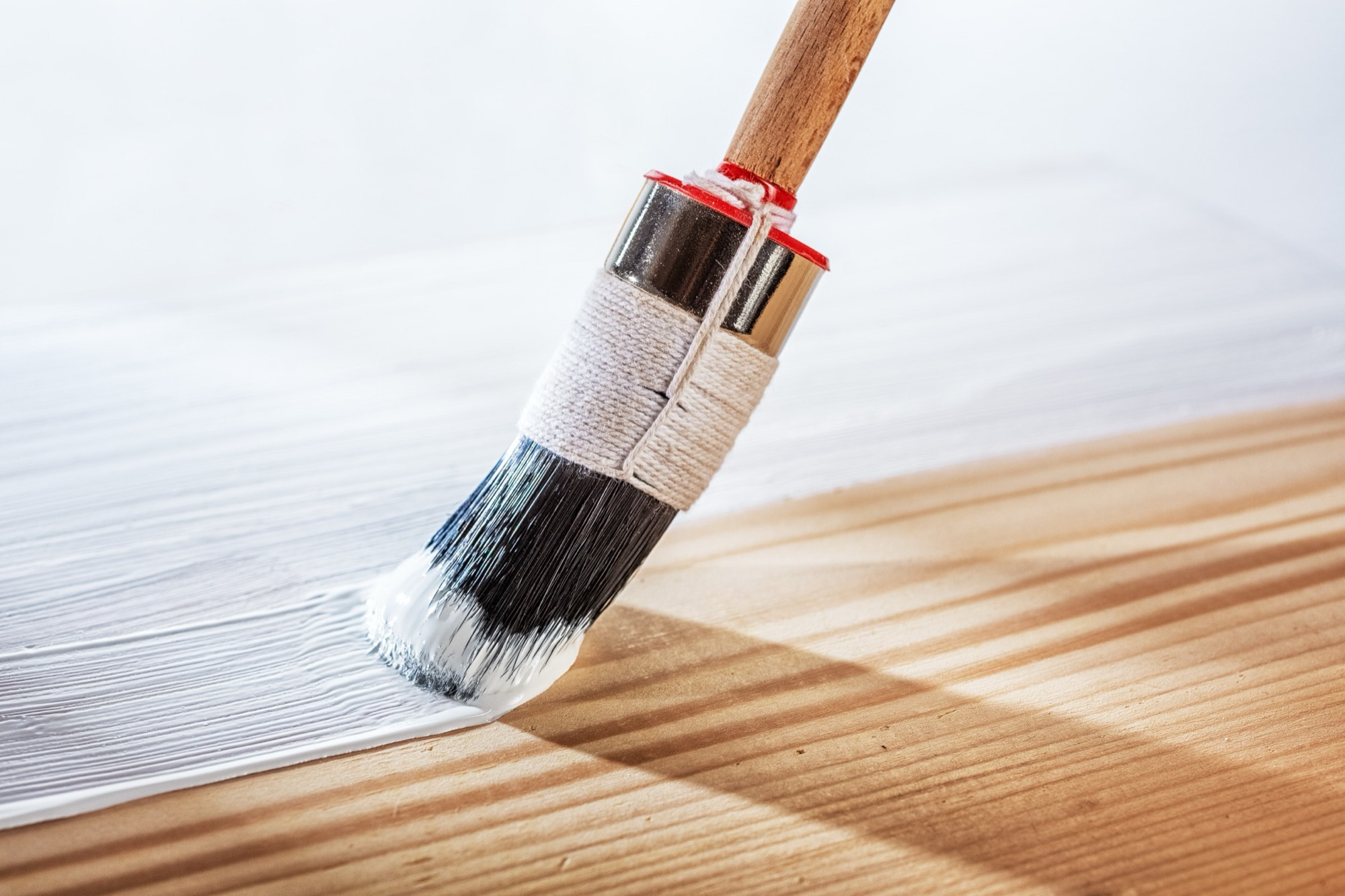
Shellac-based primers own the substrates that defeat ordinary primers, and have for a century: the cedar deck that bleeds brown through three coats of acrylic, the ceiling with a water mark that keeps returning, the rental unit where nicotine ghosts through fresh paint in a week.
Why shellac blocks what other primers cannot
Two mechanisms work together. First, the solvent: shellac primers are cut in alcohol, which flashes off in minutes. A waterborne primer wets the substrate long enough to re-dissolve tannins and water-soluble stains into its own film; the stain rides the water to the surface as the film dries. Alcohol is gone before that migration gets organized. Second, the film: dried shellac is a dense natural resin barrier that tannins, nicotine, smoke residue, and water marks do not migrate through, and it seals odor along with color.
The same speed is a production advantage. Shellac primers recoat fast, which matters on restoration and repaint work where the topcoat goes on the same visit.
The stains that specify shellac
- Tannin bleed. Cedar, redwood, and the knots in pine carry water-soluble tannins and resins that discolor latex paint from underneath. Knot priming is the classic shellac job.
- Nicotine and smoke. Fire restoration and heavy-occupancy repaints need both stain and odor sealed. Shellac handles both in one film.
- Water marks. The ring on the ceiling keeps returning through acrylic because it is water-soluble; an alcohol-borne film locks it down.
- Marker, dye, and unknown stains. On a jobsite, "we don't know what this is" defaults to shellac because its barrier works across stain chemistries.
Formulation variables
- The cut. Shellac solutions are specified in pound cut: pounds of resin per gallon of alcohol. Primers run heavier cuts than finishing washcoats, trading open time for build and blocking power. The right cut balances one-coat hiding against brushability and dry time on the target substrate.
- The solvent system. Denatured ethanol is the workhorse. Solvent choice and denaturant grade affect dry profile, odor, and the regulatory footprint of the finished primer.
- Pigmentation. Stain-killing primers are pigmented, typically titanium dioxide with extenders, which turns the amber resin white and adds hiding to the barrier. Pigment loading interacts with the cut: more pigment demands enough resin to bind it and keep the film continuous.
- The grade. Waxy flake, with Lemon #1 as the standard commercial grade, is the usual resin base for pigmented primers. The natural wax (around 5%) is no obstacle under paint, and pigment hides the amber color. Dewaxed grades enter where the product is a clear sealer or where maximum topcoat compatibility is the selling claim; the trade-offs are covered in shellac grades and forms.
Incoming QC is where primer quality starts
An aged shellac lot dissolves slowly, drags dry times, and softens the blocking film. Check flow, polymerization time, and insolubles on the per-lot COA before the resin hits the mix tank. See reading a shellac COA.
Request a SampleSourcing for primer production
Primer production runs on the waxy grade: Lemon #1 flake shellac, in 25 kg bags from United States stock.
Primer manufacturing consumes flake in volume, and the supply questions are the usual ones for a natural import: is the material in US stock, does every lot carry a COA, and how fresh is the inventory. We stock Lemon #1 flake in North America with a Certificate of Analysis on every lot and have supplied the coatings trade for more than 35 years; the full checklist for qualifying any shellac supplier is in where to buy shellac flake in the US.
Products in this line
The grades behind a shellac primer, and the one to specify when a topcoat has to key into the sealer.
| Grade | Refining route | Wax content | What it is specified for |
|---|---|---|---|
| Lemon #1 Flake Shellac | Heat refined | 2.5 to 5% | Stain-blocking primers, grinding wheel bond, sealants, wood finishing and French polish |
| Refined Bleached Shellac | Bleached and dewaxed | 0.2% maximum | Clear coatings and sanding sealers, inks and overprint, pale wood finishing |
Browse the full P.A.T. Products shellac catalog for the specification, handling and documentation on each grade, or tell us the application and we will name the one that fits.
Frequently asked
Why does shellac block stains that other primers cannot?
The alcohol carrier flashes off in minutes without mobilizing the stain the way water can, and the dried film is a barrier that tannins, nicotine, smoke, and water marks do not migrate through. Waterborne primers often re-dissolve the stain into their own wet film; shellac dries past it first.
What stains call for a shellac-based primer?
Tannin bleed from cedar, redwood, and pine knots; nicotine and smoke residue; water marks on drywall and ceilings; and bleeding markers and dyes. These are the cases where acrylic and oil primers need multiple coats or fail outright.
What shellac grade goes into a primer formulation?
Waxy flake, with Lemon #1 as the standard commercial grade, is the usual base for pigmented stain-blocking primers. The wax is not a problem under paint and pigment hides the amber color. Dewaxed grades come in for clear sealers or maximum topcoat compatibility.
What should a primer manufacturer check on incoming shellac?
The per-lot COA: flow, polymerization time, and hot alcohol insolubles. Life matters most in production, because an aged lot dissolves slowly and drags dry times before any spec violation is obvious.
Formulating or scaling a shellac primer?
We supply Lemon #1 flake from US stock with the lot COA, and can source dewaxed and high-flow grades by arrangement. Tell us the product and the volume, and we will quote and send a sample.
View the shellac product page