TRAPYLEN adhesion additives for printing inks
Adhesion additives that make solvent-based and UV-curable inks hold on PP, PE and BOPP film. Solid resins, ethyl acetate and xylene solutions, and 100 percent reactive UV grades.
Adhesion additives that make solvent-based and UV-curable inks hold on PP, PE and BOPP film. Solid resins, ethyl acetate and xylene solutions, and 100 percent reactive UV grades.
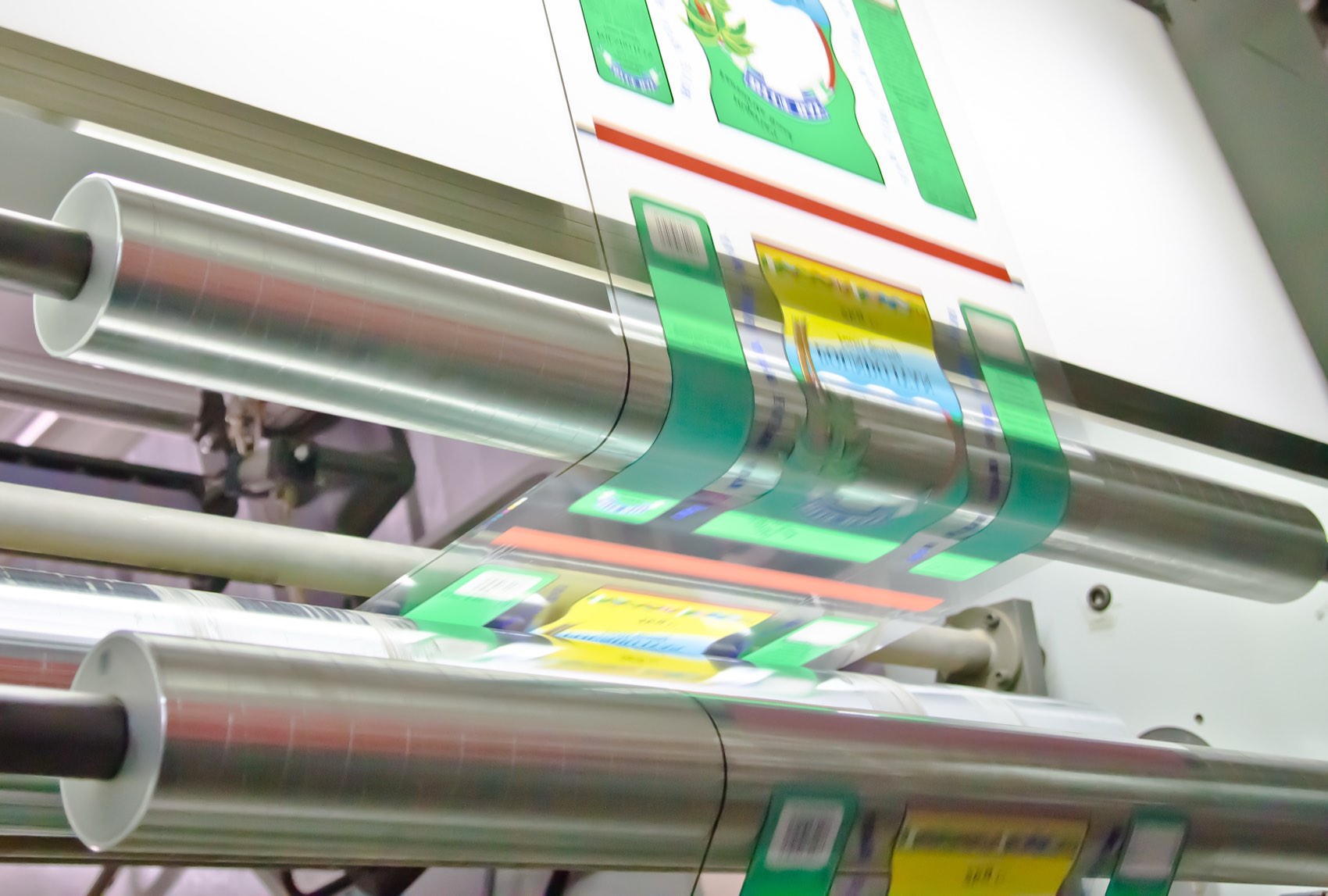
Solvent-based inks printed onto PP, PE and other polyolefin films need an adhesion additive to hold, and that is what the TRAPYLEN case three grades are for. The chlorinated polyolefin is incorporated into the ink formulation, where it anchors the ink film to a substrate that ordinary binders cannot grip. The main lane is flexible packaging film, along with screen and pad printing on polyolefin parts.
The two ethyl acetate grades carry the highest chlorine contents of the solution grades, 43 percent on 186 EAC and 36 percent on 187 EAC. Higher chlorine buys compatibility with other resins and polymers, excellent pigment wetting, high gloss and good chemical and aging resistance, and the EAC carrier keeps both grades free of aromatic hydrocarbons. 196 X is the heat-seal specialist and holds its adhesion when PP is sealed to aluminum. The solid resins 186 S and 196 S serve formulators who want to dissolve the polymer into their own solvent system.
For UV-curable inks Tramaco makes the TRAPYLEN 5000 UV series, 100 percent reactive liquids with the polymer dissolved in an acrylate monomer instead of a volatile solvent. 5650 UV in isobornyl acrylate has the best compatibility of the series and also bonds PP to aluminum. 5800 UV in hexanediol diacrylate crosslinks fastest. Neither contains a photoinitiator, so the ink formulator keeps full control of the cure package.
Adhesion is outstanding on untreated polypropylene and PP/EPDM thermoplastic rubber and more limited on polyethylene, so tell us the film and the ink system before the grade is fixed. Resistance against fatty oils and grease is limited on the high-chlorine grades and is compensated by blending with low chlorinated TRAPYLEN grades.
| Property | Typical value |
|---|---|
| Chemistry | Chlorinated polyolefin (CPO) and modified CPO |
| Chlorine content | 26 to 43 percent across the case |
| Forms | Solid resin, solutions in ethyl acetate or xylene, 100 percent reactive UV liquids |
| Solids content | 20 to 40 percent in solution grades, 100 percent in the UV grades |
| Solvents used | Ethyl acetate or xylene in the solution grades, IBOA or HDDA reactive monomer in the UV grades |
| Photoinitiator content of UV grades | None, the cure package stays with the formulator |
| Storage stability | At least 12 months for the solution grades, at least 3 months for the UV grades, at 15 degrees C |
Dosage: Incorporated into the ink and confirmed by tests in the target system. The UV grades run 4 to 10 percent of the formulation, and above that range the flexible TRAPYLEN film starts to influence the cured ink's properties.
Typical values from the manufacturer's technical data sheet. They describe the product, they are not a specification. We will send the current TDS and the batch documentation your qualification needs.
Tell us the binder system, the property you are targeting, and the volume you expect. We will confirm the grade, send the documentation, and get a sample of the candidate grade to you.
| Grade | Chemistry | Chlorine content | Form and carrier | Solids or Mw | What it is for |
|---|---|---|---|---|---|
| 186 EAC | CPO | 43% | Solution in ethyl acetate | 40% | Free of aromatic hydrocarbons |
| 187 EAC | CPO | 36% | Solution in ethyl acetate | 40% | Better adhesion than 186 EAC, free of aromatic hydrocarbons |
| 196 X | CPO | 26% | Solution in xylene | 20% | Good heat seal properties |
| 5650 UV | Modified CPO | 38% | Liquid in isobornyl acrylate (IBOA) | 100% | Best compatibility of the UV grades |
| 5800 UV | Modified CPO | 42% | Liquid in hexanediol diacrylate (HDDA) | 100% | Fast crosslinking |
| 118 S | CPO | 35% | Solid resin | Not stated | Softening range 70 to 80 degrees C |
| 185 S | CPO | 28% | Solid resin | Mw 100,000 | Softening range 60 to 70 degrees C, Tg 25 degrees C |
| 186 S | CPO | 43% | Solid resin | Mw 20,000 | Softening range 80 to 90 degrees C, Tg 45 degrees C |
| 187 S | CPO | 36% | Solid resin | Mw 30,000 | Softening range 65 to 75 degrees C, Tg 37 degrees C |
| 188 S | CPO | 26% | Solid resin | Mw 100,000 | Softening range 60 to 70 degrees C, Tg 15 degrees C |
| 190 S | CPO | 32% | Solid resin | Mw 110,000 | Softening range 70 to 80 degrees C, Tg 25 degrees C |
| 196 S | CPO | 26% | Solid resin | Mw 200,000 | Softening range 80 to 90 degrees C, Tg 20 degrees C |
Values are the manufacturer's published typical figures. Ask for the current technical data sheet on any grade and we will send it with the matching safety data sheet.
The main lane. The additive is formulated into solvent-based flexo and gravure inks so the print survives converting, filling and transport.
The 5000 UV series, 100 percent reactive and photoinitiator-free. 5650 UV for compatibility, 5800 UV for cure speed.
186 EAC and 187 EAC are recommended as binder resins for screen printing inks on untreated PP.
196 X holds adhesion through heat sealing of PP to aluminum, a common structure in lidding and pouch work.
The EAC grades also serve as adhesion promoters in solvent-based contact adhesives on natural and synthetic rubber base.
It is specified where the formulation needs ink adhesion on untreated and treated polyolefin film, aromatic-free options in ethyl acetate, compatibility with common ink binders and excellent pigment wetting, heat-seal stability where the structure needs it, and UV options with no photoinitiator, so the cure package stays yours.
The solution grades are added to the ink and the compatibility of the finished system is checked by tests, since the outcome depends on the binder package around it. Typical drying on press is 30 seconds at 80 degrees C with a residual quantity of 3 to 4 grams per square meter.
The UV grades blend with acrylic-based oligomers and common reactive diluents. Compatibility and the storage stability of the blend need to be checked, and Tramaco publishes a compatibility table for the series that we send with the data sheet. Crosslinking is achieved at roughly 120 watts per square centimeter at 1 to 3 grams per square meter film weight and 50 meters per minute coating speed, with the photoinitiator type and dosage set by the formulator.
Gel formation is possible in some solution grades at low storage temperatures. It is reversible and has no influence on quality; warming the drums to 40 to 50 degrees C returns the solution to liquid phase.
Package sizes: Iron drums of 180 kg for the solution and UV grades. Solid resins in cartons. Other packing on request..
Storage: At least 12 months for the solution grades and at least 3 months for the UV grades, in closed original packing at 15 degrees C. Keep the UV grades away from sunlight.
Refer to the current safety data sheet for hazard classification and handling. The EAC grades are free of aromatic hydrocarbons, and the UV grades contain no volatile solvent.
186 EAC or 187 EAC for general adhesion work on PP film, since the ethyl acetate carrier suits most packaging ink systems and both are aromatic-free. Move to 196 X when the structure is heat sealed. Tell us the film, the ink chemistry and the press and we will confirm the grade before the sample ships.
No. The 5000 UV series is the polymer dissolved in reactive acrylate monomer and nothing else, so the formulator chooses the photoinitiator type and dosage. Typical addition is 4 to 10 percent of the ink formulation.
Adhesion is outstanding on PP and PP/EPDM and more limited on PE. PE work usually needs the film pretreated and the system confirmed by trial, so tell us the substrate before the grade is fixed and we will set up the trial.
The case three grades Tramaco recommends are all chlorinated. The chlorine free APO grades sit in the molded parts and film primer cases, and if your ink project needs one we will take the question to Tramaco's technical team.
Yes. We send the Technical Data Sheet (TDS), Safety Data Sheet (SDS), and UV series compatibility table on request, in the manufacturer's current revision. Use Request TDS or SDS above and tell us what your qualification review needs.
Case one of the range, for coating molded polyolefin parts.
Case two of the range, ready-to-use primers for TPO and PE film.
The category page, with the form-by-form selection logic.
Why polyolefins resist bonding and what the chlorinated polyolefin does about it.