Plasticizer migrating out of a PVC coating carries dirt into the surface, softens print, and breaks adhesion at the lacquer interface. A barrier topcoat slows the migration; it does not stop it.
Put that second requirement in the specification.
Why the plasticizer moves
Flexible PVC is a hard polymer made soft by a plasticizer dispersed through it. The plasticizer is not chemically bonded to the PVC chain, so its molecules stay mobile for the whole life of the article.
Mobile molecules move down a concentration gradient. The concentration inside the coating is high and the concentration at the surface, in the air, or in whatever the fabric is pressed against is low, so the plasticizer travels outward. Heat raises the diffusion rate. Sustained contact pressure raises it. Time does the rest.
This is a property of the system, not a fault in a batch. A coated fabric that migrates is behaving the way flexible PVC behaves, and the engineering question is how fast, not whether.
Three routes out
The plasticizer leaves by three different mechanisms, and a given failure usually traces to one of them.
Evaporation. Plasticizer at the surface volatilizes into the air. This is slow at ambient and much faster on a dark surface in summer sun, which is why a black or dark tarpaulin loses plasticizer faster than a light one in the same location.
Extraction. Liquids in contact with the surface dissolve plasticizer out of it. Rain does very little, but solvents, oils, cleaning chemicals, and pool water do more, which is why an aggressive cleaning regime can age a fabric faster than the weather does.
Absorption into contacting materials. The plasticizer moves into whatever the PVC is pressed against and stays there. Adhesives, foams, films, gaskets, and other polymers all act as sinks, and this is the route that produces the sharpest failures because the receiving material changes too.
What it looks like in service
Four signatures, in roughly the order a fabricator hears about them.
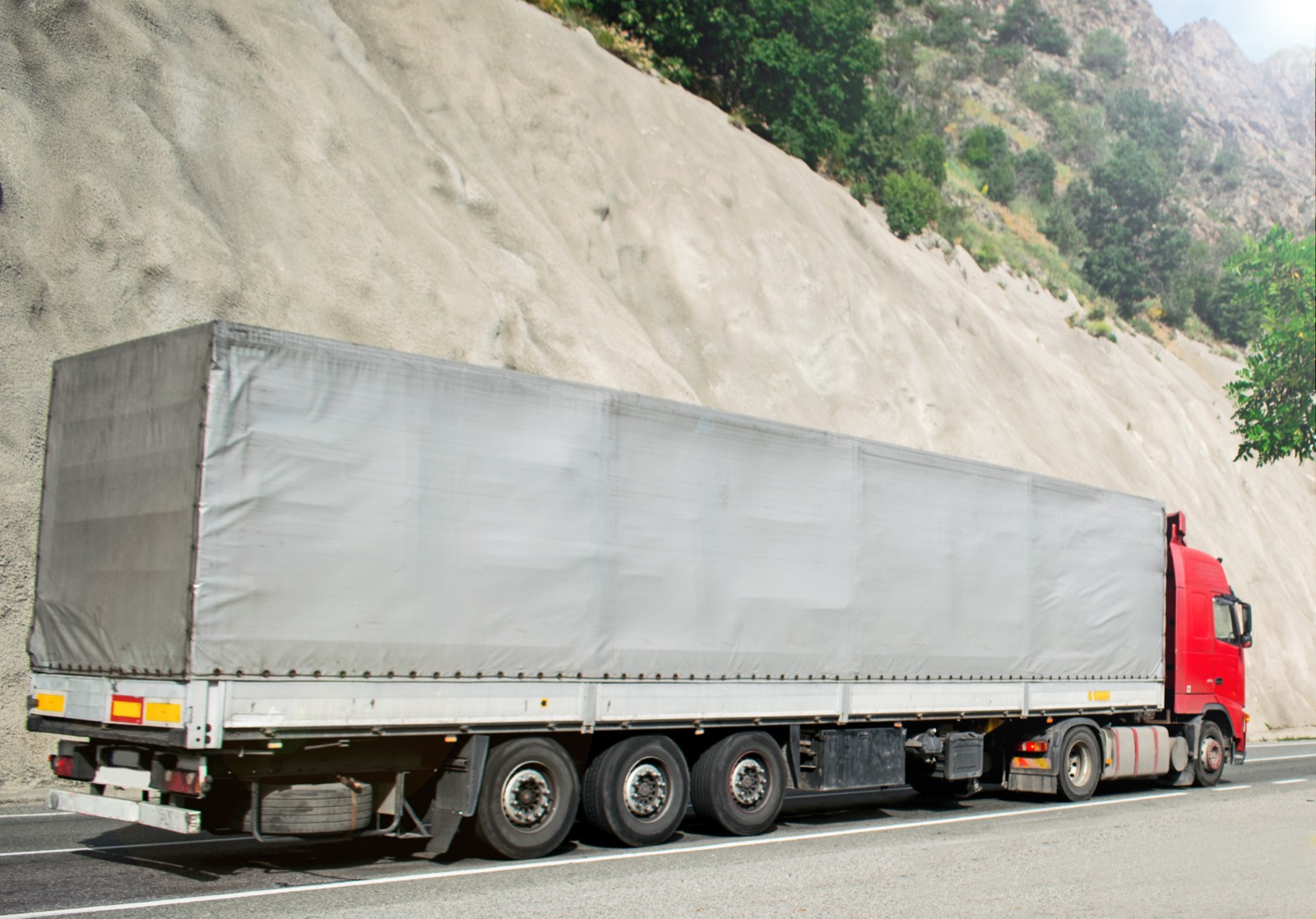
Tack and dirt pickup. Plasticizer arriving at the surface makes it slightly sticky, and airborne dirt sticks to it and works in. The complaint arrives as a cleaning problem: the fabric no longer washes back to where it started. On white and light-colored truck covers and awnings this is usually the first thing anyone notices.
Print softening and color shift. Plasticizer moving into a printed layer softens the ink film and can carry dye with it, so graphics smear, lose definition, or shift color. On backlit and frontlit media this shows up early, because the print is the product.
Adhesive and lamination failure. Plasticizer migrating into an adhesive softens it and destroys its cohesive strength, so bonds and laminations let go. Anything glued to plasticized PVC is exposed to this.
Embrittlement of the PVC itself. The long-term one. Plasticizer that has left is gone, and the coating gradually stiffens toward the hardness of unplasticized PVC. The fabric loses drape, then cracks at fold lines and at the points where it is tensioned or handled.
Chasing a tack or soiling problem?
Send a piece of the fabric and tell us what it is doing. We will have a candidate topcoat applied to your own material so the barrier is judged on your substrate.
Request a SampleWhat a barrier topcoat does
A lacquer film sits between the plasticized PVC and the outside, and the plasticizer has to diffuse through it to reach the surface. A tighter, less permeable film raises that resistance and slows the arrival rate.
Slowing the arrival at the surface pushes back the point at which the fabric goes tacky and starts holding dirt, which is what the soil-resistance requirement on a tarpaulin lacquer is partly buying. It is why weather resistance, minimizing plasticizer migration, soil resistance, and weldability appear together as one requirement set on this class of product.
The topcoat does not remove the plasticizer, bind it, or block it. It also has to live with it: plasticizer arriving at the underside of the lacquer can soften the lacquer film itself and weaken the bond at that interface, which is one of the reasons adhesion is lost there and not at the surface.
The PVDF option
Among the three topcoat chemistries, PVDF is where a plasticizer barrier effect is stated outright. It appears on the premium pool liner grade alongside excellent weather resistance, which is a demanding case: chlorinated or salt water in constant contact, plus daily UV, on a heavily plasticized liner.
That does not make PVDF the automatic answer on every fabric. Acrylic topcoats carry the volume of tarpaulin, cover, awning, and print media work and slow migration as part of the general job. Service life and end use normally decide the chemistry before barrier performance does, and the full comparison is in choosing a topcoat lacquer for PVC-coated fabric.
Specifying for a long outdoor life?
Tell us the fabric, the end use, and the years it has to hold. We can put the acrylic and PVDF options in front of you against your own substrate.
Talk to an ExpertThe other lever: the plasticizer itself
Migration rate falls as plasticizer molecular weight rises. Low molecular weight monomeric plasticizers move faster; higher molecular weight and polymeric grades move more slowly and stay put longer, which is why permanence is one of the axes a PVC formulator selects on.
That is a decision on the compound side, and it is made against cost, low-temperature flexibility, processing behavior, and regulatory position at the same time as permanence. Two levers, one problem: the topcoat controls how fast what is there gets out, and the plasticizer choice controls how badly it wants to leave. P.A.T. Products supplies both sides, and the plasticizer range sits on the plasticizers page, with selection by polymer and application covered in non-phthalate plasticizer selection.
On the plasticizer itself, Citriflex 84 is the low-volatility citrate we stock for flexible PVC, and ProFlex 9S is the reactive grade for systems that cure, where a plasticizer that reacts in cannot migrate out.
What to settle before specifying
Five facts scope the problem.
The coating. The PVC formulation and its plasticizer system, including whether it is monomeric, polymeric, or a blend.
The failure you are seeing. Tack and soiling, print, adhesion, or embrittlement. Each points at a different route out and a different fix.
The contact. What the fabric is pressed against in service and in storage, since absorption into a contacting material is the fastest route.
The thermal and chemical exposure. Surface color and climate for the heat, plus the cleaning regime and any liquid contact.
The service life. The years the finished goods are sold on, which sets whether an acrylic barrier is enough or the specification wants PVDF.
What to send us
Send a piece of the fabric and describe what it is doing and how long it took to do it. We will have a candidate topcoat applied to your own material and returned, so the barrier is judged on your own substrate.
P.A.T. Products supplies the ROWA Lack range across the United States, Canada, and Mexico as made-to-order systems, so a first order works best planned against a trial. The barrier topcoats are ROWAKRYL acrylic grades, and the PVDF option with the stated plasticizer barrier effect is in the ROWAFLON family. The full range sits on the coated textile lacquers page, and the manufacturer background is on the ROWA Lack partner page.
Frequently asked
Why does plasticizer migrate out of PVC?
In flexible PVC the plasticizer is dispersed through the polymer and not chemically bonded to it, so the molecules stay mobile for the life of the article. They move down a concentration gradient toward the surface and into anything that will take them. Heat accelerates it, sustained contact pressure accelerates it, and time does the rest. Migration is a property of the system, not a defect in a particular batch.
What does plasticizer migration look like in service?
Four signatures. A tacky surface that picks up dirt and will not clean back, which on a white truck cover or awning is the usual first complaint. Print that softens, smears, or shifts color. Adhesive bonds and laminations that let go, because the plasticizer moves into the adhesive layer and softens it. And over a longer period the PVC itself getting stiffer and more brittle as it loses the plasticizer that made it flexible.
Can a topcoat stop plasticizer migration?
No. A barrier topcoat slows the migration; it does not stop it. The lacquer film raises the resistance the plasticizer has to diffuse through, which pushes back the point at which the surface goes tacky and starts holding dirt. It does not remove the plasticizer or bind it, and the plasticizer arriving at the interface can soften the lacquer itself, which is part of why adhesion fails there. Specify the topcoat as something that buys years.
Which lacquer chemistry gives the best plasticizer barrier?
PVDF is where a plasticizer barrier effect is stated outright, alongside its weather resistance, and it is offered on premium pool liner and membrane grades where the assembly has to hold up over a long service life. Acrylic topcoats are the volume answer on tarpaulins and covers and slow the migration as part of the general soil-resistance job. The choice usually follows service life and end use before it follows barrier performance on its own.
Does the plasticizer choice itself change the migration rate?
Yes. Migration rate falls as plasticizer molecular weight rises, so low molecular weight monomerics move faster than high molecular weight and polymeric grades. That is a formulation decision on the PVC side, and it is made against cost, low-temperature flexibility, and processing as well as against permanence. The topcoat and the plasticizer choice are two levers on the same problem.
Working a migration problem?
Send the fabric, the failure, and the service life it has to reach. We will recommend a topcoat, coat a panel on your own material, and quote lead time and minimum quantity with the sample.
View coated textile lacquers