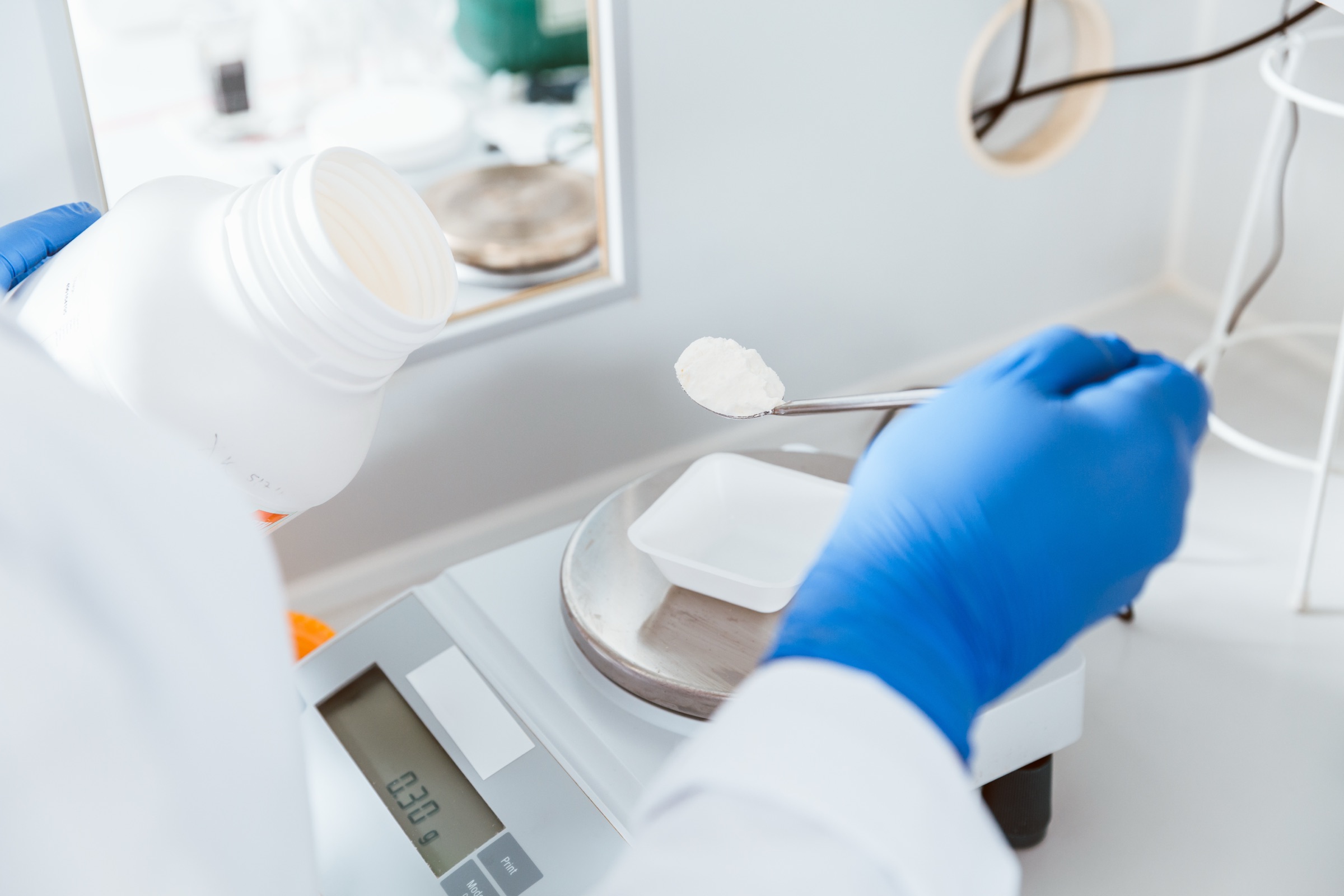
DEHP, DBP, and BBP are restricted under EU REACH, California Prop 65, and CPSC children's-product rules, and the regulated list keeps growing. The harder question is what to reformulate onto, because the right answer changes with the polymer.
Start with the polymer, not the plasticizer list
A plasticizer works by sitting between polymer chains and interrupting the interactions that make the material stiff. For that to hold up in service, the plasticizer's polarity has to match the polymer's. Match it and the plasticizer stays put, keeps the material flexible, and survives heat and time. Miss it and the plasticizer migrates, blooms, or never mixes in at all.
That is why there is no single non-phthalate answer. Flexible PVC, nitrocellulose, and nylon sit at different points on the polarity scale, and each pulls the selection toward a different chemistry.
Flexible PVC: the citrate route
For general-purpose flexible PVC, terephthalate and adipate esters carry most of the volume. The selection gets specific when the application carries compliance requirements. For food-contact film, medical articles, and children's products, acetyl tributyl citrate (ATBC, CAS 77-90-7) is the established non-phthalate plasticizer: cling and lidding film, and blood bags and IV tubing where DEHP restrictions apply.
ATBC is a citrate ester made from fermentation-derived citric acid, esterified with butanol and acetylated. That feedstock gives it a measurable bio-based carbon content by ASTM D6866. It is low in volatility, which shows up as better heat aging and less weight loss in service, and it carries FDA food-contact listings and an EU 10/2011 Annex I entry (FCM No. 138). We stock it as Citriflex 84.
The grade pages for each route carry the specification, the CAS number and the documentation: Citriflex 84 for the citrate, and ProFlex 8, ProFlex 4 and ProFlex 9S for the sulfonamides.
Cellulosics and nitrocellulose: citrates first, sulfonamides where polarity climbs
Cellulose acetate and nitrocellulose lacquers, films, and inks have long run on citrates. ATBC plasticizes both, resists yellowing, and holds adhesion to metal, and it has a long record in nitrocellulose food-packaging inks where the non-phthalate requirement arrived early.
Sulfonamide plasticizers also work in cellulosics, and they bring something the esters do not: resistance to oils and greases, because they are poorly soluble in petroleum hydrocarbons. Where a cellulosic coating or ink has to shrug off grease, the sulfonamide earns the spot.
Nylon and polar engineering resins: sulfonamides
Polyamide is the polymer that filters out most of the plasticizer catalog. General-purpose esters are not polar enough to stay compatible with it. Sulfonamide plasticizers are: N-butyl benzenesulfonamide and N-ethyl toluenesulfonamide hydrogen-bond with the amide groups and deliver flexibility, low-temperature performance, and stable processing in nylon, monofilament, fiber, and film. The mechanism, the grades, and what they change are covered in plasticizers for nylon and polyamide.
Matching a chemistry to your polymer?
Tell us the resin and the property you have to hold. We stock citrate and sulfonamide plasticizers in North American warehouses and will recommend a starting grade, with documentation for the standard you have to meet.
Request a SampleThermosets: consider a reactive plasticizer
In amino, epoxy, and polyurethane systems, a conventional plasticizer sits in the cured network and can migrate out of it over time. A reactive plasticizer avoids that by becoming part of the network. Ortho/para toluenesulfonamide carries an N-H that condenses into melamine-formaldehyde and urea-formaldehyde resins and consumes isocyanate in PU systems, building permanent flexibility into laminates and cured coatings. The trade-off is formulation accounting: the reactive grade consumes functionality and has to be balanced in the system. The details are in the ProFlex 9S article.
Adhesives and inks: both chemistries, chosen by job
Adhesives split the same way the polymers do. Polyamide hot melts and grease-resistant bonds pull toward the sulfonamides; packaging adhesives with food-contact requirements can go either way, since both ATBC and the N-ethyl toluenesulfonamide grade carry FDA adhesive-related clearances. How the selection runs inside an adhesive formulation is covered in plasticizers in hot-melt and PVAc adhesives.
Ink systems follow their resin: nitrocellulose and polyamide ink vehicles each take the plasticizer their chemistry calls for, covered in sulfonamide plasticizers in inks and resins.
The documentation that closes qualification
A non-phthalate reformulation is a paperwork exercise as much as a lab exercise. Before committing to a candidate, get the documents that speak to your standard:
- Food contact. FDA 21 CFR listings for the specific use, and for ATBC the EU 10/2011 Annex I entry (FCM No. 138). Match the clearance to the actual application; "food grade" without a citation is not a clearance.
- Bio-based claims. A bio-based carbon statement by ASTM D6866 if sustainability reporting needs it.
- Regulatory status. REACH and TSCA inventory status, plus confirmation the substance is not a phthalate and not on the SVHC candidate list. The citrate and sulfonamide chemistries described here are on neither.
We supply this documentation with samples, so qualification and paperwork run in parallel rather than in sequence.
Frequently asked
What is the best non-phthalate plasticizer for flexible PVC?
For general-purpose flexible PVC, terephthalate and adipate esters do most of the volume work. Where the application carries food-contact, medical, or children's-product requirements, ATBC is the established choice: low volatility, strong compatibility, bio-based carbon content by ASTM D6866, and a long record in DEHP-restricted applications.
What plasticizer works in nylon and polyamide?
Sulfonamide plasticizers. General-purpose esters are not polar enough to stay compatible with polyamide. N-butyl benzenesulfonamide and N-ethyl toluenesulfonamide hydrogen-bond with the amide groups and deliver flexibility, low-temperature performance, and stable processing.
Can a plasticizer be reactive?
Yes. Ortho/para toluenesulfonamide reacts into amino resins and consumes isocyanate in polyurethane systems, so it becomes part of the cured network. That gives permanent, non-migrating flexibility in laminates and cured systems.
What documentation should a non-phthalate plasticizer come with?
TDS and SDS at minimum, then whatever the application demands: food-contact clearances, a bio-based statement by ASTM D6866, REACH and TSCA inventory status, and confirmation the substance is not a phthalate and not on the SVHC candidate list.
Working a phthalate replacement?
Send the polymer, the application, and the standard you have to meet. We will recommend a citrate or sulfonamide grade from stock and back it with the documentation your qualification needs.
View the plasticizers page