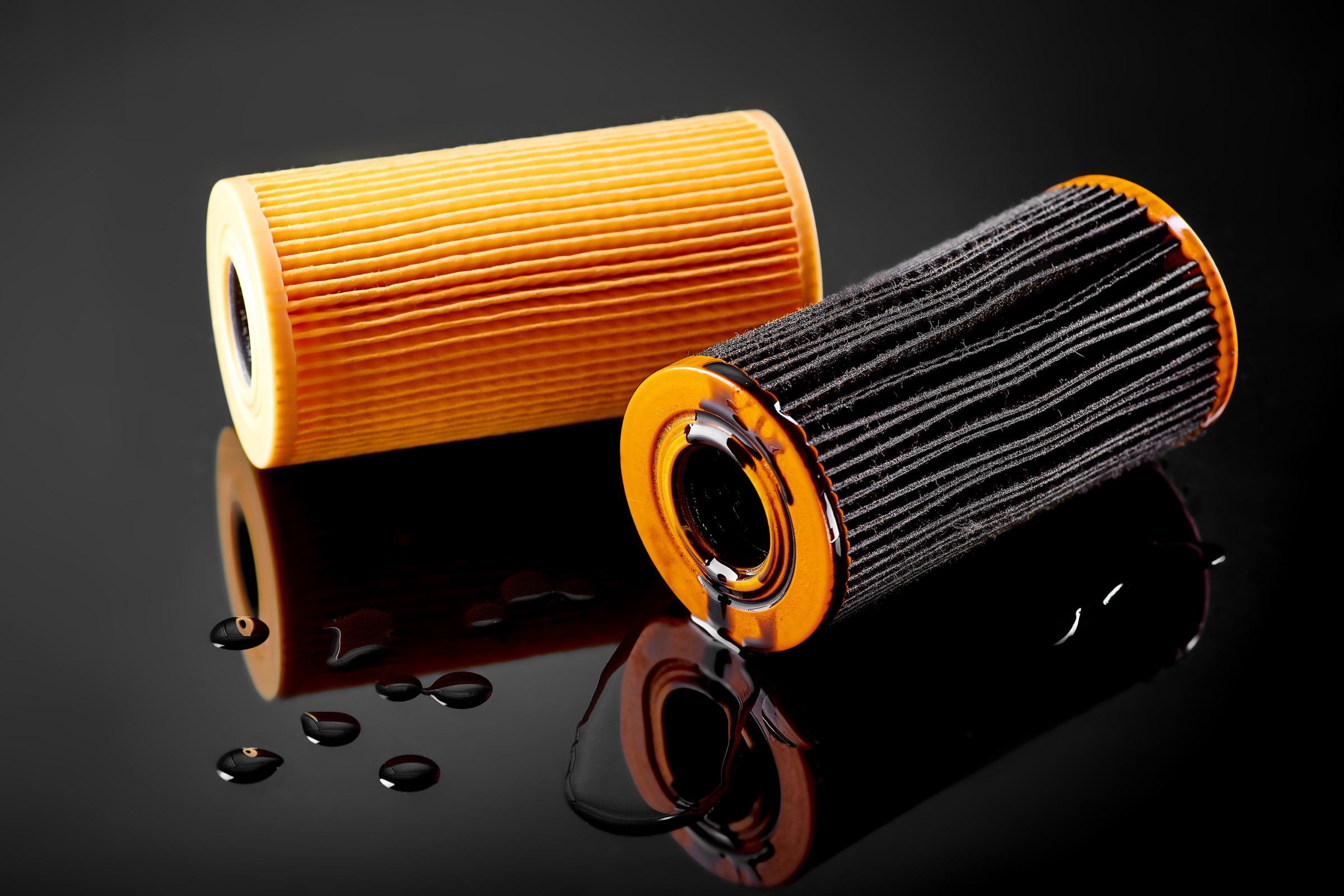
For decades the standard oil filter was a spin-on: a steel can with a base plate, valves, and a media element inside, all thrown away at every oil change. Modern passenger car platforms increasingly use a permanent housing on the engine and a replaceable cartridge element, and the newest generation of those elements is metal-free: the media is closed by molded hot-melt adhesive instead of stamped metal caps.
What a metal-free element is
A cartridge element is the replaceable heart of the filter: pleated media closed at both ends, sealed so oil must pass through the paper. In the classic construction, the ends are stamped metal caps bonded with plastisol or urethane potting compound. In the metal-free construction, hot-melt adhesive forms the end caps directly: the pleated pack is potted into molten adhesive, which cools into a cap that joins the pleats, seals the ends, and carries the element's structural loads.
The point of removing the metal is what happens after service. A spent element with no metal can be disposed of by incineration, which is why the industry calls these "eco" elements. The steel can, base plate, and valves of the spin-on era stay on the engine as a permanent housing, replaced once per vehicle instead of once per oil change.
The duty the adhesive must survive
An oil filter end cap works in the hardest environment in the filter family. The reference conditions are hot oil, typically 140 to 155°C, at 4 to 6 bar of pressure, with ISO 4548-6 as the standard reference for burst and differential-pressure performance. Add cold starts at the other end of the range, pressure pulsing, and engine vibration for the service life of the element.
That duty is why end-cap adhesives are purpose-polymerized copolyesters and copolyamides rather than general-purpose hot melts. The polymer has to hold modulus and bond strength in hot oil, resist the additive chemistry of modern lubricants, and mold into a dimensionally stable cap on production equipment. In the range we supply, Technipol 180/D and the flexible Technipol 32 carry the copolyester side, and Technipol PA copolyamide grades with softening points from roughly 174 to 215°C carry the higher-temperature end.
Why manufacturers are making the switch
- Waste and disposal. The spent element becomes a single incinerable part. No metals separation, no mixed-material disposal stream.
- Material and weight. Deleting two stamped caps and their bonding compound from every element removes cost and grams that multiply across millions of units.
- Process consolidation. One material and one potting step replace cap stamping, handling, and a separate adhesive operation.
- Sustainability declarations. Copolyamide end-cap grades reach bio-based content up to 80% from non-edible agricultural feedstocks, which flows directly into the finished filter's environmental reporting.
Qualifying an end-cap adhesive
The end cap is qualified like the structural part it is. The checklist that matters:
- The thermal and pressure profile of the target engines, against the grade's softening point and hot-oil performance.
- Bond integrity to the specific media, since papers and synthetics bond differently and media suppliers change.
- Dimensional stability of the molded cap through ageing and pressure cycling.
- Processability on your potting equipment: melt viscosity, open time, and cycle time at line speed.
- The declaration package: IMDS entries, GADSL screening, REACH and RoHS status, requested with the TDS rather than after the trial.
The wider selection logic
End caps are one of several jobs hot melts do in a filter plant; pleat spacing, edge sealing, and wound-element bonding each carry their own grade logic. The full walkthrough is in hot-melt adhesives for filter manufacturing.
Request a SampleSourcing for a metal-free program
We supply the Technipol filter adhesive range to North American filter manufacturers, with samples for qualification, per-grade technical data, the automotive declaration package, and the manufacturer's filter-application specialists behind line trials. If your program is moving from stamped caps to molded adhesive, or scaling an existing eco element, the filter adhesives page covers the range.
Frequently asked
What is a metal-free oil filter element?
A cartridge-style replacement element with no metal in the replaceable part: the pleated media is closed by hot-melt adhesive end caps, so the spent element can be incinerated while the permanent housing stays on the engine.
Can an adhesive end cap really survive engine oil service?
Yes, when engineered for it. Filter-grade copolyester and copolyamide hot melts are designed for hot oil at 140 to 155°C and 4 to 6 bar, the duty referenced by ISO 4548-6. The end cap is qualified like the structural part it is.
Why are cartridge elements replacing spin-on filters?
A spin-on discards a steel can, base plate, and valves at every change. A cartridge keeps the housing and replaces only the element, and a metal-free element turns the waste stream into a single incinerable part.
What should a manufacturer check when qualifying an end-cap adhesive?
The hot-oil temperature and pressure profile, bond integrity to the specific media, dimensional stability through the qualification cycle, processability on the potting equipment, and the IMDS/GADSL/REACH/RoHS declaration package.
Building or scaling an eco element?
Tell us the engine program's requirements and your potting process. We will match a Technipol grade and put a qualification sample on your line.
View filter adhesives