PTSC
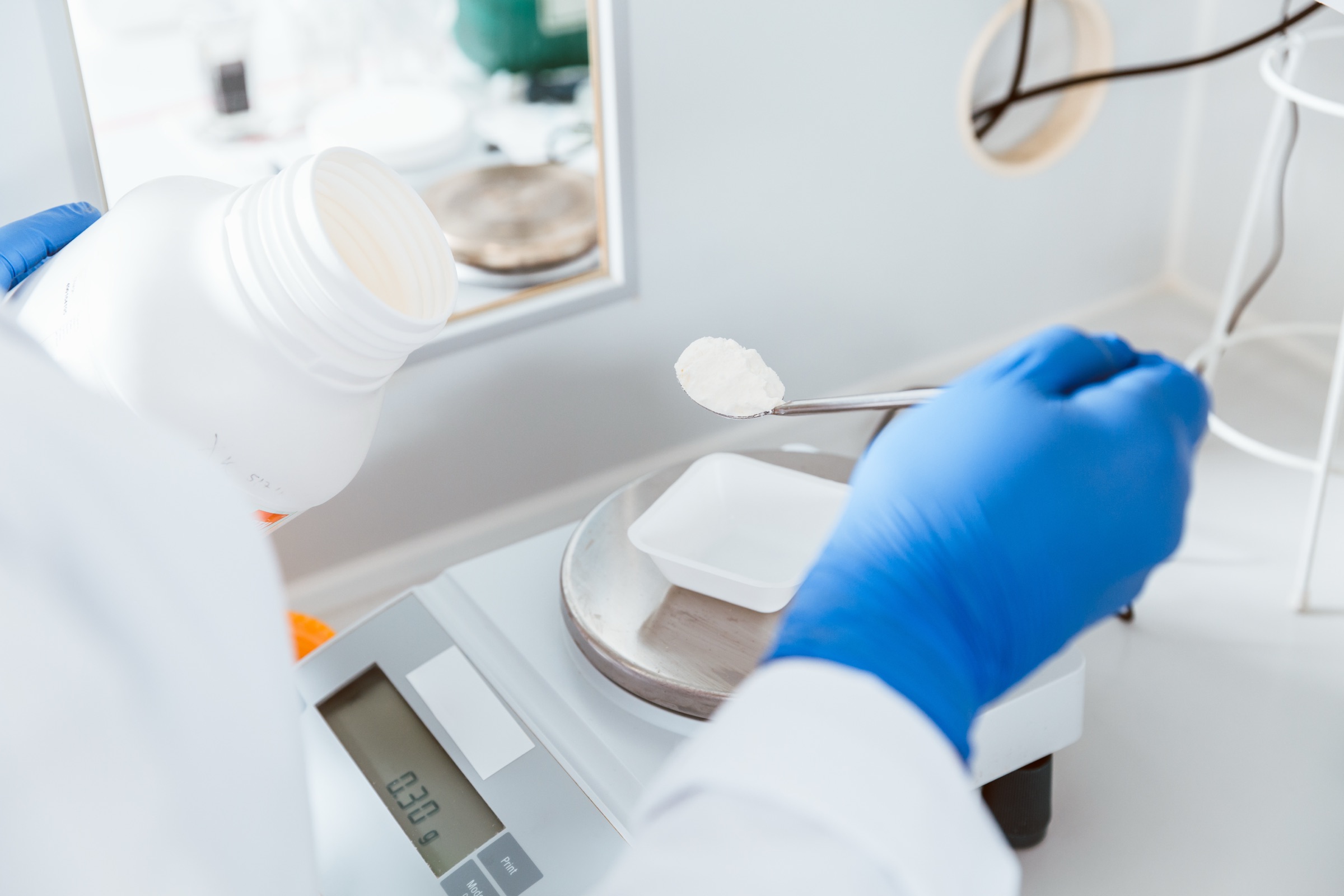
Tosyl chloride as a stocked North American raw material. A white crystalline solid at 99 percent assay for tosylation in fine-chemical and coatings synthesis.
Tosyl chloride as a stocked North American raw material. A white crystalline solid at 99 percent assay for tosylation in fine-chemical and coatings synthesis.
PTSC is p-toluenesulfonyl chloride, CAS 98-59-9, better known as tosyl chloride or TsCl. It is a white crystalline powder supplied at 99 percent assay minimum.
This is a reactive intermediate and not a plasticizer. The acid chloride is the functional part: it converts alcohols to tosylates, which turns a poor leaving group into a good one, and it sulfonylates amines to sulfonamides. That reactivity is what makes it a building block in fine-chemical synthesis and in coatings and resin chemistry where a molecule or a backbone has to be functionalized.
It sits in this line because it is the same chemistry family as the ProFlex sulfonamides and comes from the same stock. The sulfonamides are what tosyl chloride makes when it meets an amine.
The specification holds assay at 99.00 percent minimum, the crystallization point at 66.90 degrees C minimum, water at 0.10 percent maximum, color at 20 Pt-Co maximum, total free acid at 0.20 percent maximum and the ortho isomer at 0.30 percent maximum. Free acid and the ortho isomer are the two numbers a synthesis chemist usually checks first, because both affect yield.
It is supplied in kilogram and pound quantities. Tell us the scale you are running and the documentation your process needs.
The CAS Registry Number is 98-59-9. It is also written as p-toluenesulfonyl chloride, para-toluenesulfonyl chloride, tosyl chloride, TsCl, 4-methylbenzenesulfonyl chloride, toluene-4-sulfonyl chloride, and p-toluene sulphonyl chloride.
| Property | Specification |
|---|---|
| Appearance | White crystalline powder |
| Assay | 99.00 percent minimum |
| Crystallization point | 66.90 degrees C minimum |
| Water content | 0.10 percent maximum |
| Color | 20 Pt-Co maximum |
| Total free acid | 0.20 percent maximum |
| Ortho isomer | 0.30 percent maximum |
| Form | Solid |
These are specification limits from the technical data sheet, not typical values. Every batch is released against them and the certificate of analysis reports the measured result. We will send the current TDS and the batch documentation your qualification needs.
Tell us the binder system, the property you are targeting, and the volume you expect. We will confirm the grade, send the documentation, and ship a sample from North American stock.
Converting alcohols to tosylates, the standard way to make a hydroxyl into a leaving group.
Sulfonylating amines. It is the reagent behind the sulfonamide chemistry in this line.
A sulfonyl chloride building block in multi-step synthesis.
Functionalizing a resin or a molecule through the reactive acid chloride.
It is specified where the formulation needs A reactive leaving-group handle, tight control of free acid and the ortho isomer, and north American stock rather than an import lead time.
Tosyl chloride hydrolyzes. Water is specified at 0.10 percent maximum for that reason, and free acid at 0.20 percent maximum is the measure of how much hydrolysis has already happened. Keep containers closed and dry, and take the material from a fresh container when the reaction is moisture sensitive.
Crystallization point at 66.90 degrees C minimum is the purity check that matters in practice. A depressed crystallization point means either the ortho isomer or hydrolysis product is present, both of which cost yield.
It is a solid and is charged as one. Avoid breathing dust, and read the safety data sheet before handling: an acid chloride releases hydrogen chloride on contact with water.
Read the safety data sheet before handling. We send it with every order and on request.
Yes. PTSC, p-toluenesulfonyl chloride, para-toluenesulfonyl chloride, tosyl chloride and TsCl are all the same material, CAS 98-59-9. The systematic name is 4-methylbenzenesulfonyl chloride. If you are cross-referencing a specification written under any of those names, it is this product.
No. It is a reactive intermediate that we stock alongside the plasticizers because it is the same chemistry family. Tosyl chloride reacts: it converts alcohols to tosylates and amines to sulfonamides. If you want a sulfonamide plasticizer, ProFlex 8, ProFlex 4 and ProFlex 9S are the grades to look at.
Assay is 99.00 percent minimum, with the ortho isomer held to 0.30 percent maximum and total free acid to 0.20 percent maximum. Crystallization point is 66.90 degrees C minimum, water 0.10 percent maximum and color 20 Pt-Co maximum. A certificate of analysis comes with every lot.
Closed and dry. It is an acid chloride and it hydrolyzes on contact with moisture, releasing hydrogen chloride and raising the free acid. That is why water is specified at 0.10 percent maximum and free acid at 0.20 percent maximum. For a moisture-sensitive step, open a fresh container rather than drawing from a part-used one.
We stock it in North America in kilogram and pound quantities and ship across the United States, Canada and Mexico. Tell us the scale you are running and we will confirm the pack size, the lead time and the documentation with the quote.
Yes. We send the Technical specification, Safety Data Sheet (SDS), and Certificate of Analysis (COA) on request, in the current revision. Use Request TDS or SDS above and tell us what your qualification review needs.
The parent toluenesulfonamide, which is what tosyl chloride makes with ammonia.
The N-ethyl substituted toluenesulfonamide, a liquid plasticizer.
The full line, including the tosyl chloride specialty.
The chemistry family tosyl chloride sits at the head of.